


Listen to the article
China Tightens Economic Grip on Venezuela as US Military Presence Increases in Caribbean
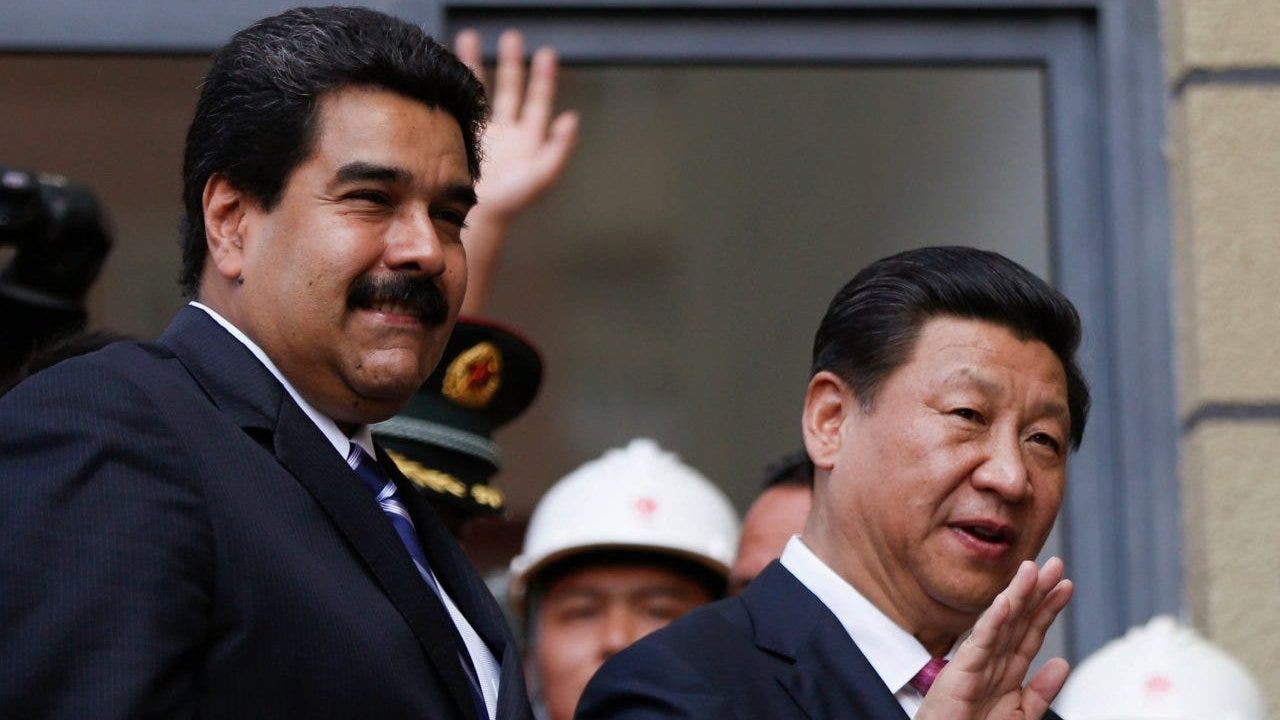
As President Donald Trump warns of “zero tolerance” for narco-states in America’s backyard, China is strengthening its economic relationship with Venezuela through a new “zero-tariff” trade agreement. This high-risk economic and political bet by Beijing could soon collide with increasing U.S. military presence in the region.
U.S. defense officials confirmed last month that the USS Gerald R. Ford aircraft carrier strike group had entered the Southern Command region, which covers the Caribbean and northern South America. The carrier, with more than 4,000 sailors and dozens of tactical aircraft, aims to “bolster US capacity to detect, monitor, and disrupt illicit actors and activities,” according to the Pentagon.
The military buildup is specifically targeting narcotrafficking routes linked to Venezuela’s military leadership, with the stated mission to “degrade and dismantle transnational criminal organizations.”
The Venezuelan response was swift. Within weeks, Venezuelan officers were reportedly training for guerrilla-style defense against a potential U.S. strike, revealing what Reuters described as “rising anxiety inside Caracas.”
Amid this tension, Beijing announced a comprehensive “zero-tariff” trade agreement with Caracas at the Shanghai Expo 2025. Venezuelan Deputy Minister for Foreign Trade Coromoto Godoy revealed that the accord covers approximately 400 tariff categories, removing duties on goods exchanged between the two nations.
“This really looks like China is going to completely take over the Venezuelan economy,” said Gordon Chang, an expert on China’s global trade strategy. “It’s going to decimate Venezuela’s local industry.”
Chang notes the trade imbalance inherent in the agreement: “Venezuela basically sells petroleum to China and very little else. China, of course, is a manufacturer of many, many items. Venezuelan manufacturing is not going to experience a renaissance anytime soon — it’s going the opposite direction.”
The timing of Maduro’s embrace of Beijing suggests increasing concern about Trump’s potential actions. “Maduro probably doesn’t have a choice,” Chang explained. “He realizes he’s got a problem in the form of Donald J. Trump. There’s a U.S. aircraft carrier not far from his shores, and a lot of military assets bearing down on him. He needs a friend, and he’s desperate.”
The trade agreement may offer temporary relief to the Maduro regime, but Chang believes it only deepens Venezuela’s dependency on China. “I don’t see this trade deal as strengthening Venezuela. I see it strengthening China’s stranglehold over Venezuela.”
For China, the tariff-free pact represents both commercial opportunity and strategic advancement in the Western Hemisphere at a time when Washington is doubling down on sanctions. The Council on Foreign Relations estimates China has extended around $60 billion in loans to Venezuela over the past two decades, with much of it repaid through oil shipments.
“China has leveraged multibillion-dollar loans and the establishment of satellite positioning and surveillance facilities to secure strategic control over Venezuela’s natural resources and critical infrastructure,” said Isaias Medina III, an Edward Mason Fellow at Harvard University and former Venezuelan diplomat to the U.N. Security Council.
Medina referenced the El Sombrero satellite ground station in Venezuela’s Guárico province, a joint China-Venezuela project that Western analysts describe as part of a wider space cooperation network giving Beijing intelligence capabilities in Latin America.
Venezuela has evolved into what Medina calls “a forward operating base for regimes openly hostile to the United States and its allies.” He points out that “Iran, Russia, China, and Cuba have entrenched themselves across Venezuelan territory, using the country as a platform for asymmetric warfare, intelligence operations, and ideological expansion throughout Latin America.”
Russia’s military involvement includes more than $12 billion in arms sales and ongoing defense cooperation, while Iranian interests potentially extend to drone manufacturing and uranium mining. Cuban military advisers remain embedded in Venezuelan security institutions.
“The Maduro government, shielded by the absence of the rule of law or legitimate governance, has replaced statecraft with criminal enterprise,” Medina said. “Grand corruption is not the exception; it is the system.”
The humanitarian consequences have been severe. “Over 30% of Venezuela’s population has been forcibly displaced. Starvation has been weaponized as a tool of social control, amounting to a war crime under international law,” Medina added.
U.S. sanctions continue to constrain Venezuela’s oil exports. In March 2025, Reuters reported that American threats to impose tariffs on nations buying Venezuelan crude caused temporary disruptions in shipments to China. Beijing dismissed these measures as “illegal extraterritorial actions” but hasn’t disclosed how it will enforce the new tariff-free arrangement.
Despite China’s economic support, Chang believes Beijing cannot ultimately shield Caracas from U.S. power. “It can certainly launch a propaganda blitz,” he said, “but it can’t project military force in the region. It’s really up to what President Trump does. China does not have the military strength to oppose American intervention if that’s what Trump decides.”
Medina emphasized the strategic importance of addressing the situation. “Just three hours from U.S. shores, this narco-terrorist regime has become the operational convergence of organized crime, drug trafficking, money laundering, and human rights atrocities,” he said, advocating for a Western response combining “diplomatic isolation, targeted sanctions, and, when necessary, defensive deployments.”
Fact Checker
Verify the accuracy of this article using The Disinformation Commission analysis and real-time sources.

14 Comments
This is a complex situation with high stakes for all parties involved. China’s ‘zero-tariff’ trade deal with Venezuela appears to be a lifeline for the Maduro government, but it also raises the risk of further confrontation with the U.S.
I wonder how this will impact global commodity markets, especially for resources like gold, copper, and lithium that are important for China’s economic and military ambitions.
China’s support for the Maduro regime is a risky gambit. While it may secure their access to Venezuela’s natural resources, it also puts them at odds with the U.S. and could jeopardize their broader economic and geopolitical interests.
This situation bears close watching, especially for investors and companies with exposure to the mining and energy sectors in Venezuela and the surrounding region.
The increased U.S. military presence in the Caribbean is a concerning development. While targeting narco-trafficking is the stated goal, it’s clear the Americans want to limit China’s influence in Venezuela and the broader region.
This geopolitical tug-of-war could have significant implications for mining and energy companies operating in Venezuela and the surrounding area. It’s a situation worth monitoring closely.
This is a delicate balancing act for China. On one hand, they want to maintain their economic ties with Venezuela and counter U.S. influence in the region. On the other, they don’t want to risk a direct confrontation with the U.S. military.
The implications for the mining and energy sectors in Venezuela are significant. Companies operating there will need to carefully navigate the geopolitical landscape to protect their interests.
The increased U.S. military presence in the Caribbean is a clear signal of their intent to limit China’s influence in Venezuela. This could lead to a dangerous escalation of tensions between the two superpowers.
It’s crucial that all parties involved exercise restraint and seek diplomatic solutions to this complex situation. Unchecked conflict could have serious consequences for the region and global markets.
China’s support for the Maduro regime seems to be driven by strategic interests rather than ideological alignment. The ‘zero-tariff’ trade deal is likely an attempt to secure access to Venezuela’s natural resources and maintain a foothold in America’s backyard.
It will be interesting to see how this plays out. The U.S. appears determined to limit China’s influence, but Venezuela’s reliance on Beijing’s economic lifeline may complicate the situation.
Interesting geopolitical developments in Venezuela. China’s expanding economic ties with the Maduro regime seem risky, given the U.S. military posturing in the region. This could lead to a potential clash of interests between the two superpowers.
I’m curious to see how this unfolds. The U.S. is clearly concerned about Venezuela’s links to narco-trafficking and wants to limit China’s influence in its backyard.