


Listen to the article
European Companies Dominate Indian Ocean Tuna Fishing Through Foreign Flags
European fishing corporations have gained outsized access to Indian Ocean tuna stocks by registering their vessels under foreign flags, according to a new investigation released Thursday by the Blue Marine Foundation and Kroll.
The report reveals that European companies are responsible for harvesting approximately one-third of tropical tuna in the Indian Ocean, despite growing concerns about overfished populations of yellowfin and bigeye tuna that are still in recovery.
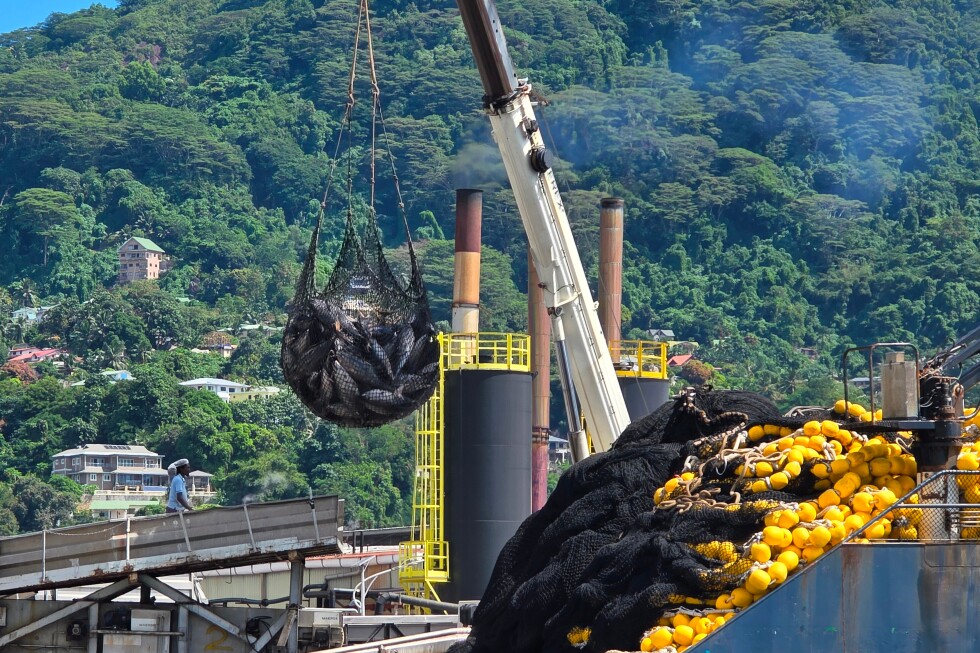
Jess Rattle, head of investigations at the London-based Blue Marine Foundation, began investigating after noticing purse seine ships—massive vessels capable of holding up to 1.8 million kilograms of fish—operating under flags of Mauritius, Tanzania, and Oman.
“We wanted to understand who really owned these vessels,” said Rattle. “Were they owned by the coastal states whose quota they were now using, or in fact, were they owned by the EU?”
The practice of “reflagging” vessels to countries like Seychelles, Mauritius, Kenya, Tanzania, and Oman has allowed the European-owned fleet to expand to more than 50 purse seine ships and supply vessels. This expansion continues despite the European Union’s public commitments to reducing fishing pressure on vulnerable stocks.
While legal, reflagging makes it difficult for regulators to assess European companies’ true impact on fisheries. Parent company ownership is often concealed behind complex layers of shell companies and foreign registries, which investigators spent months untangling.
“Europe’s opportunity to help stop overfishing is greater than first appears,” noted Benedict Hamilton, managing director at Kroll, emphasizing the hidden scale of European influence.
The revelations come just before the annual meeting of the Indian Ocean Tuna Commission in the Maldives, where the EU and 28 countries with stakes in tuna fisheries will gather to discuss management measures.
European fishing interests in the Indian Ocean date back to the 1980s, when Spanish and French companies introduced purse seine ships to the region. These vessels use enormous nets that encircle tuna schools and close like a drawstring purse, dramatically increasing catch volumes.
Europeche Tuna Group, representing the European tuna industry, defended their presence in the region, saying their relationships with coastal nations reflect long-term investment and local partnerships. Spokesperson Anne-France Mattlet highlighted that European companies benefit regional economies through taxes, fishing license fees, infrastructure investments, and supporting local processing facilities.
The European Commission maintained distance from the practice, with spokesperson Maciej Berestecki stating that reflagging is “a private business decision not influenced by public authorities,” adding that “the EU has done, and keeps doing, its utmost to promote and respect catch limits.”
Tensions between European fishing interests and coastal nations have flared previously. Five years ago, the Maldives accused the EU of failing to propose serious quota reductions as yellowfin stocks declined sharply. Last year, the EU opposed Indonesia’s proposal for restrictions on purse seine fishing, which had gained support from 15 other countries.
Recent management measures by the Indian Ocean Tuna Commission have begun showing positive results for yellowfin and bigeye tuna recovery. The EU agreed to reduce yellowfin catch by 21% for EU-flagged vessels—potentially driving companies to seek alternative quotas through other countries’ flags, according to Glen Holmes, senior officer with Pew Charitable Trusts.
Environmental organizations including Pew Charitable Trusts, Global Fishing Watch, and Oceana are advocating for greater transparency in fishing fleet ownership. A January report by Oceana found European companies regularly register vessels under foreign nations, including some the EU has criticized for lax enforcement of fishing regulations.
Vanya Vulperhorst, Oceana’s illegal fishing campaign director for Europe, called for the EU to collect and publish ownership data for fishing fleets. “What we found last year is that the real European fleet, if you add the non-EU flagged vessels, doubles,” Vulperhorst said.
Such transparency would help the EU enforce its own laws prohibiting European individuals from benefiting financially from illegal fishing practices, while providing a clearer picture of Europe’s actual footprint in distant waters.
Fact Checker
Verify the accuracy of this article using The Disinformation Commission analysis and real-time sources.

4 Comments
This highlights the need for greater transparency and oversight of fishing operations, especially when it comes to reflagging vessels under foreign flags. It’s concerning to see European companies exploiting loopholes to expand their footprint.
I agree. The practice of reflagging vessels is a concerning trend that allows companies to circumvent regulations and quotas. More robust international cooperation is needed to ensure equitable and sustainable management of shared fisheries.
Interesting report on the dominance of European fishing fleets in the Indian Ocean tuna fishery. I wonder what the long-term implications are for sustainable management of these stocks and the local coastal communities that depend on them.
As someone invested in mining and commodities, I’m curious to see how this plays out. Tuna is a key protein source, so disruptions to the supply could have ripple effects across global markets. I’ll be watching this story closely.