


Listen to the article
China Emerges as AI Testing Ground as Adoption Surpasses Global Pace
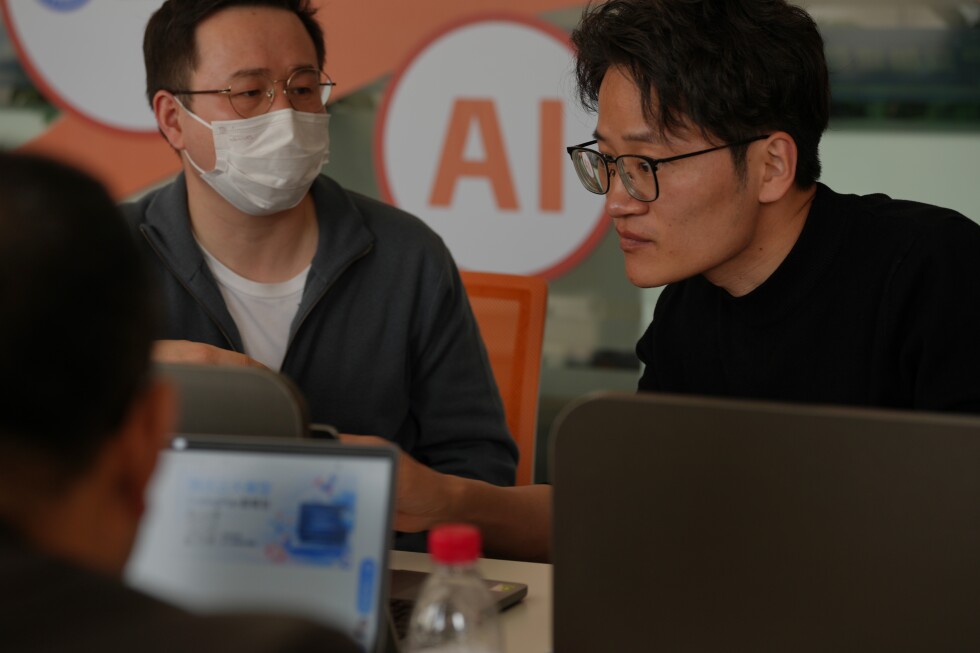
On a recent weekday in Beijing, approximately 50 people gathered outside a Chinese mobile internet company’s headquarters, waiting for assistance with installing an artificial intelligence assistant. Similar scenes have played out for days across China’s major tech hubs, including the southern technology center of Shenzhen, as engineers help eager crowds set up the popular AI agent “OpenClaw” on their devices.
“I’m worried about falling behind in technological developments,” said Sun Lei, a 41-year-old human resources manager attending one such event. She hopes the tool might streamline her work by helping source and screen resumes across various recruitment platforms.
More than a year after OpenAI stunned the world with its advanced AI model, China has transformed into a massive testing ground for AI tools in everyday life. While U.S.-developed AI models still dominate in raw computing power, Chinese citizens and businesses have embraced the technology with remarkable speed, facilitating its rapid and widespread adoption across virtually every sector.
The scale of this adoption is staggering. Of China’s 1.4 billion population, more than 600 million were using generative AI as of December 2023, representing a 142% increase from the previous year, according to a report by the government-controlled China Internet Network Information Center.
This surge is particularly evident in the recent popularity of “agentic” AI tools like OpenClaw, which can autonomously complete complex tasks. The weekly data consumption by Chinese AI models has recently surpassed that of U.S. models, according to OpenRouter, an AI gateway platform that tracks usage patterns across different AI systems.
Chinese citizens are integrating AI into nearly every aspect of daily life. Jason Tong, a 64-year-old retiree in Shanghai and former IT engineer, has used AI chatbots such as Doubao and Kimi for everyday queries since their introduction. Recently, he joined a blood glucose monitoring service that employs AI to generate personalized health advice.
“Just as carriages were eventually replaced by trains, this is bound to happen,” Tong said of AI’s inevitable integration into everyday life.
The shift extends far beyond personal use. Chinese products incorporating AI are making significant advancements, from humanoid robots with advanced cognitive capabilities to AI systems in vehicles that can handle complex tasks like making restaurant reservations.
“The competition is clearly shifting from models to ecosystems,” noted Lizzi Lee, a fellow at the Asia Society Policy Institute’s Center for China Analysis. “Chinese users are basically acting as real-time testers at scale.”
Tech giants are racing to capitalize on this momentum. Tencent has integrated OpenClaw into WeChat, China’s ubiquitous “super-app” that serves as a messaging platform but also handles food ordering, payments, and numerous other functions. Alibaba is embedding similar agentic AI capabilities into its business workflows, transforming its operational efficiency.
OpenClaw itself has been a catalyst for broader AI adoption. Originally created by Austrian software developer Peter Steinberger last year, it gained rapid popularity due to its ability to use various tools to complete sophisticated tasks autonomously.
Zhao Yikang, a Chinese college student in Macao, uses OpenClaw for both academic and practical purposes. During his internship at a real estate agency in Zhuhai, he employed the tool to automatically generate promotional videos and manage social media accounts.
“AI can understand things in a second,” Zhao said. “You just need to act as a commander and tell it what to do.” Preparing to start a photo services business after graduation, Zhao asked AI to build a company website, which it completed within 10 minutes for less than 5 yuan (approximately 70 cents).
Despite occasional warnings from Chinese authorities about potential security risks such as data leaks, enthusiasm for these tools remains high. Chinese companies increasingly set internal targets for boosting AI use to improve efficiency, according to Janet Tang, a partner at consultancy AlixPartners specializing in technology.
China’s government has strategically positioned the country for AI dominance, investing heavily in talent development and ensuring access to abundant, affordable electricity for power-intensive AI operations. The national “AI plus” blueprint outlines comprehensive steps to integrate AI across sectors from healthcare to education. In Shenzhen, judges processed 50% more cases last year partly due to AI tools assisting judicial processes.
However, U.S. export restrictions on advanced computer chips remain a significant challenge for China’s AI advancement. “Export controls on tools have slowed China’s chipmaking capabilities, and are the Achilles’ heel of many AI labs that need advanced AI chips,” explained Samm Sacks, a senior fellow at New America focused on Chinese technology policies.
Paradoxically, these restrictions have also spurred improved coordination across China’s tech supply chain. When Chinese AI firm DeepSeek released its V4 AI model preview last month, a notable change was its partial support by computer chips made by Chinese tech giant Huawei, reducing dependence on U.S. chipmakers like Nvidia.
A recent Stanford University report indicates that the U.S.-China gap in top AI models’ performance has “effectively closed,” though U.S. policymakers and companies like Anthropic and OpenAI have accused Chinese AI startups of intellectual property theft – allegations China dismisses as groundless.
Despite challenges including U.S. export controls and China’s Great Firewall internet censorship system, analysts believe any AI gap between the two countries will continue to narrow. Lian Jye Su, chief analyst at research group Omdia, concluded: “It won’t be long before China moves from fast follower to parallel innovator.”
Fact Checker
Verify the accuracy of this article using The Disinformation Commission analysis and real-time sources.

8 Comments
China’s status as a massive AI testing ground is intriguing. I’m curious to see how this widespread adoption and integration of AI impacts the country’s competitiveness across various industries in the coming years. The pace of change seems incredibly rapid.
Fascinating to see China’s embrace of AI permeating through everyday life. The scale of AI adoption is truly remarkable, as the technology gets integrated across sectors. I wonder how this rapid progress will shape China’s global competitiveness and influence in the years ahead.
It’s fascinating to see how China is positioning itself as a global leader in AI integration and deployment. The speed with which the technology is being embraced by both businesses and citizens is quite remarkable. I wonder how this will shape China’s global influence and competitiveness in the years ahead.
The growing demand for AI tools like OpenClaw in China highlights how quickly the technology is being adopted and normalized. It will be interesting to see how this compares to the AI landscape in other countries and regions. Clearly, China is positioning itself as a major AI testing ground.
Yes, China’s massive population and growing tech industry give it a unique advantage in rapidly scaling AI adoption. This could give Chinese companies and researchers a leg up in developing and refining AI capabilities.
The scenes of crowds waiting to install OpenClaw AI assistants in China’s tech hubs are a striking illustration of the country’s mass embrace of this technology. It will be crucial to monitor how this large-scale AI testing and deployment shapes China’s technological and economic trajectory on the global stage.
While the U.S. may still lead in raw AI computing power, China’s speed of AI integration into everyday life is truly remarkable. This rapid adoption could help Chinese firms and researchers make important advancements, further expanding the country’s global tech influence.
The scale of China’s AI adoption is truly astounding. While the U.S. may still lead in some technical aspects, China’s ability to rapidly deploy and test AI tools across its massive population is unparalleled. This could give Chinese firms significant advantages in developing and refining AI capabilities.