


Listen to the article
Thousands March Across Chile to Protest Environmental Rollbacks
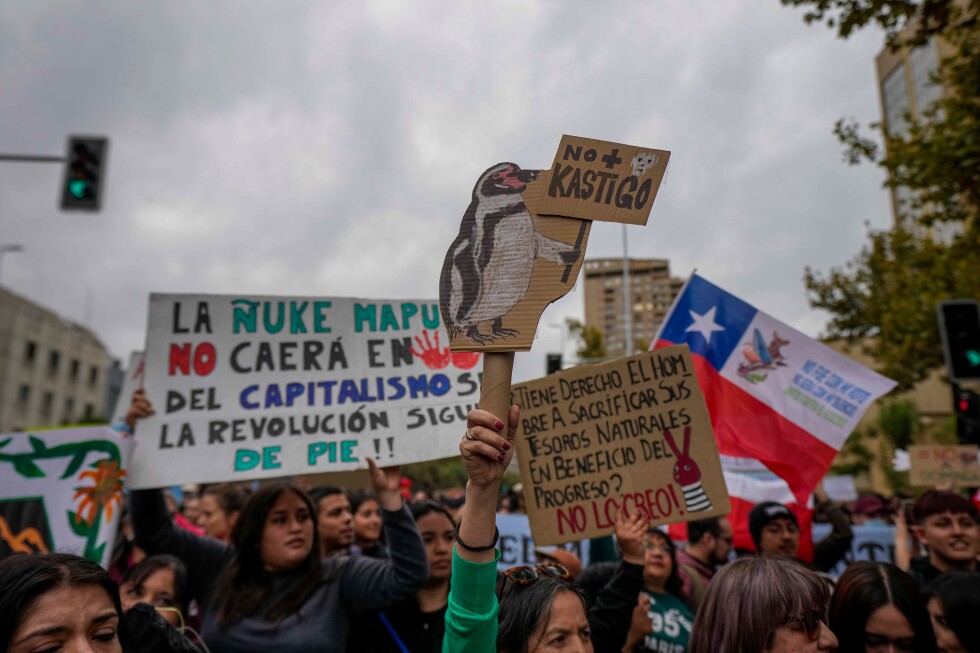
Thousands of Chileans took to the streets of Santiago and 15 other cities on Sunday to commemorate World Water Day and protest President José Antonio Kast’s recent withdrawal of dozens of environmental protection measures.
The demonstrations, organized under the slogan “Don’t ‘Kast-igate’ Nature,” brought together environmental activists, concerned citizens, and community groups in one of the largest environmental protests since Kast took office earlier this month.
The conservative president sparked controversy just one day after his inauguration when he halted 43 environmental protection regulations that had been established during the previous administration of left-wing leader Gabriel Boric. The suspended decrees included protections for endangered species like Darwin’s frog and the Humboldt penguin, the creation of new national parks, and pollution control plans for areas such as Lake Villarrica.
“We want to generate the best possible public policy around full employment, always respecting the environment,” Kast told reporters when defending his decision. The president has acknowledged climate change exists but has consistently advocated for economic deregulation and what he describes as prioritizing “technical criteria over environmental ideologies.”
Environmental organizations view these rollbacks as a significant threat to Chile’s ecological health and water security. Cristóbal Rodríguez, national spokesperson for the Movement for the Defense and Access to Water, Land and the Environment, one of the protest organizers, highlighted that 1.4 million Chileans still lack access to clean drinking water.
“The new president represents a setback that reflects his Pinochet-era roots and is commodifying nature to levels never seen before,” Rodríguez said. He further criticized the administration for using “nature as a battleground to favor the interests of big capital” and described the decree withdrawals as showing “an environmental chainsaw approach.”
Chile faces numerous environmental challenges, particularly regarding water resources. The country has been experiencing a prolonged drought for over a decade, severely affecting agricultural production and community water access. Environmental experts worry that weakening regulations could exacerbate these problems while prioritizing industrial development.
The suspended regulations also included emissions controls for thermoelectric plants, which play a significant role in Chile’s energy matrix but have been criticized for their environmental impact, particularly in heavily industrialized coastal areas where many communities already suffer from pollution-related health issues.
Kast’s election marks Chile’s sharpest right-wing turn since the country’s return to democracy in 1990 following 17 years of military dictatorship under General Augusto Pinochet. Critics point out that Kast campaigned for Pinochet in his youth and has expressed admiration for aspects of the dictator’s economic policies.
The environmental policy shift comes at a critical time for Chile’s relationship with its natural resources. The country is the world’s largest copper producer and a significant lithium exporter – both essential materials for the global green energy transition. How Chile manages these resources while balancing environmental protection and economic development has implications far beyond its borders.
Sunday’s demonstrations highlight growing tensions between the new administration’s economic priorities and environmental concerns. The protests drew particularly strong support in regions affected by water scarcity and industrial pollution, underscoring that environmental issues remain politically potent in Chilean society.
Environmental organizations have vowed to continue pressing the government to reinstate the suspended protections and strengthen, rather than weaken, the country’s environmental regulatory framework. They argue that sustainable development that respects ecological limits is essential for Chile’s long-term prosperity and the wellbeing of its citizens.
As the demonstrations concluded, organizers announced plans for continued civic action and legal challenges to the government’s environmental policies in the coming months.
Fact Checker
Verify the accuracy of this article using The Disinformation Commission analysis and real-time sources.

9 Comments
I’m glad to see Chileans mobilizing to defend their natural resources. Protecting endangered species, creating national parks, and controlling pollution are all critical steps. Hopefully the government will reconsider this decision and work to strengthen, not weaken, environmental safeguards.
It’s admirable that Chileans are standing up for their environment on World Water Day. Water is such a precious and finite resource, so it’s crucial that governments enact strong policies to manage it responsibly. I hope the new administration reconsiders its stance.
The suspension of environmental protections for areas like Lake Villarrica is particularly concerning. Freshwater ecosystems are fragile and need robust policies to prevent degradation. I hope the protesters’ voices are heard and the president reverses course on these rollbacks.
Interesting to see Chileans taking to the streets to protest the new president’s environmental rollbacks. It’s a delicate balance between economic development and environmental protection, but we should be vigilant about preserving natural resources and biodiversity.
Agreed. Revoking environmental regulations so quickly is concerning and could have serious long-term consequences for Chile’s ecosystems and communities.
The scale of these protests shows how deeply Chileans care about their environment. While economic development is important, it shouldn’t come at the expense of biodiversity and public health. The new president should listen to the concerns of citizens and find a balanced approach.
Absolutely. Rolling back environmental regulations so quickly seems like a hasty move that could backfire. The government should work with stakeholders to find sustainable solutions.
I’m curious to learn more about the specific environmental protections that were suspended and how they were intended to safeguard Chile’s natural resources and wildlife. Peaceful protests are an important way for citizens to voice their concerns over policy changes.
The article mentions measures like endangered species protections and pollution control plans being rolled back. Those seem like important safeguards that shouldn’t be removed lightly.