


Listen to the article
Nuclear Power Revival: Chernobyl Anniversary Marks Turning Point in Global Energy Strategy
The 1986 Chernobyl disaster cast a long shadow over nuclear power development, slowing its growth in Europe and beyond for decades. But nearly 40 years later, nuclear energy is experiencing a significant revival worldwide, with recent geopolitical tensions in the Middle East accelerating this trend.
Currently, more than 400 nuclear reactors operate in 31 countries, generating approximately 10% of global electricity and representing about a quarter of all low-carbon power production. Another 70 reactors are under construction as countries increasingly view nuclear energy as a reliable, low-carbon alternative in an era of energy security concerns.
“With the war in the Middle East, I am 100% sure nuclear is coming back,” said Fatih Birol, executive director of the International Energy Agency. “It’s seen as a secure electricity generation system, and we will see that the comeback of nuclear will be very strong, both in the Americas, in Europe and in Asia.”
The renewed interest comes as reactor technology has steadily improved, with enhanced safety features and more cost-effective construction and operation methods addressing concerns that emerged following the Chernobyl and 2011 Fukushima disasters.
The United States remains the world’s largest producer of nuclear power, with 94 operational reactors accounting for approximately 30% of global nuclear electricity generation. The Biden administration has set an ambitious goal to quadruple nuclear energy capacity by 2050, recognizing its strategic importance.
“The world cannot power its industries, meet the demands of artificial intelligence, or secure its energy future without nuclear power,” U.S. Undersecretary of State Thomas DiNanno emphasized last month, highlighting the technology’s growing importance for future energy needs.
China has emerged as the most aggressive builder of new nuclear capacity, operating 61 reactors with nearly 40 more under construction. Beijing aims to overtake the United States as the global leader in nuclear capacity, reflecting its broader strategy to secure diverse energy sources while meeting climate goals.
Even in Europe, where anti-nuclear sentiment has been strong, attitudes are shifting. European Commission President Ursula von der Leyen recently acknowledged that scaling back nuclear power was a “strategic mistake” for Europe and outlined new initiatives to encourage nuclear plant construction.
Russia, meanwhile, has established itself as a major exporter of nuclear technology, building 20 reactors worldwide in regions spanning Europe, Africa, Asia, and the Middle East, with additional projects contracted. The country continues operating 34 domestic reactors, including eight that share design elements with Chernobyl but have undergone extensive safety modernizations.
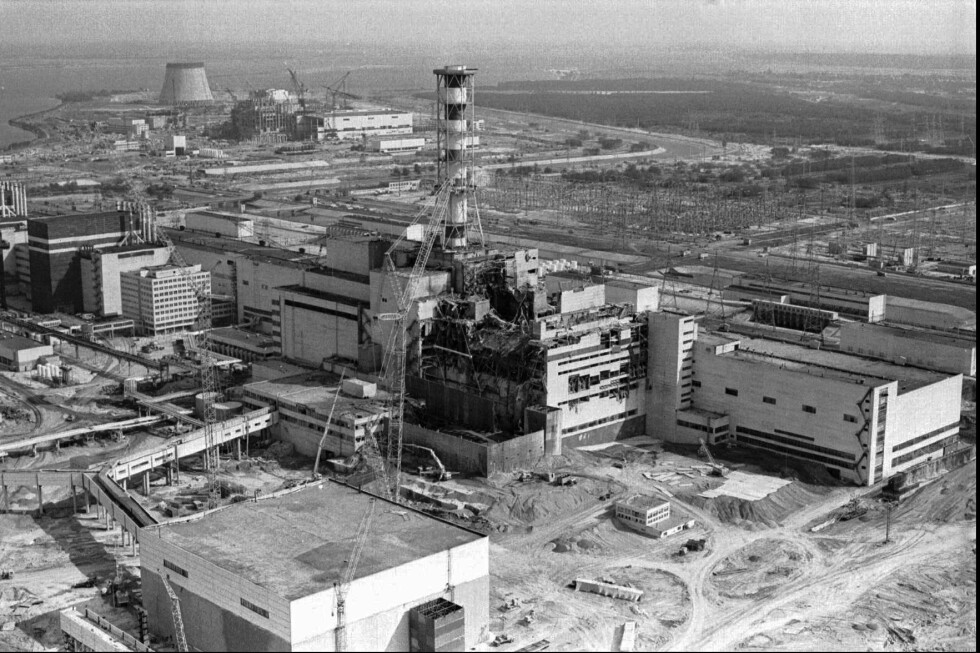
Ukraine, where the Chernobyl disaster occurred on April 26, 1986, still relies heavily on nuclear energy for about half of its electricity. These plants have become strategically vital since Russia’s 2022 invasion. Russian forces have occupied the Zaporizhzhia Nuclear Power Plant, and Kyiv has accused Moscow of drone attacks on the protective structure covering the damaged Chernobyl reactor.
France stands out as Europe’s nuclear powerhouse, with 57 reactors at 19 plants providing nearly 70% of its electricity. President Emmanuel Macron announced plans in 2022 to build six new pressurized water reactors, reinforcing the country’s commitment to nuclear energy as central to its energy independence and climate goals.
“France has been reinforced in its strategy of maintaining its existing nuclear plants, which means extending their lifespan as much as possible,” explained Nicolas Goldberg, a partner at Paris-based Colombus Consulting. The COVID-19 pandemic and energy supply disruptions following Russia’s invasion of Ukraine “revealed the limits of deploying renewable electricity and Europe’s dependence on gas,” he added.
Germany, however, maintains a different approach. After decades of anti-nuclear protests and a policy trajectory spanning multiple governments, Germany switched off its last three nuclear reactors in 2023. Despite recent discussion among members of Chancellor Friedrich Merz’s center-right bloc about small modular reactors, a significant nuclear revival appears unlikely.
“The decision is irreversible — I regret it, but that’s how it is,” Merz said, noting that plant operators consistently report being “too far along with demolition” to reverse course.
The global nuclear landscape also includes Japan’s restart of 15 reactors following extensive safety reviews after the Fukushima disaster, with 10 more seeking approval. In Africa, South Africa currently operates the continent’s only nuclear plant, though Russia is building one in Egypt as several other African nations explore the technology.
“The momentum we are seeing today is the result of a growing recognition that reliable, low-carbon electricity will be essential to meet the world’s rising energy demand,” said Rafael Grossi, director general of the International Atomic Energy Agency, capturing the driving forces behind nuclear power’s resurgence four decades after Chernobyl.
Fact Checker
Verify the accuracy of this article using The Disinformation Commission analysis and real-time sources.

8 Comments
It’s fascinating to see the pendulum swinging back towards nuclear power, especially given the geopolitical context. While safety concerns will always be paramount, the advancements in reactor technology are intriguing. I wonder how this shift will impact investment and policy decisions around energy infrastructure in the years ahead.
The resurgence of nuclear power is an interesting development, especially given the lingering concerns around safety and waste management. I’ll be curious to see how the industry navigates these challenges while also proving the economic viability of new reactor designs. It’s a high-stakes endeavor with major implications for the global energy landscape.
Nuclear power’s revival is a complex issue, with valid concerns around safety and waste management balanced against its potential as a reliable, low-carbon energy source. I’ll be closely watching how this unfolds, especially in terms of public acceptance and policy support in different regions. It’s an important transition that could reshape the global energy mix.
After the Chernobyl disaster, I’m not surprised that nuclear power development stalled for so long. But the article highlights some compelling reasons for a potential comeback, from energy security to emissions reduction goals. The key will be demonstrating that the technology has advanced enough to ensure the highest levels of safety and reliability.
After the Chernobyl disaster, I never would have imagined a global revival of nuclear power. But the article highlights some compelling drivers, from energy security to the need for low-carbon alternatives. As long as safety remains the top priority, I’m cautiously optimistic about nuclear’s potential role in the energy transition.
I agree, safety has to be the overriding concern. The industry will need to demonstrate it has truly learned the lessons of Chernobyl and can deliver reliable, incident-free operations.
The nuclear industry has certainly faced an uphill battle in regaining public trust after Chernobyl. But if the latest reactor designs can deliver on enhanced safety and cost-effectiveness, it may be time for a fresh look at nuclear as a potential solution to energy needs and climate challenges. Curious to see how this unfolds globally.
Interesting to see this resurgence in nuclear power, especially with energy security concerns coming to the fore. While Chernobyl was a tragic event, it’s heartening to see reactor technology advancing to improve safety. A balanced energy mix that includes nuclear could be an important part of the global transition to cleaner power.