


Listen to the article
UK and France Seal €500 Million Deal to Curb Channel Migrant Crossings
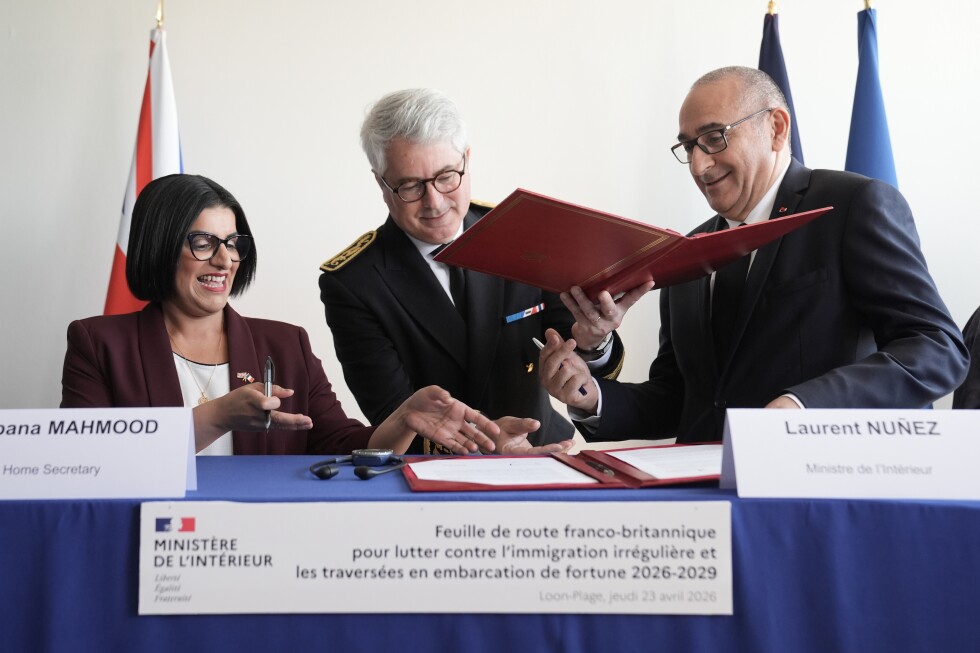
The UK and French governments signed a significant three-year agreement on Thursday aimed at drastically reducing the number of migrants crossing the English Channel in small boats. The deal, formalized during a joint visit to the Dunkirk region by UK Home Secretary Shabana Mahmood and French Interior Minister Laurent Nuñez, commits Britain to providing £500 million (€675 million) to strengthen border security measures along France’s northern coast.
Under the agreement, the UK will release an additional £160 million (€216 million) contingent on the success of new tactics. If these efforts fail to curb Channel crossings effectively, this supplementary funding could be halted after just one year, according to the UK Home Office.
“This agreement provides the right mix of skills and capabilities that we know will work on the beaches in order to reduce the crossings,” said Mahmood at the signing ceremony in Zuydcoote, France.
Nuñez emphasized the deal’s importance in “combating illegal immigration networks, human trafficking networks, which are obviously extremely harmful.”
The plan will significantly increase French police presence along the Channel coastline, expanding the current deployment from 907 officers to 1,392 by 2026-2029. France has also committed to creating an additional specialized police unit dedicated to combating irregular migration.
Technological enhancements form a crucial component of the strategy, with increased deployment of drones, helicopters, and electronic monitoring systems to better prevent crossing attempts. These tools are particularly aimed at intercepting “taxi boats” – vessels used by smugglers that typically set off largely empty from secluded coastal areas before picking up migrants at prearranged meeting points on beaches.
The agreement builds on the foundation established by the Sandhurst Treaty, first signed in 2018 and renewed in 2023, but represents a substantial financial escalation in the bilateral effort to manage migration.
UK Prime Minister Keir Starmer defended the investment, stating: “Our work with the French has already stopped tens of thousands of crossings and this government has deported or returned nearly 60,000 people with no right to be here.”
Since taking office nearly two years ago, Starmer’s Labour government has implemented a series of measures intended to sharply reduce immigration – an issue that has become politically explosive in the UK. Public anger over Channel crossings has fueled demonstrations, occasional riots, and boosted support for the hard-right Reform UK party, which has been gaining in opinion polls over the past year.
Recent government policies have expanded powers to seize assets from people smugglers, enhanced UK border surveillance, and increased international law enforcement cooperation to disrupt migrant journeys.
Early data suggests these policies may be having some impact. So far this year, just over 6,000 migrants have reached the UK via Channel crossings – a 36% decrease compared to the same period last year. However, experts caution this reduction may partly reflect unusually poor weather conditions.
The true test will come in the warmer summer months when Channel conditions typically improve. In 2023, a total of 41,472 people made the crossing, marking the second-highest annual figure since record-keeping began in 2018, following a peak of 45,755 in 2022.
French authorities report that enhanced police operations led to the arrest of 480 smugglers last year. A significant portion of resources from the new deal will be deployed starting this summer.
Nicolas Laroye, a police union representative in the Dunkirk region, welcomed the additional staffing and resources, noting the complexity of monitoring over 200 kilometers of coastline. “We’re intercepting many people before they go on the beaches to prevent them from getting on boats,” Laroye explained, adding that drones have become essential for monitoring the vast stretches of sand dunes where migrants often hide overnight.
The agreement comes amid continuing tragedies in the Channel. Earlier this month, four people died attempting to board an inflatable boat off northern France, leading British authorities to arrest a Sudanese man on suspicion of endangering life. The previous week saw two additional fatalities in similar circumstances near Calais.
Humanitarian organizations remain skeptical about the approach. “Policing alone will not prevent desperate people from turning to dangerous small boats in the first place,” warned Imran Hussain from the UK’s Refugee Council.
Migrant advocacy groups have long argued that aggressive policing tactics, such as puncturing inflatable boats on beaches, may inadvertently encourage the use of more dangerous “taxi boat” operations, increasing risks of drownings and injuries. According to aid group Utopia 56, at least 162 people have died at the French-UK border over the past three years.
Fact Checker
Verify the accuracy of this article using The Disinformation Commission analysis and real-time sources.

7 Comments
Curbing human trafficking and protecting vulnerable migrants are noble goals. However, the £500 million price tag raises questions about the cost-effectiveness of this approach. I’m curious to see the metrics used to evaluate the initiative’s impact.
A pragmatic approach to address this complex issue. Curbing illegal crossings and human trafficking networks in the Channel is a challenging yet necessary task. Strengthened security and intelligence-sharing between UK and France could yield positive results.
This agreement represents a significant investment to address a pressing humanitarian and security challenge. While the financial commitment is sizable, it’s heartening to see the UK and France working together to find a solution to this complex issue.
While the financial commitment is substantial, it’s encouraging to see the UK and France collaborating to tackle this problem. Effective border security, combined with efforts to disrupt smuggling operations, may help reduce the dangerous Channel crossings.
Agreed. A comprehensive, bilateral approach is needed to address this humanitarian crisis in a humane yet practical manner.
This agreement seems like a practical first step, but the true test will be its long-term impact on reducing illegal Channel crossings. Continued monitoring and adjustment of tactics will be crucial to its success.
You raise a fair point. Sustained commitment and flexibility to adapt the strategy as needed will be key to achieving the desired outcomes.