


Listen to the article
Estonia Seeks to Deepen Ties with Vietnam Through Digital Cooperation
Estonian Foreign Minister Margus Tsahkna met with Vietnamese Prime Minister Le Minh Hung in Hanoi on Wednesday, emphasizing his country’s commitment to strengthening bilateral relations in trade, technology, and digital transformation.
The diplomatic engagement comes as relations between the two nations have gained momentum in recent years, culminating in digital cooperation agreements signed in 2025. Despite Estonia’s relatively small economic footprint—accounting for just 0.2% of the European Union’s GDP—the Baltic nation has established itself as a leader in digital governance and e-services innovation.
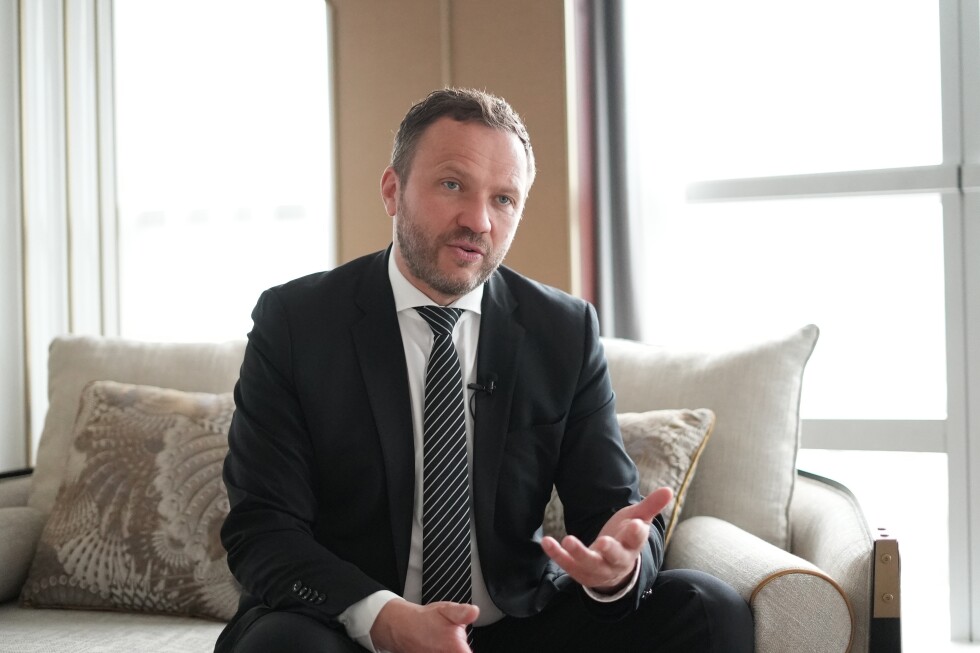
“For us, Vietnam is one of the priority countries in the region,” Tsahkna told The Associated Press in Hanoi, highlighting the strategic importance of the Southeast Asian nation in Estonia’s foreign policy.
Estonia’s expertise in digital governance could prove valuable to Vietnam, which has set ambitious targets to achieve high-income economic status by 2045. The Estonian model of digital public services could help Vietnam streamline bureaucratic processes, enhance transparency, and reduce administrative costs, according to Tsahkna.
“It is much more quicker for citizens to be part of public sector services,” the Estonian minister noted, pointing to the efficiency gains that digital transformation could bring to Vietnam’s public administration system.
During the meeting, Prime Minister Hung requested Estonia’s support in persuading the European Union to ratify an Investment Protection Agreement with Vietnam, according to state media reports. The Vietnamese leader also sought Estonia’s assistance in lifting the European Commission’s “yellow card” restriction on Vietnamese seafood exports, which was imposed due to concerns about illegal fishing practices.
The seafood export restrictions have been particularly significant for Vietnam, which ranks among the world’s largest seafood exporters, with the European market representing a crucial destination for its products. Removal of the yellow card would substantially boost Vietnam’s fishing industry, which employs millions of people along its extensive coastline.
Tsahkna proposed a mutually beneficial economic relationship, suggesting that Estonia could serve as a gateway for Vietnamese businesses entering European markets, while Vietnam offers Estonia expanded market access and a strategic foothold in the rapidly growing Southeast Asian region.
The Estonian foreign minister also used the diplomatic engagement as an opportunity to convey Europe’s perspective on Russia, which Estonia views as an “existential threat.” This aspect of the discussions touches on complex geopolitical dynamics, as Vietnam has maintained longstanding diplomatic relations with Russia since 1950 and has adopted a neutral stance regarding the war in Ukraine, advocating for peace without directly criticizing Russian actions.
Vietnam’s balanced approach reflects its historical ties with Russia and its strategic policy of maintaining relations with all major powers while avoiding alignment with any single nation—a position that has characterized Vietnamese foreign policy since its economic reforms began in the 1980s.
Tsahkna acknowledged that Estonia’s increased outreach to Vietnam and Southeast Asia is driven by both geopolitical considerations and economic opportunities. He cited growing concerns in Europe about U.S. President Donald Trump’s criticism of European defense spending and ongoing tariff tensions as factors compelling European nations to diversify their international partnerships and seek new economic connections beyond traditional allies.
The Estonia-Vietnam relationship represents a growing trend of smaller European nations building targeted partnerships with key Asian economies, recognizing the region’s growing economic importance and seeking to establish their presence independent of larger EU initiatives.
Fact Checker
Verify the accuracy of this article using The Disinformation Commission analysis and real-time sources.

10 Comments
Diversifying economic partnerships is crucial, especially for smaller nations like Estonia. Exploring tech-focused ties with a rising power like Vietnam could open new doors for trade and investment opportunities.
Interesting to see Estonia and Vietnam exploring digital cooperation opportunities. As a tech leader, Estonia’s expertise in e-services and digital governance could be quite valuable for Vietnam’s development goals.
With Estonia’s leadership in digital governance and Vietnam’s rapid economic growth, this partnership seems well-positioned to drive innovation and efficiency across both countries. It will be interesting to see the practical outcomes of their collaboration.
It’s encouraging to see smaller nations like Estonia leveraging their strengths to forge strategic partnerships. Vietnam’s rapid growth makes it an attractive destination, and Estonia’s digital leadership could be a valuable asset in this collaboration.
As Estonia and Vietnam deepen their cooperation, I wonder if there are any plans to collaborate on emerging technologies like blockchain, AI, or renewable energy. Those could be promising areas to explore given both countries’ development priorities.
I’m curious to learn more about the specific digital cooperation agreements signed between Estonia and Vietnam. What areas of focus are they prioritizing, and how do they plan to share best practices and expertise?
Strengthening trade and tech ties between Estonia and Vietnam is an interesting development. As a small but digitally-advanced economy, Estonia’s experience could provide valuable insights for Vietnam’s modernization efforts.
Digital transformation is crucial for emerging economies like Vietnam to boost efficiency and transparency. Estonia’s digital model seems like a good fit to help Vietnam streamline processes and achieve its ambitious growth targets.
Given Vietnam’s push to become a high-income economy by 2045, leveraging Estonia’s e-governance know-how could be a smart move. Collaboration on digital infrastructure and public services seems like a win-win for both countries.
Vietnam’s ambition to become a high-income economy by 2045 is an admirable goal. Tapping into Estonia’s e-governance expertise could accelerate Vietnam’s digital transformation and help streamline public services.