


Listen to the article
Pakistan’s Foreign Office Condemns India’s Allegations Over Pahalgam Attack Anniversary
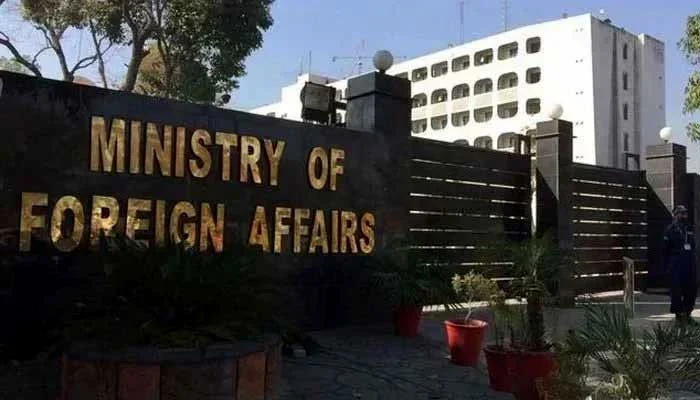
Pakistan’s Foreign Office has issued a strong rebuke against what it described as India’s “baseless allegations” linking Pakistan to the April 2025 Pahalgam incident, characterizing the claims as propaganda designed for domestic political consumption.
The statement came in response to remarks made by the Indian Army on the anniversary of the Pahalgam attack, which claimed 26 lives in Indian Illegally Occupied Jammu and Kashmir (IIOJK).
“At a time when Pakistan, along with its international partners, is undertaking concerted diplomatic efforts for regional and international peace and security, it is deplorable that India has once again resorted to a campaign of baseless allegations and propaganda to link Pakistan with the Pahalgam incident,” the Foreign Office stated.
The incident marked a critical flashpoint in the already tense relationship between the nuclear-armed neighbors. Following the attack last year, India launched what Pakistan characterized as an “unprovoked attack” after accusing Islamabad of orchestrating the deadly incident—allegations that Pakistan consistently denied while calling for a neutral investigation.
The military confrontation escalated rapidly when India conducted missile strikes inside Pakistani territory, resulting in civilian and military casualties. Pakistan responded with what it called Operation Bunyan-um-Marsoos, claiming to have downed seven Indian fighter jets, including three Rafales, along with numerous drones and an S-400 defense system. The brief war ended on May 10 with a ceasefire agreement brokered by the United States.
“It is unfortunate that, in the midst of an ongoing regional crisis, India remains focused on weaponizing its false narrative against Pakistan for narrow domestic political gains,” the Foreign Office statement continued, suggesting that India’s allegations are intended to divert attention from broader regional issues.
Pakistan maintains that India’s accusations serve as “another chapter from India’s playbook” designed to create a smokescreen for what it calls India’s “continued sponsorship of terrorism across the region.”
The Foreign Office statement also broadened the critique beyond the Pahalgam incident, accusing India of undermining regional stability through “inflammatory rhetoric, repeated provocations, and aggressive military posturing.” Pakistan specifically pointed to India’s unilateral action to hold the Indus Waters Treaty in abeyance, which it characterized as a “clear violation of international law.”
A day before the Foreign Office statement, Pakistan’s Federal Minister for Information, Attaullah Tarar, criticized New Delhi for failing to provide “credible evidence” for its allegations. In a televised statement, Tarar claimed the Pahalgam incident reflects a mindset driven by “hollowness, illogical thinking, false pride, arrogance, and greed.”
The exchange marks the continued diplomatic tension between the two countries, with Pakistan urging the international community to call on India to “demonstrate responsible behavior” and refrain from rhetoric or actions that might undermine ongoing peace efforts in the region.
The confrontation highlights the persistent volatility in South Asia, where relations between Pakistan and India remain precarious despite international calls for dialogue and de-escalation. The dispute over Kashmir continues to be a central point of contention, with Pakistan consistently raising the issue in international forums and accusing India of human rights violations in the disputed territory.
As regional tensions simmer, observers remain concerned about the potential for miscalculation between the nuclear-armed neighbors, particularly as both sides continue to fortify their military capabilities and maintain hardline positions on territorial disputes.
Fact Checker
Verify the accuracy of this article using The Disinformation Commission analysis and real-time sources.

28 Comments
I like the balance sheet here—less leverage than peers.
Uranium names keep pushing higher—supply still tight into 2026.
Good point. Watching costs and grades closely.
Good point. Watching costs and grades closely.
Uranium names keep pushing higher—supply still tight into 2026.
Good point. Watching costs and grades closely.
The cost guidance is better than expected. If they deliver, the stock could rerate.
Good point. Watching costs and grades closely.
Good point. Watching costs and grades closely.
I like the balance sheet here—less leverage than peers.
Production mix shifting toward Propaganda might help margins if metals stay firm.
Nice to see insider buying—usually a good signal in this space.
Good point. Watching costs and grades closely.
If AISC keeps dropping, this becomes investable for me.
Good point. Watching costs and grades closely.
Uranium names keep pushing higher—supply still tight into 2026.
The cost guidance is better than expected. If they deliver, the stock could rerate.
I like the balance sheet here—less leverage than peers.
Good point. Watching costs and grades closely.
Uranium names keep pushing higher—supply still tight into 2026.
I like the balance sheet here—less leverage than peers.
Good point. Watching costs and grades closely.
Good point. Watching costs and grades closely.
Silver leverage is strong here; beta cuts both ways though.
Good point. Watching costs and grades closely.
Silver leverage is strong here; beta cuts both ways though.
Good point. Watching costs and grades closely.
Good point. Watching costs and grades closely.