


Listen to the article
Syrian Government Announces Ceasefire in Aleppo Amid Ongoing Kurdish Conflict
Syria’s Defense Ministry declared a ceasefire Friday following three days of intense fighting between government forces and Kurdish fighters in Aleppo that displaced over 140,000 people. Despite the announcement, violence resumed by evening, complicating efforts to stabilize the volatile northern city.
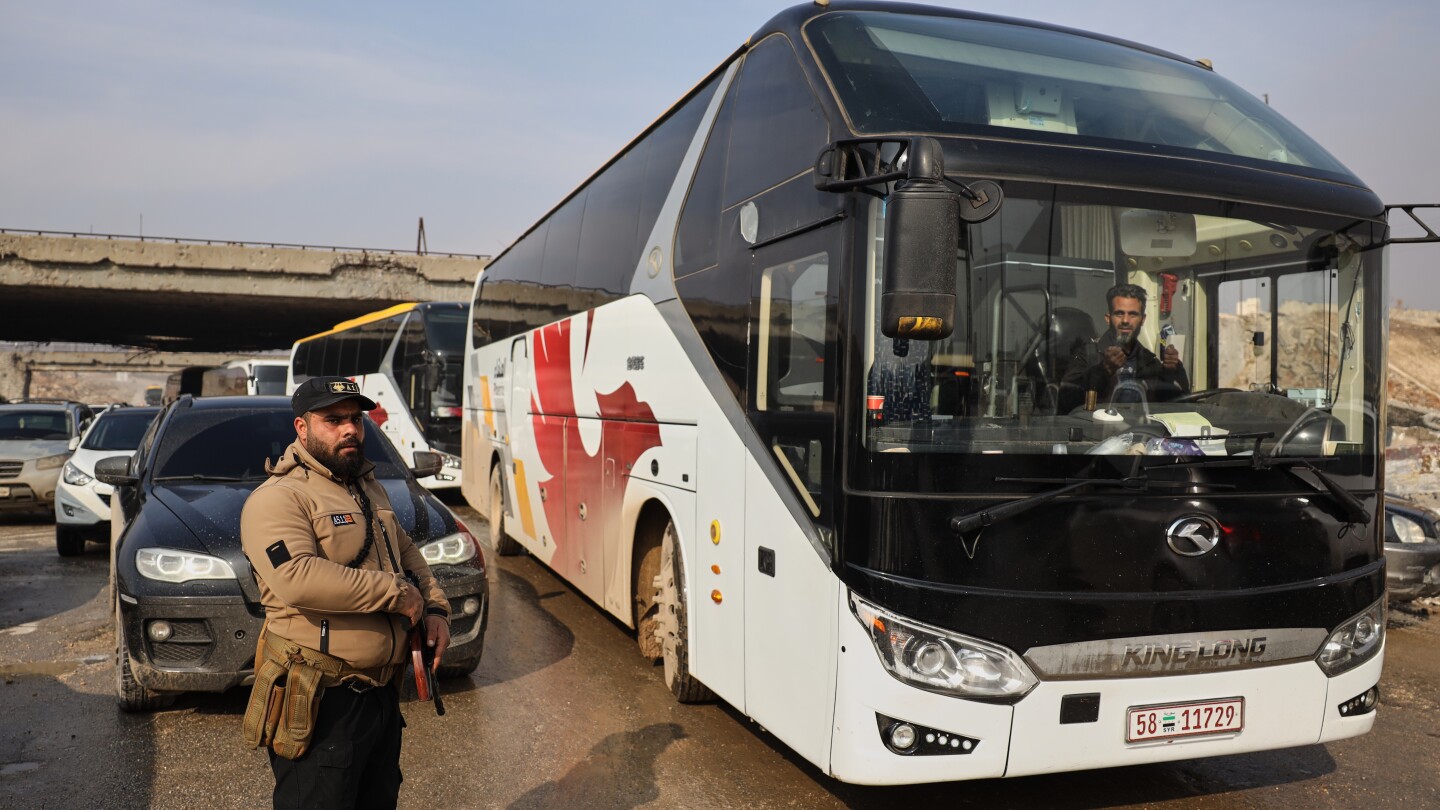
The ceasefire, which officially began at 3 a.m., applied to three contested neighborhoods: Sheikh Maqsoud, Achrafieh, and Bani Zaid. Government officials gave armed Kurdish groups a six-hour window to evacuate these areas, allowing them to carry “personal light weapons” and offering military escorts to Syria’s Kurdish-controlled northeast.
However, the evacuation deadline passed with no fighters departing. Buses that arrived to transport militants remained empty, and sporadic gunfire briefly interrupted the relative calm. By evening, the Syrian army declared Sheikh Maqsoud a “closed military zone” and announced a “clearing operation,” signaling a breakdown in the fragile agreement.
A local council representing Sheikh Maqsoud and Achrafieh rejected the evacuation demands in a public statement, declaring, “We will not accept the pressures imposed on us and the calls for surrender. We do not trust the Damascus government to entrust our security to us, and we have decided to remain in our neighborhoods and defend them.”
U.S. Special Envoy to Syria Tom Barrack welcomed the initial ceasefire, expressing “profound gratitude to all parties” for their restraint. The U.S. was reportedly working to extend the agreement beyond the brief six-hour window. President Donald Trump later told Kurdish broadcaster Rudaw that he wanted to see peace between the warring factions, noting that while Kurds and the Syrian government have been “natural enemies over the years,” the U.S. maintains relations with both sides.
The humanitarian toll of the conflict has been severe. An estimated 142,000 people fled their homes since fighting erupted Tuesday with exchanges of artillery fire and drone strikes. Kurdish forces reported at least 12 civilians killed in Kurdish-majority neighborhoods, while government officials counted nine civilian deaths in surrounding government-controlled areas. Dozens more have been wounded on both sides, with military casualties still unclear.
Local residents expressed cautious hope for peace but remained skeptical. Ahmed Hajjar, a tailor in Achrafieh, called the ceasefire announcement “a good step” but demanded the removal of army checkpoints that have strangled commerce in the area. “I can’t work now, the workers aren’t able to come, and I can’t send any products outside,” he explained. “If I want to bring in textiles I get stuck at the checkpoint for an hour and a half or two or three hours.”
Both sides quickly accused each other of violating the agreement. The Syrian military claimed the SDF targeted evacuation buses three times, shelled army positions, and attacked soldiers, resulting in three military deaths and twelve injuries. Meanwhile, the SDF-affiliated Internal Security Forces reported that government forces struck a hospital in Sheikh Maqsoud where civilians had sought refuge, rendering it inoperable.
The renewed violence in Aleppo highlights the complexities of Syria’s fragmented political landscape. The Kurdish-led Syrian Democratic Forces (SDF) controls much of the country’s northeast and has long served as America’s primary partner in fighting Islamic State militants. However, Turkey considers the SDF a terrorist organization due to its ties with the Kurdistan Workers’ Party (PKK), which has waged a decades-long insurgency in Turkey.
Further complicating matters, Syria’s interim President Ahmad al-Sharaa signed an agreement in March last year requiring the SDF to merge with the Syrian army by the end of 2025. Implementation of this deal has stalled amid disagreements over its terms. Some factions within Syria’s newly formed army were previously Turkey-backed insurgent groups with a history of clashing with Kurdish forces.
As diplomatic efforts continue, President al-Sharaa spoke by phone Friday with Masoud Barzani, head of the Kurdistan Democratic Party in neighboring Iraq. Though the KDP has traditionally maintained good relations with Turkey and opposed groups aligned with the PKK, recent months have seen attempts to mend these divisions amid the broader regional instability.
Fact Checker
Verify the accuracy of this article using The Disinformation Commission analysis and real-time sources.

14 Comments
It’s concerning to see the ceasefire unravel so quickly, highlighting the fragile nature of any de-escalation efforts in this long-running conflict. The competing agendas and distrust between the Syrian government and Kurdish forces seem deeply entrenched.
You’re right, the breakdown of this ceasefire so soon after it was announced demonstrates the immense challenges in achieving a lasting peace. The underlying tensions and lack of trust between the parties involved are formidable obstacles to overcome.
The failure to evacuate Kurdish fighters as per the ceasefire terms raises questions about the sincerity of the parties involved and their commitment to a peaceful resolution. Overcoming such deep-seated distrust will be crucial for any future negotiations to succeed.
Absolutely. The lack of follow-through on the evacuation plans casts doubt on the broader ceasefire agreement and the good faith of the negotiating parties. Rebuilding trust will be an essential, yet immensely difficult, task going forward.
The Kurdish forces’ refusal to evacuate the contested neighborhoods despite the ceasefire terms suggests an unwillingness to compromise. This intransigence could prolong the clashes and disrupt any prospects for a durable peace agreement.
You raise a fair point. The Kurds may feel their territorial control is critical to their autonomy and security, making them reluctant to concede ground even in the face of a ceasefire. Resolving these competing claims will be a significant challenge.
This situation in Aleppo is a stark reminder of the ongoing instability and violence that continues to plague Syria, even as the broader civil war appears to be winding down in some areas. The Kurdish-Syrian government tensions remain a persistent source of conflict that will require careful diplomacy to address.
Well said. The Aleppo clashes underscore that the Syrian conflict is far from over, with the Kurdish issue remaining a volatile flashpoint. Resolving this will require nuanced negotiations and a willingness to compromise from all sides, which has proven elusive so far.
The Syrian government’s declaration of a “closed military zone” and “clearing operation” in Sheikh Maqsoud suggests they are prepared to use force to assert control over the contested areas. This could lead to further escalation and violence, undermining any progress made.
That’s a concerning development. The government’s hardline stance and willingness to resort to military force risks sabotaging any negotiated settlement and heightening the suffering of civilians caught in the crossfire.
The displacement of over 140,000 people due to this latest flare-up is a tragic humanitarian toll. Ensuring the safety and well-being of civilians caught in the crossfire should be a top priority for all parties involved.
Absolutely. The human suffering caused by these clashes is heartbreaking. Protecting civilian lives and providing aid to the displaced must be an immediate concern, regardless of the political dynamics at play.
This latest ceasefire breakdown between Syrian forces and Kurds is troubling. The volatile situation in Aleppo highlights the complexities of the ongoing conflict and the fragility of any political resolutions. It will be crucial to monitor the situation closely for further developments.
Agreed, the constant cycle of ceasefires and renewed violence is deeply concerning. A lasting political solution seems elusive amidst the competing interests and deep-seated tensions in the region.