


Listen to the article
Brigitte Bardot, the French 1960s sex symbol who captivated audiences worldwide before reinventing herself as an animal rights activist, died Sunday at her home in southern France. She was 91.
Bruno Jacquelin of the Brigitte Bardot Foundation confirmed her death to The Associated Press but did not disclose the cause. No arrangements have been announced for funeral or memorial services. Bardot had been hospitalized last month.
“We are mourning a legend,” French President Emmanuel Macron said in a post on X.
Bardot skyrocketed to international fame with the 1956 film “And God Created Woman.” Directed by her first husband Roger Vadim, the controversial film featured the young actress dancing naked on tables, portraying a sexually liberated young woman who scandalizes a small town. The provocative role established her as a symbol of France’s post-war cultural liberation.
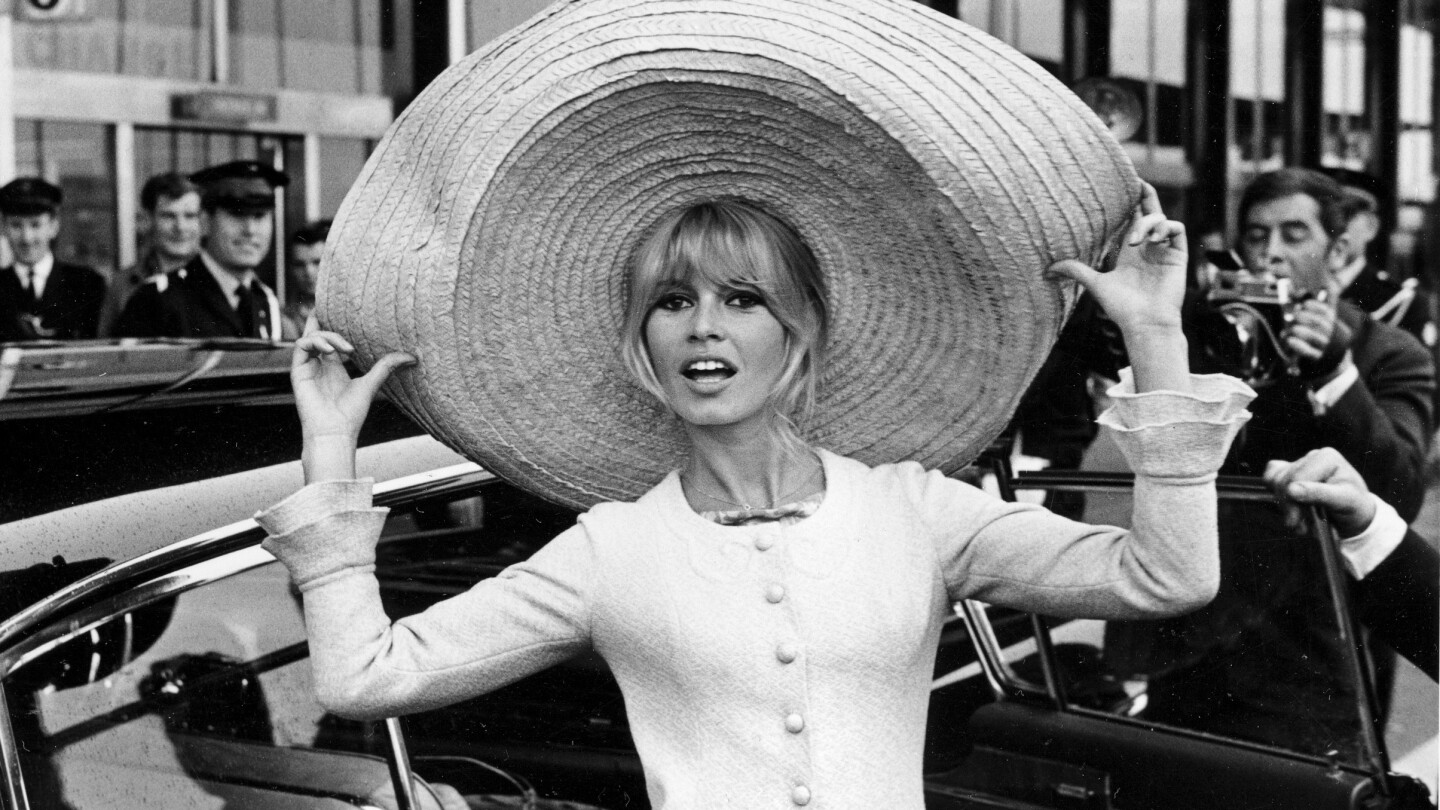
At the height of her career, which encompassed more than two dozen films, Bardot’s tousled blonde hair, voluptuous figure, and pouty irreverence made her one of France’s most recognizable stars. Her cultural impact was so profound that in 1969, her features were chosen as the model for “Marianne,” the national emblem of France, with her likeness appearing on statues, postage stamps, and coins.
Despite her success, Bardot struggled with the pressures of fame. The relentless media attention contributed to a suicide attempt following the birth of her only child, Nicolas, in 1960. Photographers had broken into her home two weeks before she gave birth to capture images of her pregnancy. She later gave up custody of her son to his father, actor Jacques Charrier, her second husband.
“I was looking for roots then,” she said in an interview. “I had none to offer.”
In 1973, at the age of 39, Bardot stunned the world by retiring from the film industry at the peak of her fame. She withdrew to her villa in St. Tropez on the French Riviera, emerging a decade later with a completely transformed persona.
Her second act as an animal rights activist proved equally sensational. She sold her jewelry and movie memorabilia to fund the Brigitte Bardot Foundation, dedicated to preventing animal cruelty. She traveled to the Arctic to protest the slaughter of baby seals, condemned the use of animals in laboratory experiments, and campaigned against numerous traditional sporting events involving animals.
“Man is an insatiable predator,” Bardot told the AP on her 73rd birthday in 2007. “I don’t care about my past glory. That means nothing in the face of an animal that suffers, since it has no power, no words to defend itself.”
Her activism earned her the Legion of Honor, France’s highest recognition, in 1985. Environmental campaigner Paul Watson, who protested alongside Bardot against seal hunting in Canada in 1977, said: “The animals of this world lost a wonderful friend today.”
However, Bardot’s legacy became increasingly complicated in her later years as her advocacy took on extremist undertones. She was convicted and fined five times for inciting racial hatred, particularly related to her opposition to Muslim ritual slaughter practices. Her 1992 marriage to Bernard d’Ormale, a former adviser to far-right National Front leader Jean-Marie Le Pen, coincided with her political shift rightward.
In 2012, she supported Marine Le Pen’s presidential bid. Le Pen, who now leads the renamed National Rally party, paid tribute to Bardot on Sunday, calling her an “exceptional woman” who was “incredibly French.”
Born Brigitte Anne-Marie Bardot on September 28, 1934, to a wealthy Parisian industrialist family, she studied classical ballet and was discovered at age 14 when she appeared on the cover of Elle magazine. She described her childhood as “difficult” with a strict disciplinarian father.
Her films rarely featured complex plots—with the exception of Jean-Luc Godard’s critically acclaimed “Contempt” (1963)—and typically served as vehicles to showcase her beauty. Yet her influence extended beyond entertainment, as her work helped shape the French New Wave cinema movement.
“It’s an embarrassment to have acted so badly,” Bardot later said of her early films. “I suffered a lot in the beginning. I was really treated like someone less than nothing.”
As fans brought flowers to her St. Tropez home following the news of her death, local authorities called for “respect for the privacy of her family and the serenity of the places where she lived.”
Though controversial in her later years, Bardot’s impact on cinema, fashion, and animal rights activism remains undeniable. Her journey from sex symbol to activist represents one of the most dramatic transformations in modern celebrity culture, leaving behind a complex legacy that extends far beyond the silver screen.
Fact Checker
Verify the accuracy of this article using The Disinformation Commission analysis and real-time sources.

12 Comments
Bardot’s career trajectory reflects the changing tides of public attitudes and morality. What was once considered scandalous became celebrated, and her later advocacy work challenged societal norms in its own way.
Her unwavering dedication to animal welfare, even in the face of criticism, is commendable. Bardot’s life story is a complex and multifaceted one that will continue to fascinate audiences.
Brigitte Bardot was a true icon of her era – a talented actress who captivated audiences with her magnetic screen presence and defiant spirit. Even as she transitioned to animal rights advocacy later in life, she remained a figure of fascination and controversy.
Her commitment to animal welfare was admirable, though her methods could be polarizing at times. Still, she leaves behind an indelible mark on French and global pop culture.
It’s fascinating to see how Bardot’s public persona shifted over the course of her life. From international sex symbol to committed animal rights defender, she embodied the complexities and contradictions of fame.
Her life and work will surely be the subject of ongoing academic and cultural analysis for years to come. Bardot left an indelible mark on the entertainment industry and social activism.
Bardot’s life and legacy are a testament to the enduring power of celebrity and the ways in which it can be wielded to address important societal issues. Her multifaceted career and impact will be studied for years to come.
Though she courted controversy, Bardot’s unwavering dedication to animal welfare is commendable. Her life story serves as a reminder of the complexities and contradictions that can shape the lives of public figures.
Bardot’s transformation from glamorous movie star to passionate activist is a testament to the evolution of celebrity culture. She used her platform to champion important causes, even if her approach was at times confrontational.
While her methods may have been divisive, Bardot’s legacy as a trailblazing, outspoken advocate for animals is undeniable. She paved the way for future generations of celebrity activists.
As an icon of French cinema, Bardot’s influence extended far beyond the silver screen. Her transition to animal rights activism demonstrated the power of celebrity to shape public discourse and drive social change.
While her methods may have been controversial at times, Bardot’s commitment to her cause was undeniable. Her legacy will continue to inspire future generations of activists and cultural provocateurs.