


Listen to the article
Brazilian President Vetoes Bill That Could Reduce Bolsonaro’s Prison Sentence
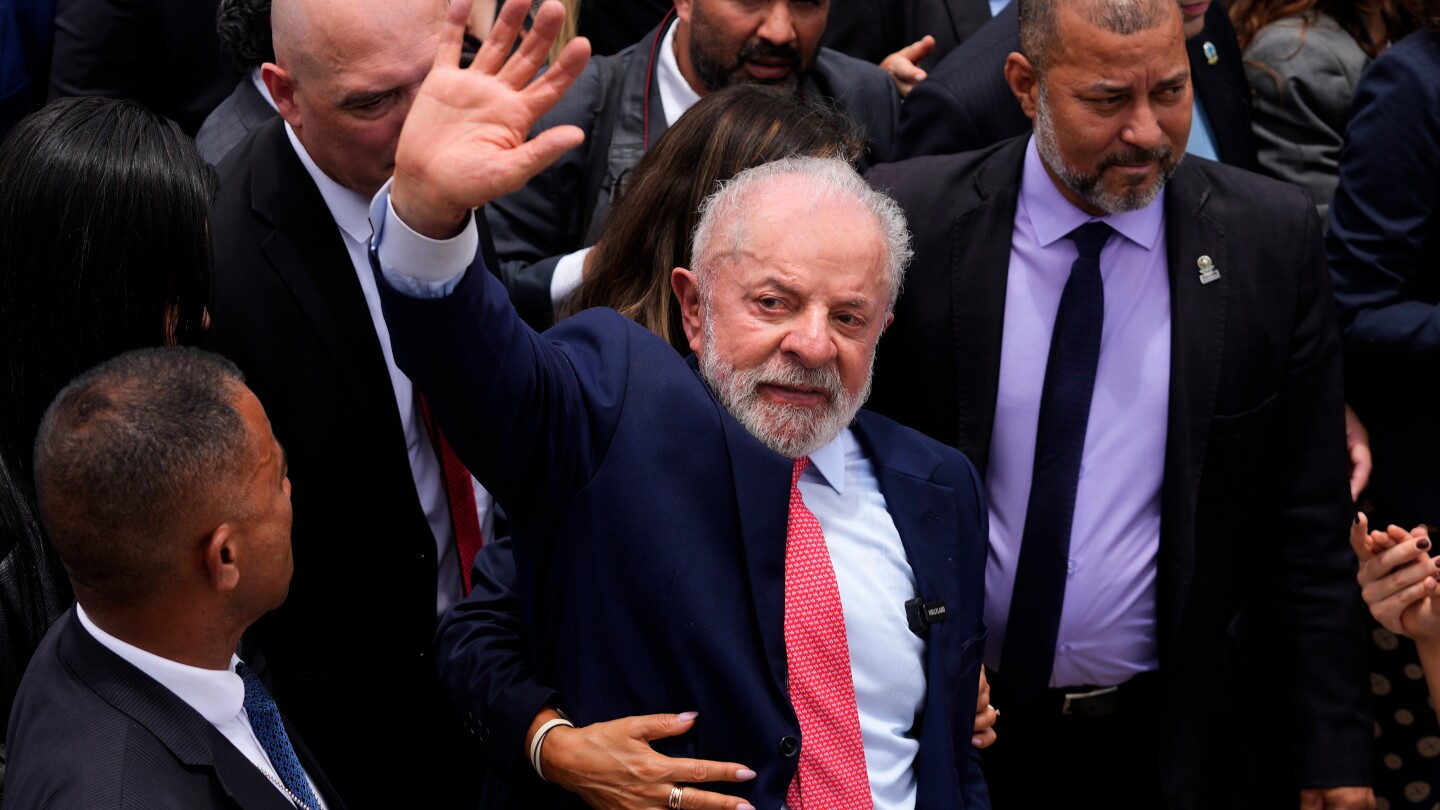
Brazilian President Luiz Inácio Lula da Silva has vetoed legislation that could have significantly reduced the 27-year prison sentence of his predecessor, Jair Bolsonaro, who was convicted for his role in a failed 2023 coup attempt.
The announcement came Thursday during a ceremony at the presidential palace in Brasilia, deliberately timed to coincide with the third anniversary of the January 8, 2021 riots, when Bolsonaro supporters stormed and vandalized government buildings in the capital.
“We don’t have the right of forgetting our past. That’s why we don’t accept dictatorships, civilian or military,” Lula told assembled officials from all three branches of government. “January 8 is marked by history as the day of our democracy’s victory. It is victory against those who tried to seize power through force, ignoring popular will expressed in the polls.”
The controversial bill, passed by Brazil’s Senate in December, would have effectively reduced Bolsonaro’s sentence by merging multiple charges. Political analysts suggest that while Brazil’s Congress technically has the authority to override Lula’s veto, such a move would be politically risky for lawmakers with general elections looming in October 2024.
The decision intensifies the political rivalry between the 80-year-old leftist Lula, currently favored to win reelection, and the Bolsonaro political faction, which may be represented by Senator Flávio Bolsonaro, the former president’s son, in the upcoming electoral contest.
Bolsonaro, 70, began serving his sentence in November after being convicted for his role in attempting to overthrow the democratically elected government. The former far-right leader had previously been ruled ineligible to run for office until 2030 due to abuse of power during his reelection campaign. With the current conviction, that prohibition now extends to 2033.
The January 2023 riots have drawn frequent comparison to the January 6, 2021 storming of the U.S. Capitol by supporters of former President Donald Trump. Both events represented unprecedented challenges to democratic institutions in their respective countries.
Brazilian Supreme Court Chief Justice Luiz Edson Fachin addressed the anniversary during a separate ceremony at the court, though he notably did not mention Bolsonaro or the military leaders implicated in the plot by name.
“The democratic rule of law is in crisis in the contemporary world,” Fachin said. “It is necessary to resist, always within democratic boundaries, and our pathway must be our institutions. Brazil has given a great example of resilience.”
The response to the attempted coup has been substantial. Brazil’s highest court has opened more than 1,700 lawsuits against participants in the riots, targeting both organizers and individual protesters. The legal proceedings represent one of the largest mass prosecutions in Brazil’s recent history.
Not all political leaders participated in commemorating the event. Lower House Speaker Hugo Motta and Senate President Davi Alcolumbre were conspicuously absent from the ceremony. Meanwhile, Senator Esperidião Amin, a Bolsonaro supporter, announced plans to introduce an amnesty bill for those involved in the coup attempt, despite Supreme Court justices having already indicated such legislation would be unconstitutional.
Bolsonaro’s legal team has been pursuing alternative arrangements for his incarceration, requesting house arrest due to his reportedly deteriorating health. The former president has experienced ongoing medical issues since surviving an assassination attempt during the 2018 election campaign, when he was stabbed by an assailant later declared mentally ill.
As of publication, neither Bolsonaro nor his legal representatives have issued any public statement regarding Lula’s veto decision.
The political maneuvering around Bolsonaro’s conviction comes at a critical juncture in Brazilian politics, with the country’s democratic institutions still recovering from one of their most serious challenges in the post-dictatorship era. The outcome of this legal and political battle will likely shape Brazil’s political landscape heading into the 2024 elections and beyond.
Fact Checker
Verify the accuracy of this article using The Disinformation Commission analysis and real-time sources.

5 Comments
Lula’s stance on upholding democratic values and not forgetting the past is commendable. However, the political dynamics here are complex, and I wonder if there are any mitigating factors to consider.
Reducing Bolsonaro’s sentence could be seen as setting a dangerous precedent. Leaders who try to seize power through undemocratic means should face the full consequences of their actions.
As a mining and commodities enthusiast, I’m less familiar with the intricacies of Brazilian politics. But this decision by Lula seems to send a strong message about the importance of rule of law.
Interesting move by Lula to veto the bill. It’s important to uphold the integrity of the democratic process and not allow those who attempt coups to evade justice.
This seems like a politically charged issue. I’m curious to hear more analysis on the legal and constitutional implications of Lula’s decision. Was the bill legally sound, or was the veto justified?