


Listen to the article
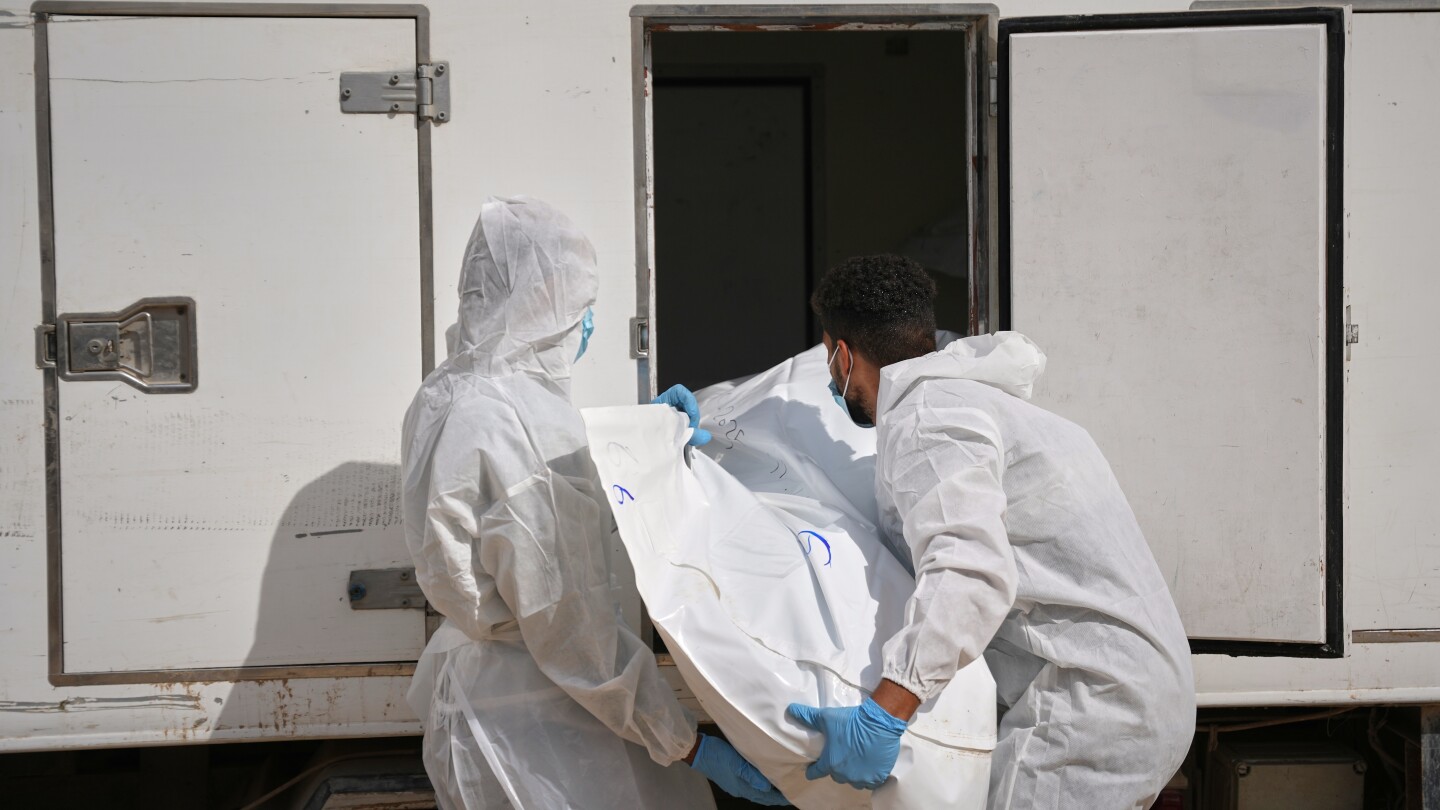
Israel returned the bodies of 15 Palestinians to Gaza on Friday as part of the ongoing U.S.-brokered ceasefire agreement, according to officials at Nasser hospital in Khan Younis. This exchange follows militants’ handover of one of the last remaining Israeli hostages’ bodies taken during the October 7, 2023 attack.
Israeli authorities identified the returned remains as those of Meny Godard, who was abducted from Kibbutz Be’eri in southern Israel. Godard’s wife, Ayelet, was killed during the initial Hamas attack. The armed wings of Hamas and Palestinian Islamic Jihad reported recovering Godard’s body in southern Gaza.
Since the ceasefire began on October 10, the remains of 25 hostages have been returned to Israel, with three more still needing recovery and transfer. Hamas also returned 20 living hostages on October 13 in an earlier phase of the agreement.
The ceasefire’s first phase includes a critical exchange mechanism: for each hostage returned, Israel releases the remains of 15 Palestinians. So far, 330 Palestinian bodies have been returned, though Gaza Health Ministry officials report only 95 have been formally identified.
On Friday, 27 additional unidentified Palestinians were buried in Deir al-Balah, bringing the total number of unidentified Palestinians interred to 182, according to Gaza’s Health Ministry. Officials cite a significant challenge in identification efforts due to insufficient DNA testing equipment.
Despite the ongoing exchanges, tensions remain high as both sides accuse each other of violating various terms of the agreement. Israel has claimed Hamas has handed over partial remains in some cases and staged body discoveries in others. Meanwhile, Hamas alleges Israel has opened fire on civilians and restricted humanitarian aid flow into Gaza.
In a parallel development, UN Human Rights Chief Volker Türk condemned the recent surge in Israeli settler violence against Palestinians in the West Bank. Spokesperson Thameen Al-Kheetan reported that October saw more than 260 attacks by Israeli settlers against Palestinians – the highest monthly total since 2006.
“We reiterate that the Israeli government’s assertion of sovereignty over the occupied West Bank and its annexation of parts of it are in breach of international law, as the International Court of Justice has confirmed,” Al-Kheetan stated.
Recent incidents include Israeli settlers torching and defacing a mosque in a central West Bank Palestinian village on Thursday. This followed earlier violence where masked settlers set fire to vehicles and property in the Palestinian villages of Beit Lid and Deir Sharaf.
The escalation prompted Israeli President Isaac Herzog to denounce the attacks as “shocking and serious,” while Israeli Army Chief of Staff Lt. Gen. Eyal Zamir insisted the military “will not tolerate the phenomena of a minority of criminals who tarnish a law-abiding public.”
U.S. Secretary of State Marco Rubio expressed concern on Wednesday that West Bank violence “could undermine what we’re doing in Gaza.” While Israeli officials characterize settler violence as isolated extremism, Palestinians and rights groups argue the attacks are widespread and conducted with impunity under Prime Minister Benjamin Netanyahu’s far-right government.
Adding to regional tensions, the Palestinian Health Ministry reported six teenagers aged 15-17 were killed by Israeli fire in four separate incidents over the past two weeks. The most recent incident on Thursday resulted in the deaths of two 15-year-old boys near Beit Ummar. The Israeli military claims in three cases, soldiers were responding to “terrorists” hurling explosives or Molotov cocktails, while in another incident, troops fired on rock-throwers according to “standard operating procedures.”
Looking ahead, the ceasefire agreement outlines next steps including the creation of an international stabilization force, formation of a technocratic Palestinian government, and Hamas disarmament. This fragile peace plan aims to wind down a conflict triggered by Hamas’s attack that killed approximately 1,200 people and took 251 hostages.
Israel’s subsequent military offensive has resulted in over 69,100 Palestinian deaths in Gaza, according to Gaza’s Health Ministry, which maintains detailed records considered generally reliable by independent observers despite being part of the Hamas-run government.
Fact Checker
Verify the accuracy of this article using The Disinformation Commission analysis and real-time sources.

10 Comments
This is a small but important step in the right direction. However, the larger geopolitical dynamics are highly complex, and achieving a sustainable peace will require significant compromises and concessions from all parties involved. Continued dialogue and international pressure will be crucial.
The return of the bodies is an important humanitarian gesture, but the broader political situation remains highly complex and volatile. Both sides must show restraint and a willingness to negotiate in good faith if any durable resolution is to be reached.
The ceasefire agreement seems to be holding, at least in this limited respect. However, the deeper issues driving the conflict remain unresolved. I hope this exchange can build momentum towards more substantive negotiations and a lasting political solution.
The return of the remains is a humanitarian gesture, but the broader political situation remains extremely fragile. I hope this exchange can pave the way for more comprehensive negotiations and a negotiated settlement that addresses the root causes of the conflict.
This exchange is a small step forward, but the overall situation remains deeply troubling. I hope the parties can build on this progress and find a path towards a comprehensive peace agreement that respects the rights and security concerns of all involved.
While the return of the remains is meaningful, the ongoing conflict has taken a tremendous human toll. Lasting peace will require difficult compromises and a shared commitment to protecting civilian lives on both sides. The international community should continue to press for a negotiated settlement.
This exchange is a positive development, but the conflict’s human toll has been devastating. Both sides must demonstrate a genuine commitment to finding a peaceful resolution that respects the rights and security concerns of all involved. Continued international mediation will be essential.
This is a somber exchange following the recent hostilities. While the return of the remains is an important step, the loss of life on both sides is deeply tragic. Efforts to resolve the conflict through diplomatic means and avoid further bloodshed should continue.
It’s positive to see the ceasefire agreement yielding some progress, but the human toll is still immense. I hope this exchange can build momentum towards a more lasting peace settlement that addresses the root causes of the conflict. Continued dialogue and compromise will be essential.
The identification and repatriation of the remains is critical for providing closure to the families. However, the larger geopolitical issues driving this conflict remain unresolved. Sustainable peace will require difficult compromises and a shared commitment to human rights on all sides.