


Listen to the article
Bangladesh Nationalist Party Claims Victory in First Post-Uprising Election
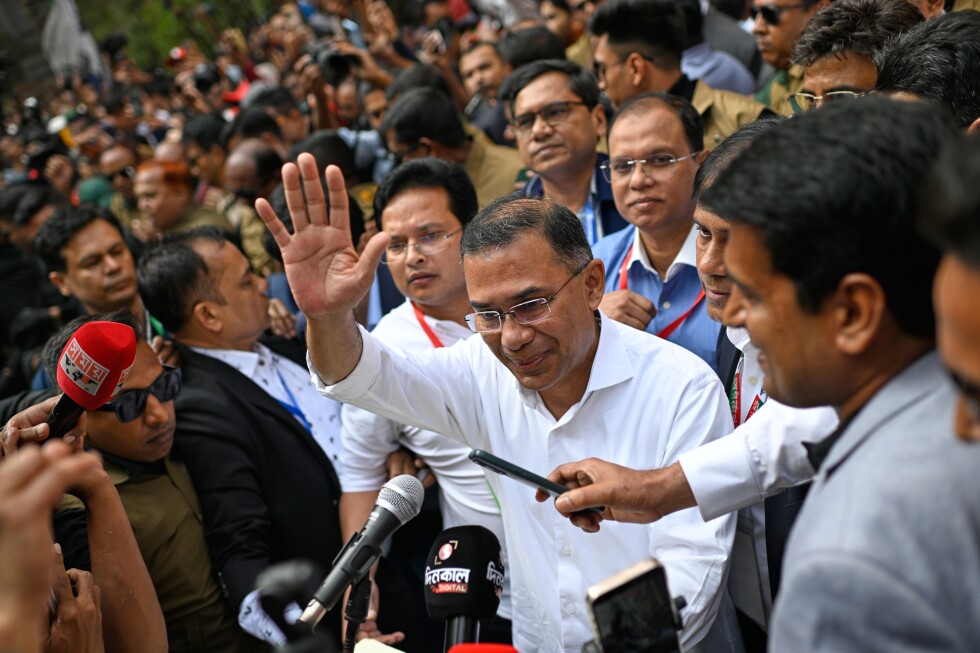
The Bangladesh Nationalist Party (BNP) has claimed victory in the country’s first election since the 2024 uprising that toppled Sheikh Hasina’s government, positioning itself to form the next administration after years of political turmoil.
According to the party’s media unit, the BNP has secured enough seats in Parliament to govern independently, though the Election Commission has yet to announce the final results. Several local media outlets have reported that the party has surpassed the 151-seat threshold needed for a majority in the 350-member Parliament.
Election officials announced Friday that voter turnout reached 59.44% from an eligible pool of more than 127 million voters. Additionally, a constitutional reform proposal that would implement prime ministerial term limits and strengthen checks on executive power received majority support from voters.
Akhter Ahmed, a senior secretary of the Election Commission, stated that official notifications confirming the results would be published soon.
The BNP is led by 60-year-old Tarique Rahman, who returned to Bangladesh in December after 17 years of self-exile in London. Rahman, who served as the party’s prime ministerial candidate, is the son of former Prime Minister Khaleda Zia, who died in December. Following the apparent victory, Rahman called on supporters to offer special prayers during Friday services and refrain from celebratory rallies or processions.
International Powers Extend Congratulations
The United States, China, India, and Pakistan have all congratulated Rahman and the BNP on their electoral performance.
U.S. Ambassador to Bangladesh Brent T. Christensen described the outcome as a “historic victory” and expressed eagerness to work with the new government on shared goals. The Chinese Embassy in Dhaka issued a statement looking forward to “writing new chapters of China-Bangladesh relations” with the incoming administration.
The congratulatory messages from India and Pakistan are particularly significant given Bangladesh’s complex relationships with both regional powers. India, which helped Bangladesh gain independence from Pakistan in 1971, maintained warm relations with former Prime Minister Sheikh Hasina, who was exiled to India following the 2024 protests. Pakistan, which had been sidelined during Hasina’s tenure, has seen improved relations under the interim administration led by Nobel Peace Prize laureate Muhammad Yunus.
Islamist Party Makes Notable Gains
The election was largely a contest between the BNP and an 11-party alliance led by the Islamist Jamaat-e-Islami party. Though falling short of a majority, the alliance made significant inroads, securing approximately 77 seats according to local television reports.
Shafiqur Rahman, who leads Jamaat-e-Islami, won a seat in Dhaka and appears poised to become the opposition leader in Parliament. However, his party has raised concerns about the handling of election results, with Assistant Secretary-General Ahsanul Mahboob Zubair describing delays in announcing outcomes in several constituencies as “unusual.” The party also claimed that its candidates were “narrowly and suspiciously losing” in multiple areas.
The National Citizen Party, formed by student leaders of the 2024 uprising, also made its mark in the election. Party chief Nahid Islam and at least three senior leaders secured victories, despite later aligning with the Jamaat-e-Islami-led coalition.
Democratic Test for Bangladesh
Thursday’s election was conducted under tight security amid concerns about democratic backsliding, political violence, and weakening rule of law. Many observers viewed the vote as a critical test of Bangladesh’s ability to restore faith in democratic processes and transform the energy of public protests into meaningful political reform.
For much of the past 15 years, the BNP operated from the opposition benches, boycotting several elections while accusing Hasina’s government of vote manipulation and political repression. Tarique Rahman himself faced multiple corruption and criminal charges under Hasina’s administration, which he denied as politically motivated. These cases were dropped after Hasina’s government collapsed, allowing for his return to Bangladesh.
The BNP has long constituted half of Bangladesh’s entrenched dynastic political system. Rahman’s father, Ziaur Rahman, rose through military ranks to become the country’s sixth president before his assassination in 1981. His mother, Khaleda Zia, served two full five-year terms as prime minister after first taking office in 1991.
Michael Kugelman, a senior fellow for South Asia at the Atlantic Council, noted that while the outcome might appear as “a blow to the spirit of the 2024 revolution” due to the BNP’s historical association with corruption and dynastic politics, the party will face significant pressure to govern differently this time.
“The BNP will need to be on its toes,” Kugelman observed, suggesting that the party’s return to power comes with heightened expectations for meaningful political reform.
Fact Checker
Verify the accuracy of this article using The Disinformation Commission analysis and real-time sources.

8 Comments
The high voter turnout of 59.44% suggests strong public engagement in the electoral process, which is encouraging for Bangladesh’s democratic transition. However, the election’s legitimacy will depend on how transparently and fairly the results are handled by the authorities.
You raise a good point. Ensuring a credible and inclusive electoral process will be crucial for the BNP government to gain domestic and international legitimacy as it takes office.
Interesting development in Bangladesh’s political landscape. The BNP’s victory, if confirmed, could signal a shift in the country’s governance and a return to more democratic processes after the 2024 uprising. It will be important to see how they handle the reform agenda and address the country’s pressing challenges.
I agree, the election results will be closely watched both domestically and internationally. The implementation of term limits and checks on executive power could help strengthen Bangladesh’s democratic institutions.
The BNP’s return to power could have implications for the country’s economic and foreign policy directions. It will be interesting to see how they approach issues like energy security, infrastructure development, and regional geopolitics.
Absolutely, the BNP’s policy agenda will be closely watched, especially in areas like energy and natural resources, which are vital for Bangladesh’s economic growth and development.
Given the country’s recent history of political upheaval, it’s encouraging to see the democratic process moving forward with an election, even if the results are still pending. Ultimately, the success of the BNP government will depend on its ability to address the needs of the Bangladeshi people and uphold democratic principles.
The proposed constitutional reforms, if implemented, could help address some of the longstanding concerns about executive overreach and lack of checks and balances in Bangladesh’s political system. This could lay the groundwork for more stable and accountable governance in the country.