


Listen to the article
A Bahraini political activist was sentenced to six months in prison and fined approximately $530 by a local court on Thursday for criticizing Arab states and advocating for increased Palestinian support during an interview in Beirut.
Ebrahim Sharif, a former leader of the secular, leftist Waad Party, faces his tenth legal challenge from Bahraini authorities since the kingdom’s 2011 Arab Spring protests, according to the Bahrain Institute for Rights and Democracy.
The prosecution comes amid heightened regional tensions following the outbreak of the Israel-Hamas war, with Sharif’s comments likely striking a particularly sensitive chord in Bahrain. The island kingdom, along with the United Arab Emirates, normalized relations with Israel in 2020 through the Abraham Accords, a Trump-era diplomatic initiative that established formal ties between Israel and several Arab nations.
Bahraini prosecutors defended the legal action while simultaneously claiming the kingdom upholds freedom of speech principles, despite a documented pattern of targeting critics. This apparent contradiction highlights the ongoing challenges to free expression in the Gulf state, where authorities have repeatedly demonstrated low tolerance for dissenting views on sensitive political matters.
This case represents the latest in a series of legal troubles for Sharif, who previously served prison time for his political activities. In another notable incident, he faced prosecution over remarks made to The Associated Press before a visit by then-Prince Charles to Bahrain.
The sentence comes at a time when Gulf states like Bahrain are carefully balancing their diplomatic relationships with Israel and public sentiment regarding the Palestinian cause. The Israel-Hamas conflict has placed governments that normalized ties with Israel in a difficult position, as popular support for Palestinians remains strong across the Arab world.
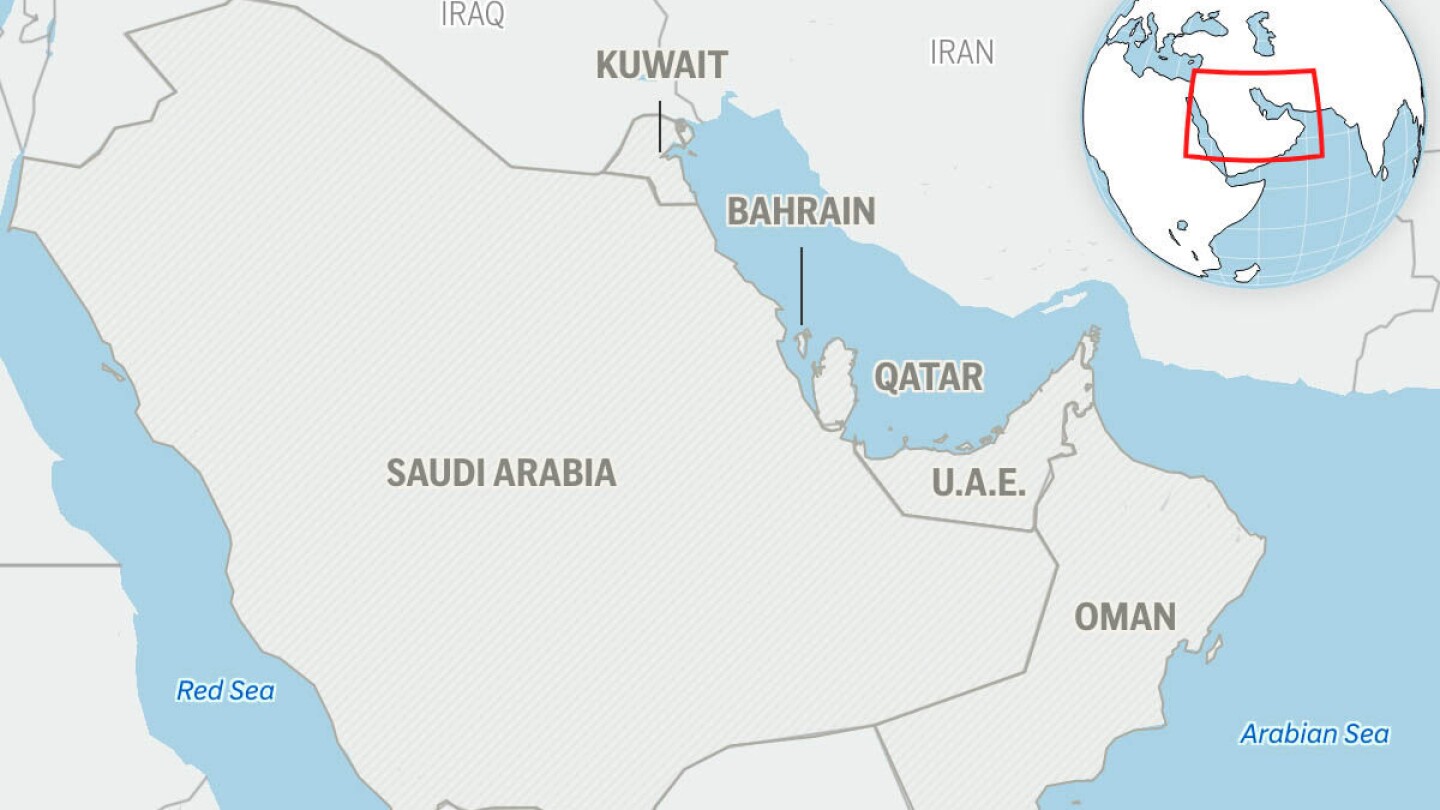
Bahrain holds significant strategic importance in the region as home to the U.S. Navy’s 5th Fleet, making it a crucial American ally in the Persian Gulf. This military presence underscores the complex geopolitical considerations at play in the kingdom, where internal security concerns often intersect with international relations.
Human rights organizations have consistently criticized Bahrain’s post-2011 crackdown on political dissent. Following widespread pro-democracy demonstrations during the Arab Spring, Bahraini authorities implemented stricter controls on political activities and speech, particularly targeting opposition figures and activists calling for governmental reforms.
The Bahrain Institute for Rights and Democracy’s documentation of repeated legal actions against Sharif illustrates what critics describe as a systematic pattern of using judicial mechanisms to silence political opponents. The organization has repeatedly called attention to what it characterizes as the deterioration of civil liberties in the kingdom.
Regional analysts note that the timing of Sharif’s sentencing coincides with increasing pressure on governments across the Middle East to respond to public sentiment supporting Palestinians, while maintaining strategic relationships with Western allies and, in some cases, Israel.
The case also highlights the challenges faced by political activists throughout the Gulf region, where criticizing government policies or sensitive diplomatic relationships can result in criminal charges. Despite international pressure for reforms, human rights advocates argue that freedom of expression remains significantly restricted in several Gulf Cooperation Council states.
As the Israel-Hamas conflict continues to unfold, cases like Sharif’s demonstrate the complicated position of Arab governments that have formalized relations with Israel while attempting to manage domestic public opinion that largely supports Palestinian rights and statehood.
Fact Checker
Verify the accuracy of this article using The Disinformation Commission analysis and real-time sources.

14 Comments
This seems like an unfortunate example of a government cracking down on free speech, even as they claim to uphold it. I hope the activist can appeal this sentence and that Bahrain makes real progress on human rights.
Agreed, it’s concerning to see such a pattern of targeting critics in Bahrain. Freedom of expression is a fundamental right that should be protected.
It’s disheartening to see Bahrain seemingly backsliding on human rights and political freedoms, especially after the progress made with the Abraham Accords. This case highlights the complex challenges in the region.
Absolutely, these types of contradictions and double standards when it comes to human rights are all too common. Bahrain needs to do much more to align its actions with the principles it claims to uphold.
Prosecuting an activist for an interview given in another country seems like a clear overreach by Bahraini authorities. I hope the international community continues to closely monitor the human rights situation there and pushes for greater accountability.
Prosecuting an activist for an interview given in another country is a concerning overreach by Bahraini authorities. This case highlights the ongoing challenges to free speech and civil liberties in the country, despite its efforts to improve regional relations.
The normalization of relations between Bahrain and Israel through the Abraham Accords is an interesting geopolitical development, but it appears the government is still heavily restricting dissent and criticism within the country. This seems like a complex and troubling situation.
You’re right, the contradiction between normalizing ties with Israel while cracking down on domestic critics is quite concerning. Bahraini authorities need to do more to uphold basic civil liberties.
This is a troubling development that reflects the ongoing challenges to free expression in Bahrain, even as the country seeks to improve diplomatic ties in the region. Authorities need to respect fundamental civil liberties.
You’re right, the harsh sentence for this activist highlights the gulf between Bahrain’s stated principles and its actual practices when it comes to human rights. More international pressure is clearly needed.
It’s concerning to see Bahrain continuing to target and punish activists, even for interviews conducted abroad. This appears to be part of a broader pattern of restricting dissent and critical speech in the country.
This case illustrates the complex dynamics at play in Bahrain, where the government seems intent on maintaining tight control over political discourse, even as it seeks greater regional integration. More needs to be done to protect fundamental freedoms.
Absolutely, the contradiction between Bahrain’s diplomatic outreach and its crackdown on domestic critics is troubling. The country needs to demonstrate a genuine commitment to human rights and free expression.
Targeting activists and punishing them for speaking out, even from abroad, is a worrying trend. I hope the international community continues to pressure Bahrain to improve its human rights record and protect freedom of expression.