


Listen to the article
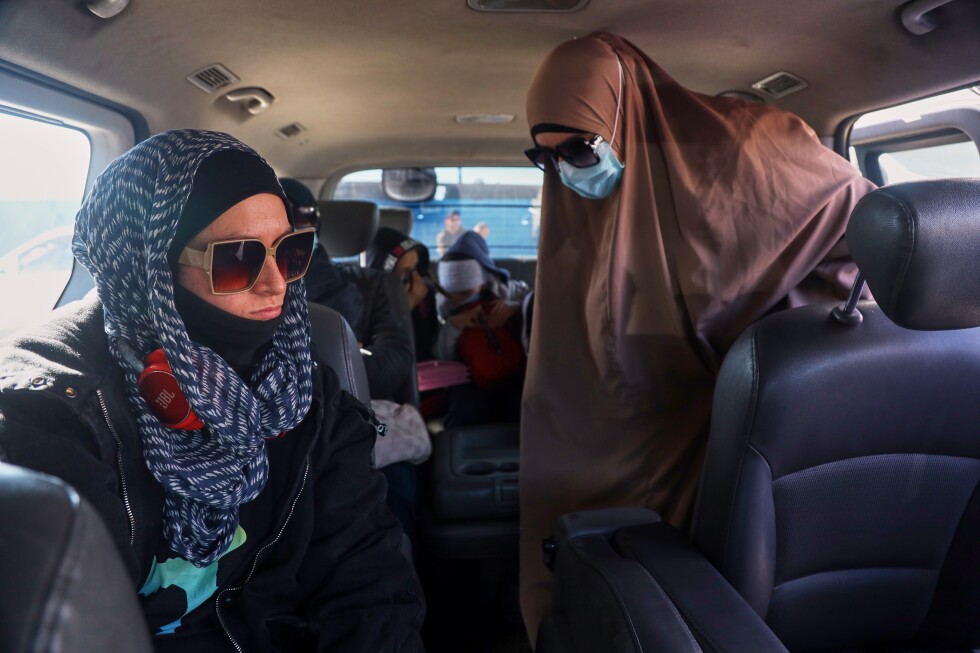
Syrian authorities on Monday halted the repatriation of 34 Australian women and children with alleged ties to Islamic State militants, forcing them to return to the Roj detention camp in northeastern Syria shortly after their departure.
The group, comprising 11 families, had begun their journey with plans to travel to Damascus before flying to Australia. Camp administrator Rashid Omar said Syrian officials in Damascus contacted the families approximately one hour after they left the camp, informing them that procedural requirements for their departure remained incomplete.
“They had no choice but to return to the camp,” Omar explained. “Everything had been arranged, and relatives had traveled from Australia to accompany them back home.”
Hakmiyeh Ibrahim, the camp’s director, noted that family members of the detainees had coordinated the repatriation effort rather than Australian government officials working directly on the operation. Australian authorities did not immediately respond to requests for comment on the failed repatriation attempt.
The Roj camp currently houses approximately 2,200 people from about 50 different nationalities, primarily women and children with supposed connections to ISIS. While most residents have not been formally charged with crimes, they effectively remain detained in the heavily guarded facility, which has until recently been controlled by the Kurdish-led Syrian Democratic Forces (SDF).
This attempted repatriation would have marked the first such operation in 2024. According to Ibrahim, 16 families were successfully repatriated last year, including German, British, and French nationals. In 2022, three Australian families were returned to their home country.
The international community has grappled with the question of repatriating citizens from these detention camps for years. Human rights organizations have repeatedly documented poor living conditions, inadequate medical care, and widespread violence in the facilities. Despite these concerns, many countries have hesitated to accept the return of their nationals, citing security concerns and legal complexities.
Among Roj camp’s most recognized detainees is Shamima Begum, who left London as a 15-year-old in 2015 to join ISIS in Syria. Begum, who married a Dutch ISIS fighter and lost all three of her children, recently failed in her legal appeal against the British government’s decision to strip her of UK citizenship.
The region housing these detention facilities has experienced significant upheaval in recent months. In April, Syrian government forces seized control of al-Hol camp, the largest such facility in the area, during fighting with Kurdish forces that resulted in Damascus gaining control over most of northeastern Syria previously held by the SDF.
The United Nations refugee agency reported on Sunday that many residents have fled al-Hol camp amid the changing security situation. Syrian authorities are reportedly planning to relocate those who remain, though specific details about their intended destination remain unclear.
Meanwhile, the U.S. military has transferred thousands of accused ISIS fighters from detention centers in northeastern Syria to Iraq, where they will face trial. This transfer represents another attempt to address the complex issue of foreign fighters and their families captured during operations against the Islamic State.
The Australian families’ thwarted journey highlights the continuing challenges in resolving the status of foreign nationals with alleged ISIS connections, particularly women and children who may have had limited agency in their presence in ISIS territory. As regional control shifts in northeastern Syria, the fate of these detainees becomes increasingly uncertain, caught between reluctant home countries and changing power dynamics on the ground.
Fact Checker
Verify the accuracy of this article using The Disinformation Commission analysis and real-time sources.

12 Comments
The situation at the Roj camp highlights the ongoing humanitarian crisis stemming from conflicts in the region. While repatriating citizens linked to extremist groups is challenging, it’s crucial to address this issue thoughtfully and carefully.
Repatriation efforts like this one are complex and sensitive. I hope the authorities can work together to resolve the remaining logistical issues and enable a safe return for these families to Australia.
The Roj camp housing people with alleged ties to IS militants highlights the ongoing humanitarian crisis stemming from the conflicts in the region. Careful, thoughtful repatriation efforts are crucial to address this issue.
Repatriating citizens from conflict zones is a complex and sensitive process. I hope the Australian government can work closely with Syrian authorities to resolve the remaining issues and enable a safe return for these families.
This failed repatriation attempt is a reminder of the delicate balance governments must strike between security concerns and humanitarian considerations when dealing with citizens linked to extremist groups. It’s a complex issue without easy solutions.
Repatriating citizens from conflict zones is a difficult process that requires careful coordination between authorities. Hopefully the remaining procedural requirements can be resolved to facilitate the safe return of these families to Australia.
The situation at the Roj camp highlights the ongoing humanitarian crisis stemming from the conflicts in the region. While repatriating citizens linked to extremist groups is challenging, it’s crucial that governments address this issue thoughtfully and with the safety of all involved in mind.
It’s understandable that Syrian authorities would have strict requirements for the repatriation of these individuals. Hopefully the remaining logistical issues can be resolved to enable the safe return of these families to Australia.
This failed repatriation attempt demonstrates the challenges governments face in dealing with citizens linked to extremist groups. Balancing security concerns with humanitarian considerations is a delicate and important task.
It’s understandable that Syrian authorities would have strict procedural requirements for the repatriation of these individuals. Hopefully the remaining steps can be completed to facilitate their safe return to Australia.
This is a complex and sensitive situation. While repatriating Australians from conflict zones is challenging, it’s important to ensure proper procedures are followed and the safety of all involved is prioritized.
It sounds like there were some logistical issues that prevented the smooth execution of this repatriation attempt. Hopefully the authorities can work through the remaining requirements to facilitate a safe return home for these families.