


Listen to the article
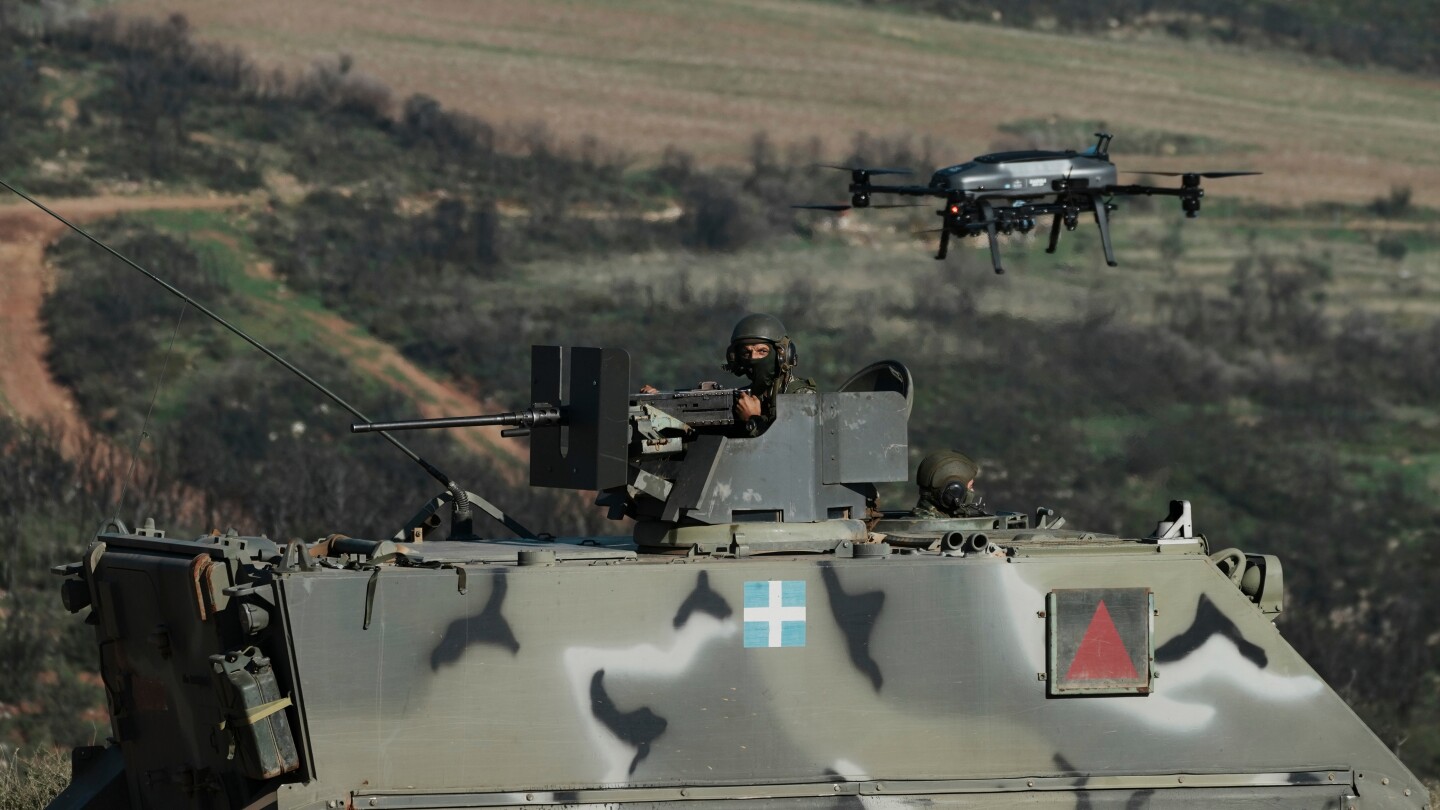
Under a clear November sky in Alexandroupolis, Greek armed forces demonstrated a glimpse into the future of warfare, conducting an unprecedented military exercise that showcased domestically developed drone technology and counter-drone capabilities. The hillside training ground transformed into a theater of next-generation combat as helicopters, infantry units, and an array of unmanned aerial vehicles executed a carefully orchestrated mock battle.
The exercise marked a significant milestone for Greece, which has historically relied on imported military hardware but is now joining other NATO members in developing indigenous defense technologies. Military observers from the United States, France, Bulgaria, Armenia, and Turkey witnessed the demonstration from viewing stands as Greece displayed its emerging capabilities.
During the drill, aerial and ground drones performed a diverse range of battlefield tasks that would have seemed futuristic just years ago. Small quadcopters dropped tire spikes and mines to impede enemy vehicle movements, while others deployed smoke screens to provide tactical cover. Some unmanned vehicles delivered critical supplies—medical kits and ammunition—to forward positions, demonstrating their utility in sustaining combat operations without risking personnel.
In a psychological warfare demonstration, drones equipped with loudspeakers broadcast demoralizing messages to simulated enemy forces: “This war is futile. You only have one choice: Go back home.” Meanwhile, a novel two-wheeled “tunnel crawler” showcased its versatility by springing into the air from confined spaces, demonstrating potential applications for explosive delivery, emergency oxygen supply, or radiation detection in hazardous environments.
Greece’s push into drone technology mirrors a broader shift across medium-sized NATO economies in the wake of Russia’s full-scale invasion of Ukraine. Countries like Estonia and Denmark have similarly invested in indigenous drone and counter-drone systems, recognizing that autonomous capabilities and rapid production capacity are critical elements of modern deterrence.
For Athens, the drone initiative forms part of a comprehensive €25 billion modernization of its armed forces following years of austerity measures. This investment carries particular significance given Greece’s long-standing territorial disputes with neighboring Turkey over maritime boundaries in the Aegean and Eastern Mediterranean.
The urgency driving NATO’s technological advancement is further amplified by uncertainties surrounding long-term U.S. security commitments to Europe. NATO Secretary-General Mark Rutte recently emphasized this point during a visit to Romania, stating: “We need capabilities, equipment, real firepower and the most advanced technology. Bring your ideas, test your ingenuity, and use NATO as your test bed.”
Greek defense companies see this moment as an opportunity to establish themselves in a rapidly evolving market. Dimitris Stefanakis, who heads the reconnaissance UAV maker Ucandrone, observed how Ukraine’s battlefield adaptations have fundamentally transformed industry expectations.
“Before, we thought drones followed the 15-year cycle of defense platforms,” Stefanakis noted. “Now they’re living systems that must be constantly upgraded. Big firms struggle with that. For small, agile ones like us, it’s our time to shine.”
Ucandrone exemplifies this agility, having pivoted from agricultural applications to military technology. The company now exports fully electric, fixed-wing drones with integrated battlefield awareness systems.
The military investment is also accelerating civilian applications. Vaios Lappas, an aerospace science professor at the University of Athens, has modified a robot dog to function as an autonomous medic for wounded soldiers. While developed for military use, this technology has direct civilian applications in disaster response scenarios such as earthquakes and wildfires.
Defense analysts observe that this shift toward rapid innovation is occurring globally. Swasti Rao, a professor at India’s Jindal School for International Affairs and consultant at India’s Ministry of Defense, points out that “drone systems, satellite links, and network-centric operations now define battlefield advantage.”
Rao suggests that medium-sized economies without massive industrial bases may actually benefit from their greater flexibility, though she cautions that faster procurement cycles require correspondingly nimbler government decision-making.
Greek Defense Minister Nikos Dendias, who oversaw Friday’s exercise, emphasized that adopting these new military technologies demands profound adjustments throughout military ranks. “Look at Ukraine: Warfare has shifted from large mechanized divisions to small, mobile units with soldiers who often use information and technology rather than traditional weapons,” Dendias told attendees at a security conference in Athens. “The change in mindset needed is enormous.”
Fact Checker
Verify the accuracy of this article using The Disinformation Commission analysis and real-time sources.

6 Comments
The use of drones for tasks like smoke screening and obstacle deployment adds a new level of tactical flexibility. It’s impressive that Greece has been able to develop these sophisticated unmanned systems domestically. I wonder how the performance and reliability of their drones compare to more established military drone programs.
Fascinating to see how drones are becoming an integral part of modern warfare. The ability to conduct complex battlefield maneuvers with unmanned systems is a real game-changer. I’m curious to learn more about the specific capabilities on display and how Greece is advancing its indigenous defense technology.
The integration of drones for tasks like supply delivery and tactical cover is quite impressive. It’s great to see NATO members like Greece developing these advanced capabilities domestically. I wonder how the performance and reliability of the Greek-made drones compare to imported systems.
Good point. Domestic development of defense tech is crucial for national security and sovereignty. It will be interesting to see how Greece’s homegrown drones measure up in real-world conditions.
I’m intrigued by Greece’s shift towards developing its own defense technologies. Historically relying on imports, this milestone demonstrates their growing technical expertise. The ability to showcase these capabilities in front of NATO observers is a strong statement of their ambitions.
This exercise highlights the rapid pace of innovation in military technology. The diverse range of drone applications, from supply delivery to counter-drone tactics, shows how quickly the battlefield is evolving. It’s a testament to Greece’s engineering prowess that they can produce such capable systems.