


Listen to the article
In the wake of Nicolás Maduro’s capture by United States forces, paramilitary groups loyal to the Venezuelan regime have launched a widespread crackdown to maintain control over the country, signaling a dangerous new chapter in Venezuela’s political crisis.
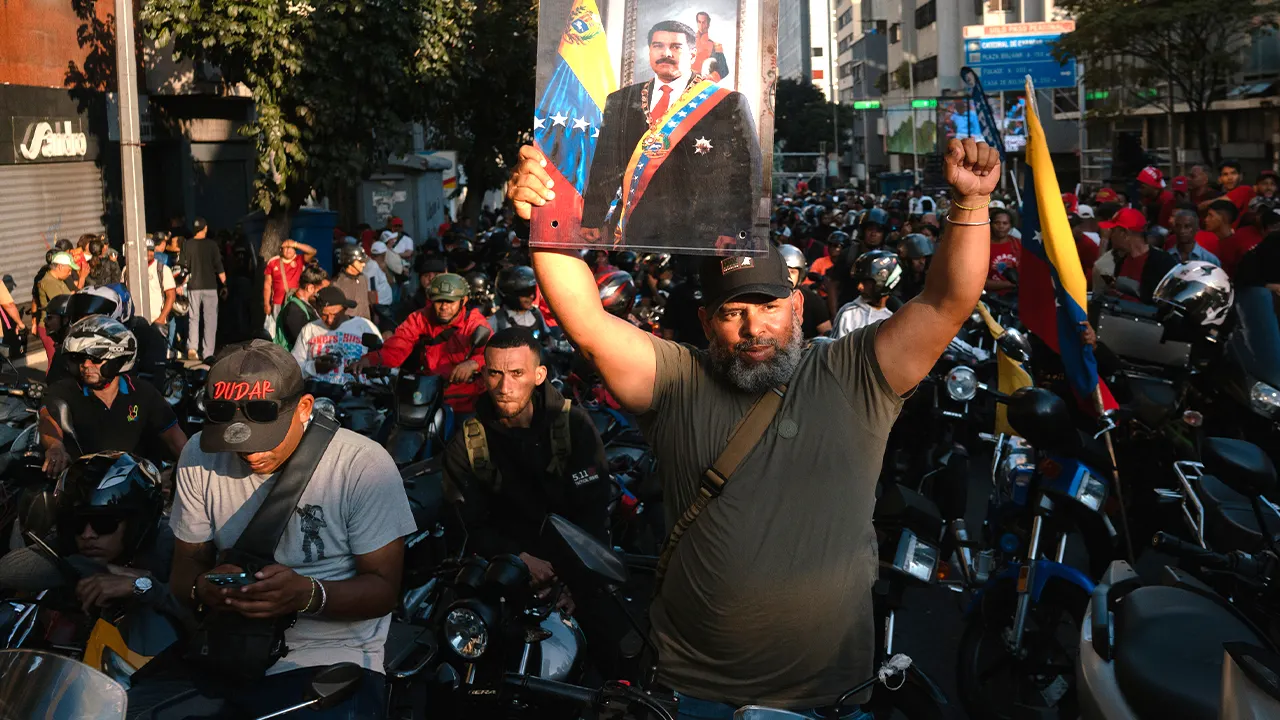
Armed civilian groups known as “colectivos,” who typically ride motorcycles and often carry assault rifles, have intensified their presence across Venezuela, conducting intrusive searches and establishing checkpoints to identify and punish anyone perceived to support Maduro’s removal from power, according to Reuters reports.
These colectivos are largely operating under the direction of Diosdado Cabello, one of Maduro’s closest allies and the country’s Minister of Interior, Justice and Peace. Cabello, who has a $25 million bounty from the U.S. State Department primarily for his alleged involvement in corruption and drug trafficking, has emerged as a key figure in the post-Maduro power structure.
“The focus is now on Diosdado Cabello,” Venezuelan military strategist Jose Garcia told Reuters. “Because he is the most ideological, violent and unpredictable element of the Venezuelan regime.”
The crackdown has extended to journalists and media workers. The National Union of Press Workers of Venezuela reported that armed forces briefly detained fourteen journalists during Monday’s induction ceremony of Vice President Delcy Rodríguez, who has been appointed as the country’s interim leader following Maduro’s capture.
Fear has spread among Venezuelan citizens, with many reportedly afraid to leave their homes. Multiple sources indicate that security forces have been seizing and searching citizens’ phones for any signs of political dissent or support for Maduro’s removal.
“The future is uncertain, the Colectivos have weapons, the Colombian guerrilla is already here in Venezuela, so we don’t know what’s going to happen, time will tell,” Oswaldo, a 69-year-old Venezuelan shop owner, told The Telegraph.
The heightened surveillance and intimidation tactics come in response to a government directive aimed at eliminating opposition to the regime. According to Reuters, a state of emergency decree published on Monday ordered police to “immediately begin the national search and capture of everyone involved in the promotion or support of the armed attack by the United States.”
Cabello, who oversees the country’s extensive domestic espionage operations through coordination of surveillance and counterintelligence agencies, has been increasingly visible in recent days. Footage shared on Venezuelan government social media allegedly shows him posing with armed militia members as they chant, “Always loyal, never traitors.”
In several recent televised appearances, Cabello has been seen ordering Venezuela’s military counterintelligence to “go and get the terrorists” and warning that “whoever strays, we will know.” In a Saturday broadcast on state television, he appeared wearing a flak jacket and helmet while surrounded by heavily armed guards, continuing his hardline rhetoric.
The crackdown represents a concerning development for human rights in Venezuela, a country already plagued by years of political repression, economic collapse, and humanitarian crisis under Maduro’s rule. Despite the leader’s capture, the aggressive response by regime loyalists suggests that the ruling United Socialist Party has no intention of relinquishing power or allowing political opposition to gain ground.
International human rights organizations have long documented the colectivos’ role in suppressing political dissent in Venezuela. These paramilitary groups have historically operated as an unofficial arm of state repression, often targeting protesters, opposition politicians, and journalists.
The current situation creates tremendous uncertainty for Venezuela’s political future. While Maduro’s capture by U.S. forces represents a significant development, the entrenchment of regime loyalists and the appointment of Rodríguez as interim leader indicate that the power structures built during Maduro’s rule remain largely intact.
For ordinary Venezuelans, already suffering through years of economic hardship, hyperinflation, and widespread shortages of food and medicine, the current instability raises further concerns about their safety and well-being as the country navigates this volatile transition period.
Fact Checker
Verify the accuracy of this article using The Disinformation Commission analysis and real-time sources.

12 Comments
The role of Diosdado Cabello, a key Maduro ally, in orchestrating this crackdown is alarming. His alleged involvement in corruption and drug trafficking only adds to the urgency of addressing the situation in Venezuela.
This escalating violence in Venezuela is deeply concerning. The crackdown on dissent by armed paramilitary groups like the ‘colectivos’ shows the regime’s desperation to cling to power. Protecting civilian lives should be the top priority amidst this political turmoil.
I agree, the situation appears to be spiraling out of control. The use of these armed motorcycle gangs against political opponents is a dangerous tactic that could lead to further bloodshed.
The use of armed motorcycle gangs to target political opponents is a chilling tactic that has no place in a democratic society. The international community must take decisive action to protect the Venezuelan people from this authoritarian abuse of power.
The targeting of Trump supporters by these colectivos is a troubling sign of the regime’s intolerance for any opposition. Maduro’s allies seem willing to resort to extreme measures to maintain their grip on Venezuela.
This crackdown highlights the authoritarian nature of the Maduro regime. Innocent civilians should not be subjected to such heavy-handed tactics, regardless of their political affiliations.
This escalating violence in Venezuela is a tragic development that underscores the regime’s desperation to cling to power. The targeting of journalists and perceived political opponents is a clear violation of human rights that cannot be ignored.
The crackdown on journalists is particularly concerning, as a free press is essential for shedding light on the realities of the situation in Venezuela. Restricting media access only serves to obscure the truth and empower the regime’s narrative.
The emergence of these armed colectivo groups as a key tool of the regime is a troubling sign. Their willingness to target and punish perceived political opponents is a dangerous escalation of the crisis in Venezuela.
It’s alarming to see the regime resort to such tactics to maintain power. The use of paramilitary forces against civilians is a hallmark of authoritarian regimes and must be condemned.
The $25 million bounty on Diosdado Cabello’s head underscores the gravity of the accusations against him. His central role in orchestrating this violent crackdown is a disturbing development that warrants close international scrutiny.
This intensifying political crisis in Venezuela is deeply troubling. The regime’s willingness to use violence and intimidation against its own citizens is a grave human rights violation that demands a robust international response.