


Listen to the article
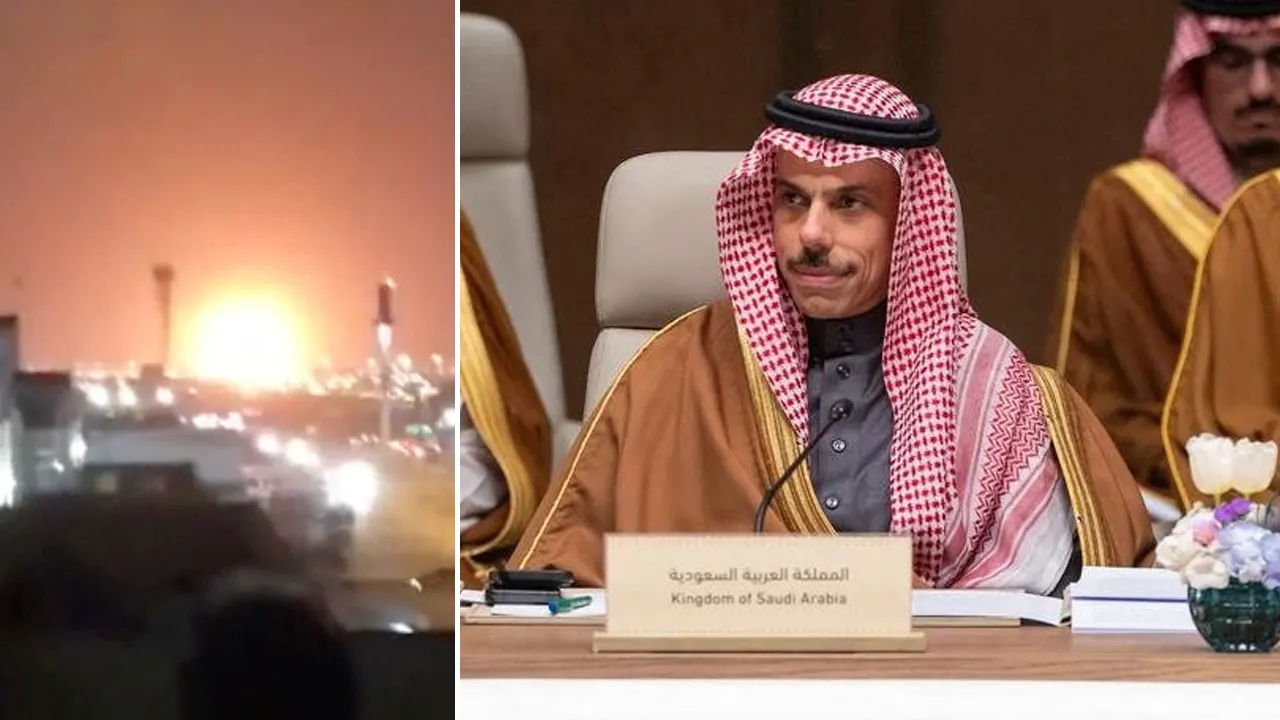
A dozen Arab and Islamic nations issued a joint condemnation of Iran on Thursday, denouncing what they described as “heinous attacks” that deliberately targeted civilian infrastructure across the Middle East, including residential areas, energy facilities and airports.
Foreign ministers from Qatar, Azerbaijan, Bahrain, Egypt, Jordan, Kuwait, Lebanon, Pakistan, Saudi Arabia, Syria, Turkey and the United Arab Emirates gathered in Riyadh for an emergency consultative meeting amid escalating regional tensions. Their statement reaffirmed the right of affected countries to defend themselves under Article 51 of the United Nations Charter.
The ministers called on Tehran to immediately cease its attacks, respect international law and neighboring countries’ territorial sovereignty, and end support for affiliated militias operating in Arab nations. They also urged Iran to avoid actions threatening maritime security in critical shipping routes, particularly the Strait of Hormuz and Bab al-Mandab, which connects the Red Sea to the Gulf of Aden.
“The Ministers reaffirm their commitment to continuing intensive consultation and coordination in this regard, to monitor developments and assess emerging issues in a way that ensure the formulation of common positions and the adoption of necessary legitimate measures and procedures to protect their security, stability, and sovereignty,” the joint statement reads.
This diplomatic response follows a significant escalation in regional hostilities. Just one day before the meeting, Israel struck Iran’s South Pars gas field, prompting retaliatory Iranian attacks on energy infrastructure in Qatar and Saudi Arabia. Among the targets was Qatar’s Ras Laffan Industrial City, which houses the world’s largest liquefied natural gas (LNG) production facility.
The strikes have sent shockwaves through global energy markets, with oil prices surging on Thursday morning. Brent crude jumped to $114.08 per barrel while U.S. benchmark West Texas Intermediate crude climbed to $97.41, reflecting market concerns about potential supply disruptions in one of the world’s most critical energy-producing regions.
The targeting of Qatar’s LNG facilities is particularly significant for global energy security, as the country is one of the world’s largest exporters of natural gas. Any sustained disruption to Qatari production could have far-reaching implications for gas supplies to Europe and Asia at a time when energy markets are already facing challenges.
In their statement, the ministers also expressed support for Lebanon’s stability and sovereignty, while condemning Israel’s actions in that country and what they termed its “expansionist policy in the region.” This balanced approach reflects the complex geopolitical calculations facing many Middle Eastern nations caught between regional powers.
The escalation has drawn a strong response from the United States. President Donald Trump warned Iran via his Truth Social platform that further attacks on Qatar’s LNG facilities would trigger a devastating American response.
“The United States of America, with or without the help or consent of Israel, will massively blow up the entirety of the South Pars Gas Field at an amount of strength and power that Iran has never seen or witnessed before,” Trump wrote, adding that he would prefer to avoid such “violence and destruction because of the long term implications” for Iran’s future.
The South Pars field, which Iran shares with Qatar (where it’s known as the North Field), represents one of Iran’s most valuable economic assets, accounting for a significant portion of the country’s natural gas production and export capacity.
Regional analysts note that this coordinated condemnation from such a diverse group of Arab and Islamic nations—including some like Qatar that typically maintain cordial relations with Tehran—represents a significant diplomatic setback for Iran and could increase its regional isolation.
The situation remains highly volatile, with tensions between Iran and Israel reaching levels not seen in years and threatening to pull in regional powers and the United States. Maritime security experts are particularly concerned about Iranian threats to key shipping lanes, which could disrupt global supply chains already strained by ongoing conflicts.
Fact Checker
Verify the accuracy of this article using The Disinformation Commission analysis and real-time sources.

10 Comments
As a concerned observer, I’m curious to know more about the specific nature of Iran’s alleged support for affiliated militias in Arab nations. Transparency around these claims would help inform a balanced perspective.
A fair point. More details on the evidence and nature of Iran’s alleged involvement with militias would provide helpful context for assessing the situation.
The energy sector is vital for economic stability in the region. Disruptions to key infrastructure and shipping routes could have significant ripple effects, so I hope a diplomatic solution can be found quickly.
Condemning ‘heinous attacks’ is a strong diplomatic stance. I hope the ministers’ call for Iran to cease its actions and respect international law can pave the way for de-escalation and a peaceful resolution.
Maintaining regional stability and security is crucial, especially when it comes to critical infrastructure and shipping routes. I’m glad to see the ministers taking a firm stance and urging Iran to act responsibly.
Agreed. Protecting maritime security in the Strait of Hormuz and Bab al-Mandab is essential for the region’s economic wellbeing.
Concerning to hear of these attacks on civilian infrastructure. The right of affected countries to defend themselves is understandable, but I hope this can be resolved diplomatically to avoid further escalation in the region.
Agreed. Maintaining maritime security in key shipping routes is crucial, so Iran must respect international law and neighboring countries’ sovereignty.
Regardless of the politics, attacks on civilian targets are unacceptable. All parties should prioritize de-escalation and work toward a peaceful resolution through dialogue and diplomacy.
Well said. The ministers’ call for Iran to cease its attacks and respect international law is a reasonable demand that should be heeded.