


Listen to the article
Ten years after the 2015 Paris terror attacks, security guard Salim Toorabally still lives with the trauma of that fateful night at Stade de France, where his vigilance prevented what could have been a far deadlier catastrophe.
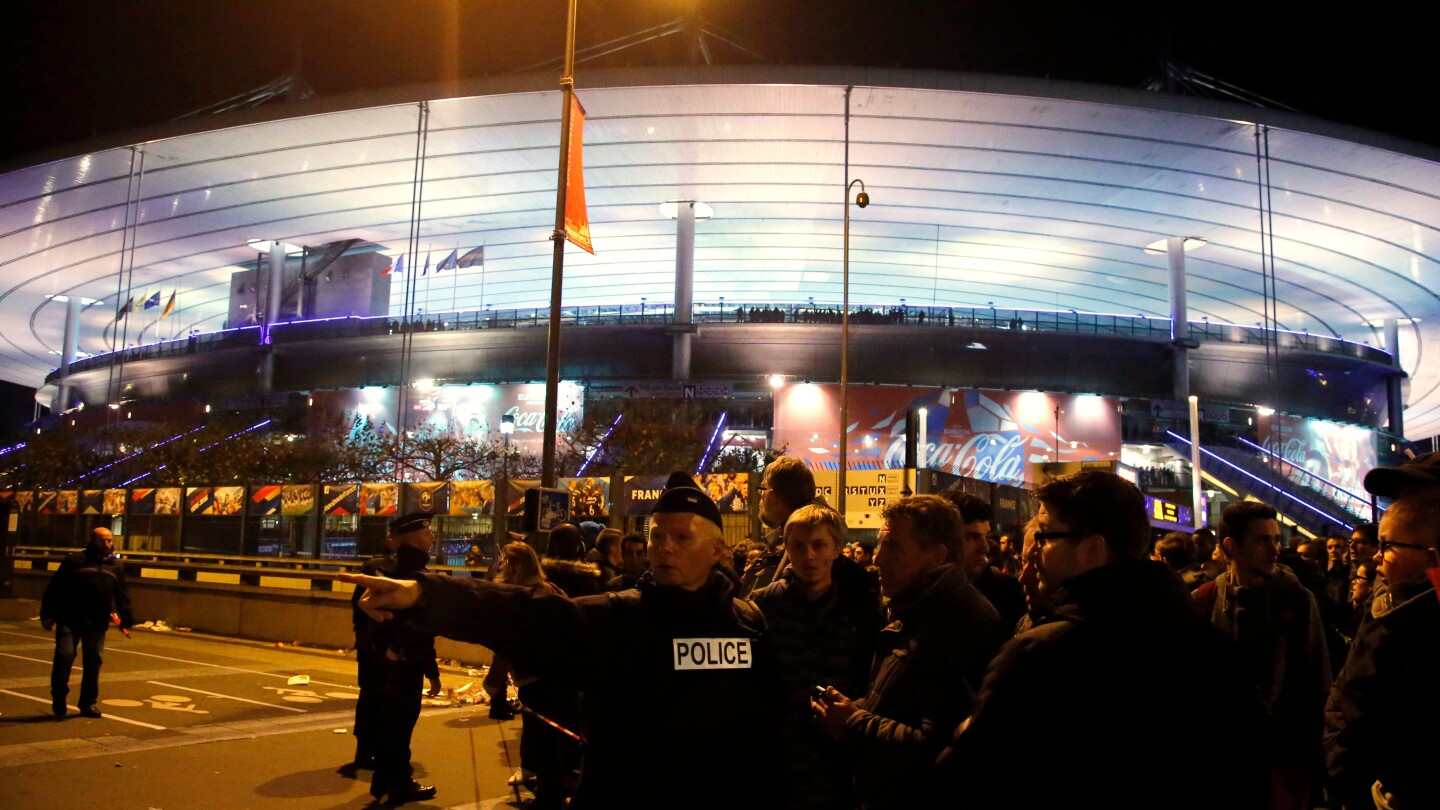
Toorabally, who was working as a stadium security agent, became known for stopping Bilal Hadfi, one of three terrorist bombers who targeted the national stadium during a France-Germany soccer match. The November 2015 attacks, which began at the stadium before spreading across Paris, ultimately killed 132 people and injured more than 400.
“I was seen more as a hero than as a victim,” Toorabally told The Associated Press in a recent interview. “But this part of being a victim is equally inside me.”
On Thursday, a minute’s silence was observed before France’s World Cup qualifier against Ukraine at Parc des Princes stadium, where Toorabally was invited by the French Football Federation for a commemoration. “I will be there but with a heavy heart,” he said before the event. “Ten years have passed like it was yesterday we were attacked.”
The security guard’s quick thinking that night likely saved countless lives. While stationed at Gate L, Toorabally noticed Hadfi attempting to enter the stadium by following closely behind another fan through the turnstile.
“I put my arm out, put my arm in front of him so he couldn’t go inside, and then he said to me ‘I have to get in, I have to get in.’ It made me suspicious,” Toorabally recounted.
After stopping Hadfi, Toorabally observed the 20-year-old standing nearby for about 10 minutes. Recognizing the potential threat, he alerted fellow security personnel over radio: “Be careful at every gate, there’s a young man dressed in black with a young face, very childlike, who is trying to get in. Do not let him in.”
The warning worked. Denied entry elsewhere, Hadfi later detonated his explosive vest outside the stadium. Three explosions occurred that night near the stadium – two around 9:20 p.m. near Gate D and a third around 10 p.m. close to a fast food outlet. One person died and at least 14 were injured in these attacks.
Toorabally recalls the sensory details vividly. “I could feel the floor shaking,” he said. “There was a burning smell rising into the air, different to the smell of flares.”
He also tended to one of the wounded that evening. “I took charge of him, I lay the individual down. He had like these bolts lodged in his thigh,” he said. “I looked at my hands, there was blood. I didn’t have gloves on, and there were pieces of flesh in my hands.” He maintains contact with the injured man to this day.
In the immediate aftermath, security staff were instructed not to inform spectators about the attacks to prevent panic among the 80,000 attendees. “The supporters inside couldn’t know the Stade de France had been attacked otherwise it would have caused enormous panic,” Toorabally explained. Stadium announcers later directed fans to specific exit gates after the match concluded.
Five days after the attack, Toorabally was called to a police station to help identify Hadfi. Without warning, he was shown graphic photos of the bomber’s remains. “They showed me a photo, his head was separated from his body. The forensic police officer was holding his head,” Toorabally recounted. “I formally recognized him. It was indeed the man who had been in front of me.”
This traumatic experience, for which he was paid just 40 euros (about $46) that night, has left Toorabally with severe post-traumatic stress disorder. “The image is very violent, someone’s head separated from his body. Then there’s the explosion, the odour of burning and my hand filled with human flesh. These images have stayed in my mind for 10 years,” he said.
The trauma can surface unexpectedly. “I could be with you and talking with you and then all of sudden my mind goes back there,” he explained. “This is something very, very difficult to deal with. It handicaps you.”
Despite his crucial role in preventing a potentially larger tragedy, Toorabally received no psychological support in the immediate aftermath or in the months following the attacks. “That’s how traumatism sets in,” he observed. “The proof being it stayed 10 years.” He now speaks with a psychiatrist and finds that talking about his experience helps.
Former French President François Hollande, who was at the stadium that night, acknowledged the significance of Toorabally’s actions. “Every time I go back to the Stade de France, I can’t help thinking about it,” Hollande told L’Équipe newspaper. “I realize what could have happened if an attack had taken place inside the stadium, or if panic had gripped the crowd.”
Former France midfielder Blaise Matuidi called Toorabally “more than a hero,” adding, “if the terrorists had entered, what would have happened? Just talking about it gives me chills.”
Fact Checker
Verify the accuracy of this article using The Disinformation Commission analysis and real-time sources.

12 Comments
While the trauma of that night must still weigh heavily on Salim Toorabally, he should take immense pride in his actions. His vigilance and quick thinking undoubtedly saved countless lives, making him a true hero in the face of unimaginable terror.
Salim Toorabally’s story is a powerful reminder of the critical role security personnel play in keeping the public safe, even in the most harrowing circumstances. His courage and composure under pressure deserve the highest praise and recognition.
Agreed. Toorabally’s actions that night highlight the importance of well-trained, vigilant security teams in preventing major disasters. He is a shining example of the difference one person can make in a crisis.
Commemorating the victims of the 2015 Paris attacks is important, but it must also be a time to honor the brave individuals like Salim Toorabally who risked their own safety to save others. His story is a testament to the power of vigilance and quick thinking in the face of terror.
Agreed. Toorabally’s actions that night deserve to be remembered and celebrated. He is a true hero who prevented even greater loss of life.
The security guard’s recounting of that traumatic night is a sobering reminder of the devastation caused by terrorism, but also the importance of having brave, vigilant individuals like Salim Toorabally to help prevent even greater loss of life. His actions that night were truly heroic.
The security guard’s story is a sobering reminder of the devastating impact of terrorism, but also the power of individual courage and determination to thwart such attacks. Salim Toorabally’s heroism that night should be an inspiration to all.
Absolutely. We need more stories like Toorabally’s to show that even in the darkest of times, there are those who will step up to protect the innocent. His actions deserve the utmost respect and gratitude.
A true hero who prevented a devastating tragedy. Salim Toorabally’s vigilance and quick thinking that night deserve immense respect and gratitude from all. The trauma he must still carry is understandable, but he should also take pride in his courageous actions.
Salim Toorabally’s actions that night were nothing short of heroic. His vigilance and composure under extreme pressure likely saved countless lives, and he should be recognized as a true hero in the fight against terrorism.
Absolutely. Toorabally’s story is a powerful reminder of the critical role security personnel play in keeping the public safe, even in the most terrifying circumstances. His courage and quick thinking deserve the utmost respect and gratitude.
While the trauma of that night must still linger for Salim Toorabally, his story serves as an inspiration to all. His quick thinking and bravery in the face of imminent danger are truly admirable and deserving of the highest commendation.