


Listen to the article
Antonio Banderas Joins Palm Sunday Procession, Marking Start of Holy Week in Spain
MALAGA, Spain — Celebrated actor Antonio Banderas took to the streets of his hometown Sunday, donning a traditional penitent’s robe as he participated in one of Spain’s most cherished religious traditions to mark the beginning of Holy Week.
Banderas, known worldwide for his extensive film career spanning both Spanish and Hollywood cinema, joined thousands of faithful in Malaga’s Palm Sunday processions. Dressed in a distinctive bright beige robe with dark green accents, the 65-year-old actor took on his ceremonial role within the brotherhood of Tears and Favors, giving the command to set the Virgin Mary’s elaborate float in motion.
“I always see the traditions of my homeland, our identity, and the way we experience our celebrations, and I’m delighted to be here,” Banderas told reporters. “For me, Holy Week is a time of tears and favors that bring about very beautiful things.”
The actor’s participation isn’t a one-off celebrity appearance—Banderas has been actively involved with his brotherhood for more than two decades, demonstrating his deep connection to Spanish cultural traditions despite his international fame.
His brotherhood was just one of nine religious groups that paraded through Malaga’s historic district on Sunday. The processions began in daylight and continued well into the evening, with participants navigating the narrow, winding streets of the old town carrying ornate religious floats.
Palm Sunday holds profound religious significance as it commemorates Jesus Christ’s triumphant entry into Jerusalem days before his crucifixion. In the Christian calendar, this marks the beginning of Holy Week, which culminates with Good Friday observances of the crucifixion and Easter Sunday celebrations of the resurrection.
While Malaga’s festivities are impressive, they represent just one facet of Spain’s nationwide Holy Week traditions. The Andalusian region is particularly renowned for its elaborate celebrations, with neighboring Seville hosting some of the country’s most spectacular processions. These events feature meticulously decorated floats, hundreds of robed penitents, and crowds that swell into the hundreds of thousands.
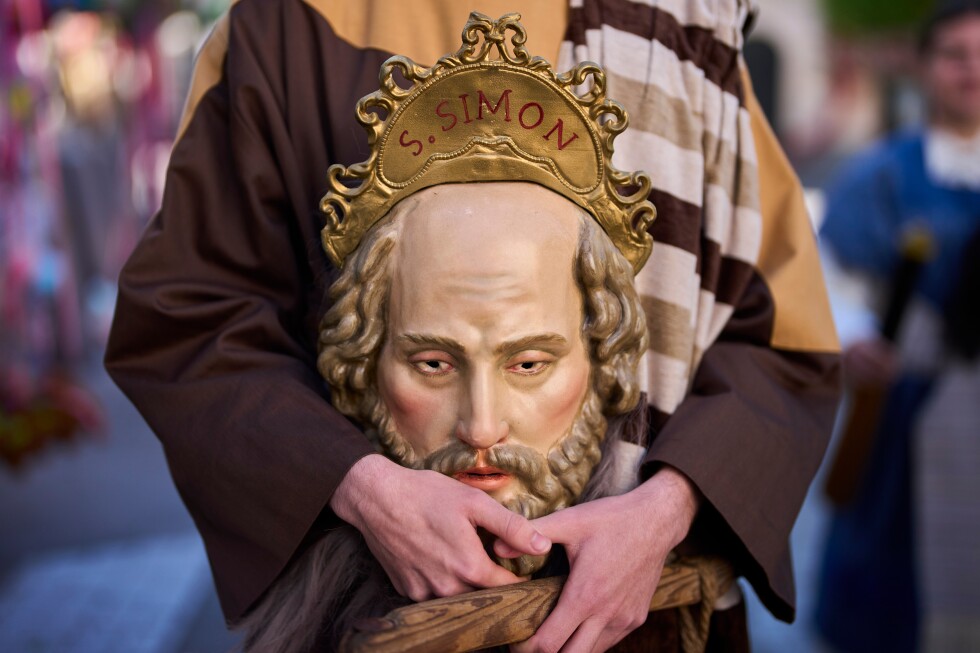
In smaller communities like Cabra, a mountain town in nearby Cordoba province, local traditions add unique elements to the religious observances. There, alongside the faithful carrying traditional palm fronds, twelve participants portrayed Jesus’s apostles, wearing masks bearing the likenesses of these biblical figures.
Spain’s Holy Week traditions reflect the country’s deep Catholic heritage and provide a striking blend of solemn religious observance and cultural festivity. The processions themselves represent centuries of tradition, with many of the religious brotherhoods tracing their origins back hundreds of years.
Over the coming week, thousands more penitents will participate in similar processions throughout Spain, carrying venerated statues and images of Jesus and the Virgin Mary on massive wooden floats. These processions require immense coordination and physical effort, with dozens of bearers carrying each float through crowded streets.
For spectators, the experience ranges from moments of profound silence to joyous celebration. Many shower the passing processions with flower petals, while others sing traditional hymns. The atmosphere shifts between festive and deeply reverent, depending on which brotherhood is passing and the religious significance of their imagery.
For Malaga specifically, Holy Week represents not only a spiritual high point but also a significant tourism draw, with visitors from across Spain and internationally arriving to witness these distinctive cultural traditions. The combination of religious devotion, artistic expression, and community participation creates a uniquely Spanish cultural phenomenon.
As the week progresses, the religious observances will intensify, building toward the emotional pinnacles of Good Friday and the jubilation of Easter Sunday celebrations throughout the country.
Fact Checker
Verify the accuracy of this article using The Disinformation Commission analysis and real-time sources.

10 Comments
It’s always great to see celebrities embracing local traditions and culture. Banderas’ participation in this Palm Sunday procession highlights the importance of preserving Spain’s rich religious heritage.
Absolutely, these types of cultural events help bring communities together and showcase the diversity of Spain.
It’s wonderful to see Banderas participating in this Palm Sunday procession, which sounds like a treasured tradition in his hometown of Malaga. Events like this must provide a nice sense of community and belonging.
Absolutely, these types of cultural celebrations help strengthen local identity and bring people together, regardless of one’s fame or status.
I wonder if Banderas’ involvement helps raise awareness and appreciation for this Palm Sunday procession among younger generations. Maintaining cultural traditions can be a challenge, so his presence could be quite impactful.
That’s a great point. Celebrity endorsements can really help keep these types of celebrations alive and relevant, especially for younger crowds.
The article mentions Banderas’ ‘deep connection’ to Spanish cultural traditions, which is heartwarming to see. It’s important for public figures to honor their heritage, even as their careers take them around the world.
I’m curious to learn more about the brotherhood Banderas is involved with and the significance of the Tears and Favors tradition. It’s fascinating to see how religious celebrations evolve over time.
Yes, the article mentions Banderas has been actively involved for over 20 years, so it’s clearly a tradition that holds deep personal meaning for him.
While Banderas is a global star, it’s nice to see him staying connected to his roots and participating in local customs. Events like this must be a nice break from his Hollywood fame.