


Listen to the article
Mother of Slain Hostage Channels Grief Into Memoir After Son’s Death in Gaza
When Hersh Goldberg-Polin was held captive in Gaza’s tunnels, fellow hostages recalled how he would quote Holocaust survivor Viktor Frankl: “Those who have a ‘why’ to live, can bear with almost any ‘how.'” His family clung to hope that like Frankl, Hersh would return with a message of resilience and purpose.
That hope was shattered in August 2024 when, after nearly a year in captivity, Hersh and five other hostages were shot dead by their Hamas captors deep underground as Israeli forces reportedly closed in on their location.
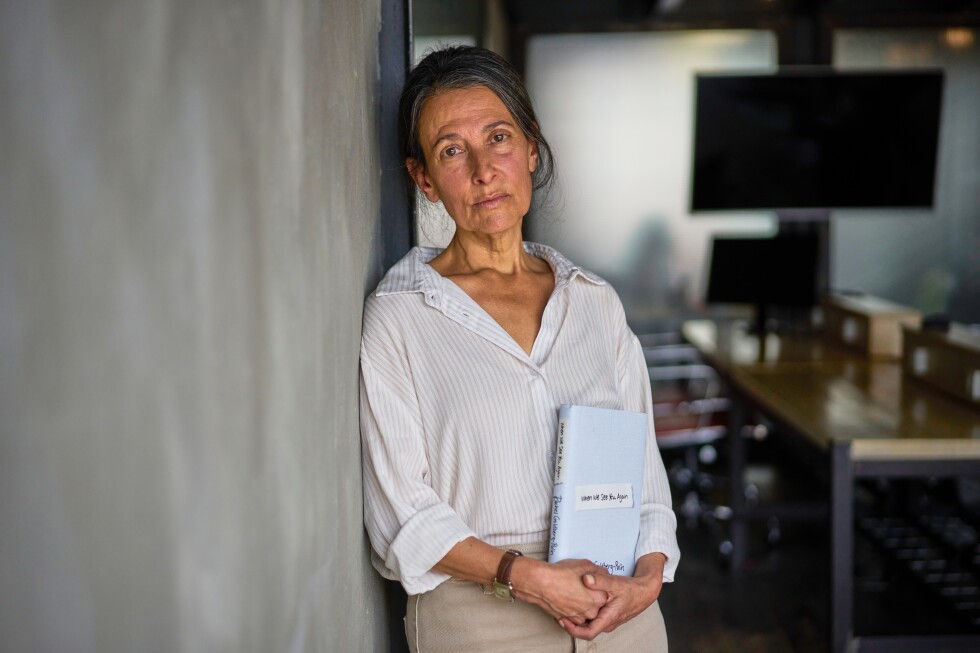
Now, the burden of finding meaning in his loss has fallen to his family, particularly his mother Rachel Goldberg-Polin, whose tireless advocacy for her son’s release made her a recognized figure worldwide. On Tuesday, she released a memoir titled “When We See You Again,” a raw chronicle of her grief journey.
“I’m still trying to figure out with clarity what is my why, but it’s clear to me that my why is not done,” Goldberg-Polin said in a recent interview in Jerusalem, with a photo of a smiling Hersh behind her. “I just really wanted to tell the truth. It’s very ugly.”
The memoir defies conventional structure, offering no neat narrative arc or tidy, uplifting message. Instead, it presents an unfiltered account of grief, without political score-settling against either Hamas militants who killed her son or Israeli leaders whom many have blamed for failing to secure his earlier release.
Hersh was among the 251 people abducted during Hamas’s October 7, 2023 attack on southern Israel. Before being dragged into Gaza, his hand was blown off by a grenade. He eventually became one of the best-known hostages, with his name and image appearing on posters and graffiti across Israel, often accompanied by Frankl’s quote that he had reportedly shared with fellow captives.
The war triggered by the attack led to more than 70,000 Palestinian deaths and widespread destruction in Gaza before a ceasefire deal in October 2024 secured the release of remaining hostages. By then, Hersh had been dead for over a year, though his family didn’t learn of his fate until much later.
Rachel’s memoir takes care not to idealize her son. She includes everyday details that humanize him – like how “he picked his scabs as a kid and was bad at doing dishes.”
“Hersh has become a symbol to many,” she writes. “I don’t know what to do with that. But it’s OK. If people need Hersh to be something, he will be that. That is the essence of service, being what is needed.”
The book recounts Rachel’s own background – growing up in Chicago before moving to Israel with her husband and three children when Hersh was six – and shares stories from “the before time,” including Hersh’s encyclopedic knowledge of U.S. presidents and his passion for Jerusalem’s local soccer team.
While the book touches on Hersh’s capture and captivity, its emotional core is Rachel’s description of the “very raw, peeled, oozing, throbbing pain” of losing a child. She characterizes her days as “hundreds of sodden days dripping with anguish.”
“The book really started just as a way of taking this tremendous weight of suffering that was causing my soul to buckle,” she explained in her interview. The writing emerged in unplanned bursts, as she grappled with the question: “How do I survive the next 15 minutes?”
Part of her motivation stemmed from frustration when people asked how she was doing. “I think, ‘Well, do you not see this dagger sticking out of my chest at my heart? How can you possibly be asking me that?'” she said. “But I realized they don’t see it. And it’s not because they’re mean or insensitive. They simply don’t see it.”
She describes trying to convey her grief as similar to “trying to describe blue to someone who’s blind,” adding, “I’m desperate for people to see my blue, and I’m yearning for people to feel my pain.”
The memoir also explores the unexpected solidarity she found with others who have experienced profound loss. During her son’s shiva, the traditional Jewish mourning period, many shared their own stories of death and grief. Instead of finding these interactions intrusive, Rachel came to see them as gestures of fellowship – people saying: “Let me stand next to you and we’ll be in this together.”
Throughout the campaign for the hostages’ release, Rachel had maintained that “Hope is mandatory,” even when it seemed impossible. Now, she finds people constantly approaching her and her husband seeking some measure of their resilience.
She offers no easy answers, as shown in a letter addressed to Hersh near the end of the book where she makes a solemn promise: “I will carry your why,” she writes. “I’ll do it, I’ll carry your why around the world.”
Fact Checker
Verify the accuracy of this article using The Disinformation Commission analysis and real-time sources.

10 Comments
The excerpt highlights the powerful role that hope can play, even in the darkest of circumstances. The fact that Hersh’s fellow hostages recalled his quotes about finding meaning and purpose is a testament to the resilience of the human spirit. It will be interesting to see how the mother grapples with the loss of that hope in her memoir.
Memoirs that explore grief and loss can be incredibly cathartic, both for the author and the reader. I’m curious to learn more about how the mother’s advocacy work may have shaped her perspective and her approach to processing this tragedy.
This is a heavy and difficult topic, but I appreciate the author’s transparency in describing the ‘ugly’ truth of her grief journey. Exploring such raw emotions through memoir can be a powerful form of catharsis, both for the writer and the reader. I hope this book finds an audience that can empathize with the mother’s experience.
Memoirs that tackle sensitive political or conflict-related issues can sometimes become politicized. I wonder if the author has faced any challenges in presenting her personal story in a way that avoids oversimplifying or inflaming the broader geopolitical context.
This is a heartbreaking story. I can’t imagine the grief and anguish this mother must be experiencing after the loss of her son in such a tragic way. Her decision to write a memoir to share her truth and process her grief is admirable, even if the subject matter is incredibly painful.
Memoirs that explore profound personal loss can sometimes provide solace and understanding to others going through similar experiences. I hope this book helps the mother find some meaning and purpose amid her immense grief.
The quote about finding a ‘why’ to live, even in the darkest of circumstances, is a powerful one. It speaks to the human capacity for resilience and the search for meaning, even in the face of unimaginable tragedy. I’m interested to learn more about the mother’s journey to discover her own ‘why’ after this devastating loss.
The fact that she was a recognized figure worldwide for her advocacy efforts makes this story even more compelling. Her voice and perspective will likely resonate with many readers who have experienced similar heartbreak.
This is a heartbreaking but important story that sheds light on the human cost of the ongoing conflict in Gaza. While the political and security context is complex, the mother’s raw emotions and search for meaning in the wake of her son’s death are universal. I commend her for having the courage to share her story.
Memoirs that explore personal loss in the context of larger geopolitical events can be powerful tools for fostering greater empathy and understanding. I hope this book resonates with readers and contributes to a more nuanced dialogue around this difficult issue.