


Listen to the article
Southeast Asian Leaders Grapple with Iran War Impact at Annual Summit
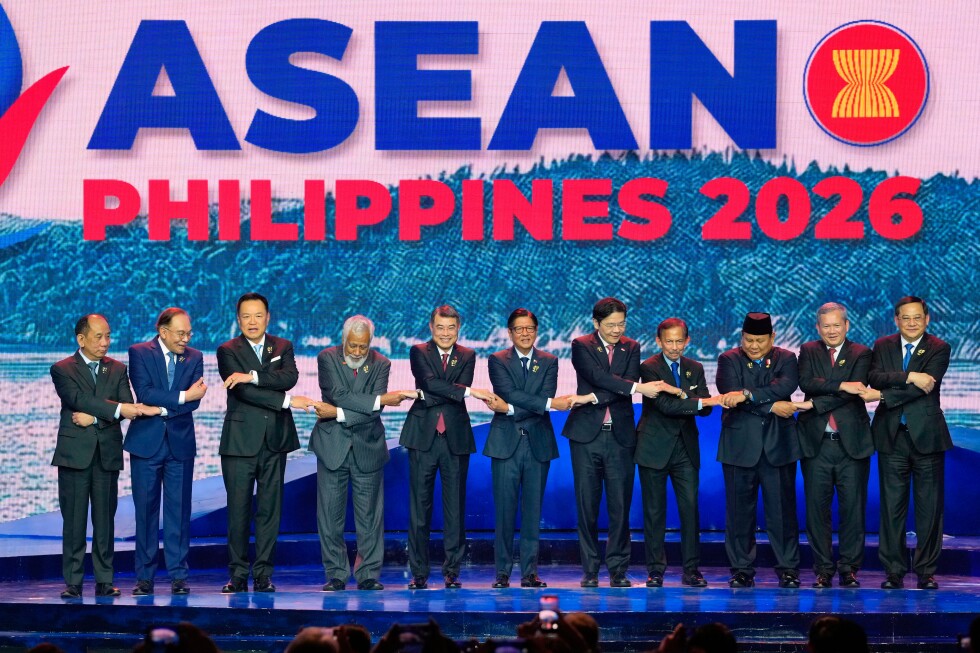
Southeast Asian leaders convened their annual summit in Cebu, Philippines on Friday under growing pressure to address the economic and humanitarian consequences of the ongoing Iran war. Officials characterized the conflict as one that “should not have occurred in the first place,” highlighting the region’s vulnerability to global crises.
In an unusual move reflecting the gravity of the situation, President Ferdinand Marcos Jr. ordered the Association of Southeast Asian Nations (ASEAN) summit to be conducted without its traditional ceremonial elements, acknowledging the severe economic headwinds facing the region and the world.
Discussions centered on establishing a comprehensive contingency plan to ensure stable fuel and food supplies for the region, which imports most of its oil and gas from the Middle East. The conflict has created particular urgency for ASEAN nations, which collectively have over one million citizens working and living in the affected areas.
“We have seen firsthand the vulnerability of our nations to external factors,” Marcos told fellow leaders during a closed-door meeting. “The domino effect of oil supply disruptions on the various sectors of our countries has affected how we conduct business, how we work, how we live.”
The Philippine president offered a sobering assessment of the long-term implications, noting that “even if the tensions de-escalate in time, the damage to critical infrastructure, to vital systems and trust in general will continue to be felt for years to come.”
Several Southeast Asian citizens have been killed since military strikes against Iran began on February 28. Despite a month-old ceasefire, sporadic hostilities continue, particularly in the strategic Strait of Hormuz, a critical chokepoint for global oil shipping that directly affects energy security throughout Southeast Asia.
Thailand’s Foreign Minister Sihasak Phuangketkeow voiced stronger criticism than most ASEAN officials. “This war should not have occurred in the first place,” he told The Associated Press, adding that all ASEAN states were alarmed by the situation. “We don’t know what the objectives are right? The peace talks seem to be moving, but we want the war to end.”
A draft joint declaration seen by AP outlines ASEAN’s proposed contingency measures, calling for member states to share information and strengthen coordination with international organizations “to ensure the safety and welfare of ASEAN nationals in affected areas.”
The plan includes several practical measures: ratifying an agreement for coordinated emergency fuel sharing, planning a regional power grid, diversifying crude oil sources, promoting electric vehicles, and exploring new technologies including civilian nuclear energy.
While the Iran war dominated discussions, leaders also addressed persistent regional challenges including South China Sea territorial disputes involving Beijing, Myanmar’s five-year civil war, and recent border conflicts between Thailand and Cambodia.
Regarding the South China Sea, leaders pledged to “endeavour to conclude the negotiation of an effective and substantive Code of Conduct” with China. This proposed non-aggression pact has been under negotiation for more than a decade while confrontations between Chinese, Philippine, and other nations’ naval forces have intensified in the disputed waters.
The slow progress on these longstanding issues has fueled criticism of ASEAN as merely a “talk shop” where leaders appear annually in traditional attire for symbolic displays of unity despite deep internal divisions.
The 11-member regional bloc includes Brunei, Cambodia, East Timor, Indonesia, Laos, Malaysia, Myanmar, the Philippines, Singapore, Thailand, and Vietnam. Four member states – Brunei, Malaysia, Vietnam and the Philippines – are directly involved in the South China Sea territorial disputes, highlighting the complex regional dynamics ASEAN must navigate while addressing the immediate concerns of the Iran war.
Fact Checker
Verify the accuracy of this article using The Disinformation Commission analysis and real-time sources.

14 Comments
If AISC keeps dropping, this becomes investable for me.
Exploration results look promising, but permitting will be the key risk.
Silver leverage is strong here; beta cuts both ways though.
Good point. Watching costs and grades closely.
Uranium names keep pushing higher—supply still tight into 2026.
Good point. Watching costs and grades closely.
Nice to see insider buying—usually a good signal in this space.
The cost guidance is better than expected. If they deliver, the stock could rerate.
Good point. Watching costs and grades closely.
Good point. Watching costs and grades closely.
If AISC keeps dropping, this becomes investable for me.
Good point. Watching costs and grades closely.
Nice to see insider buying—usually a good signal in this space.
Interesting update on Alarmed ASEAN leaders discuss crisis plan to mitigate backlash from Middle East war. Curious how the grades will trend next quarter.