


Listen to the article
Trump Claims Success in Venezuela Operation, Pledges U.S. Role in Transition
President Donald Trump declared Saturday’s military operation that led to Venezuelan President Nicolás Maduro’s ouster a “major success,” while outlining plans for his administration to temporarily manage Venezuela until a transition of power can be implemented.
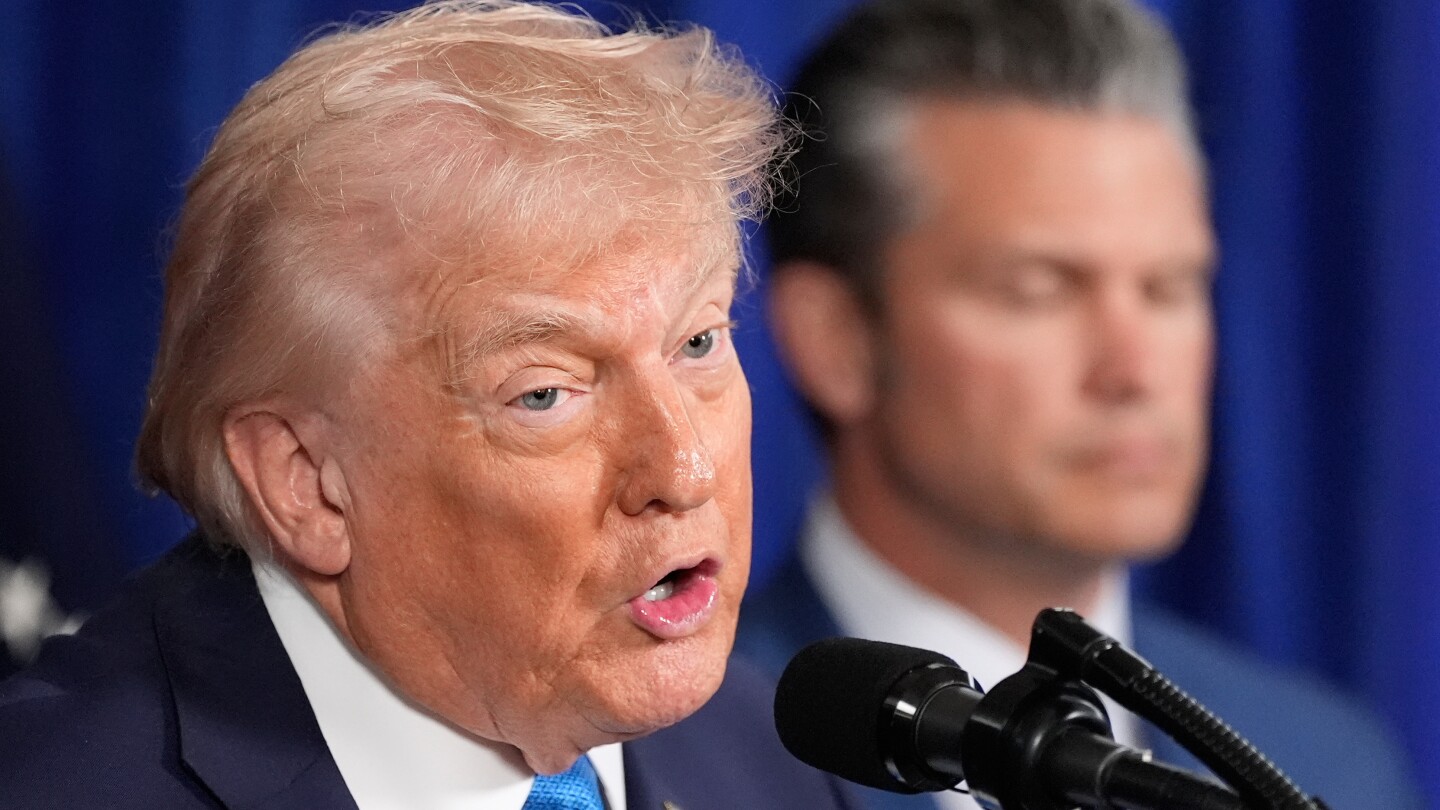
“This was one of the most stunning, effective and powerful displays of American military might and competence in American history,” Trump announced during a news conference at his Mar-a-Lago resort in Florida.
While there are no visible signs of U.S. troops on the ground in Caracas, Trump’s bold assertions about America’s role in Venezuela’s future align with his characteristically confident approach to foreign policy. The operation represents a significant shift for a president who campaigned on reducing American military entanglements abroad.
The president’s pledge to oversee Venezuela’s transition comes as his administration already faces challenges in other global hotspots, including ongoing efforts to broker peace between Israel and Hamas in Gaza, and Russia’s nearly four-year war in Ukraine.
Venezuela’s path forward remains fraught with obstacles. The White House must now navigate the power vacuum created by Maduro’s removal and maintain stability in a country that has endured years of hyperinflation, severe food and medicine shortages, and mass emigration despite possessing the world’s largest proven oil reserves.
Trump expressed confidence that Venezuela’s vast petroleum resources would fund the transition. “The money coming out of the ground is very substantial,” he said. “We’re going to get reimbursed for everything that we spend.”
The operation marks the second time during his presidency that Trump has authorized significant military action against adversaries. In June, he directed strikes against Iranian nuclear sites, demonstrating his willingness to deploy American military power despite promises to avoid foreign conflicts.
International Reaction
Saturday’s action has prompted concern from global leaders who worry about the precedent set by unilateral U.S. military intervention.
European Commission President António Costa expressed “great concern” about the situation following the American operation. France’s Foreign Minister Jean-Noël Barrot criticized the action, stating that “the military operation that led to the capture of Maduro infringes the principle of the non-use of force that underpins international law.”
Domestically, some Democratic lawmakers immediately condemned the action. Senator Ruben Gallego of Arizona wrote on X: “This war is illegal, it’s embarrassing that we went from the world cop to the world bully in less than one year. There is no reason for us to be at war with Venezuela.”
Russia’s foreign ministry condemned what it called a U.S. “act of armed aggression” against Venezuela, while China’s foreign ministry issued a statement saying the operation violates international law and Venezuelan sovereignty.
The Path to Intervention
The operation culminated months of pressure led by Secretary of State Marco Rubio and other administration officials who have long advocated for action against Maduro’s regime. In South Florida, home to a large Venezuelan diaspora opposed to Maduro, the operation received enthusiastic support.
Rep. Carlos Gimenez, a Florida Republican, praised the action, comparing Maduro’s extradition to the fall of the Berlin Wall and thanking Trump for having “changed the course of history in our hemisphere.”
Rubio used the moment to issue a warning to Cuba, another U.S. adversary in the Caribbean and ally of Maduro’s government. “If I lived in Havana, and I was in the government, I’d be concerned — at least a little bit,” he said.
Venezuela’s Political Future
Prior to the military operation, Venezuelan officials had reportedly proposed a plan in which Maduro would step down in three years, transferring power to Vice President Delcy Rodriguez to complete his term ending in 2031. The White House rejected this proposal, questioning the legitimacy of Maduro’s rule and accusing him of overseeing a narco-terrorist state.
Venezuela’s opposition maintains that exiled politician Edmundo González, an ally of opposition leader Maria Corina Machado, is the country’s rightful president following disputed elections.
Trump said he wasn’t ready to commit to recognizing any specific leader but insisted that his administration must remain “very involved” in Venezuela’s transition. “If we just left, it has zero chance of ever coming back. We’ll run it properly. We’ll run it professionally,” Trump said, adding that American oil companies would invest “billions and billions of dollars” in the country’s petroleum industry.
“We can’t take a chance of letting somebody else run it — just take over where Maduro left,” Trump concluded, underscoring his administration’s intention to play a decisive role in shaping Venezuela’s political future.
Fact Checker
Verify the accuracy of this article using The Disinformation Commission analysis and real-time sources.

11 Comments
Venezuela’s political and economic crisis has been devastating for the country. While U.S. intervention may help stabilize the situation, it’s crucial that Venezuelans maintain a leading role in determining their own future.
Interesting development in Venezuela. Curious to see how the U.S. manages the transition and what role they will play in the country’s future. Hoping for a peaceful and prosperous outcome for the Venezuelan people.
Agreed. The U.S. military intervention seems bold, but stability and democracy are crucial for Venezuela. Let’s hope this leads to positive change, not further turmoil.
The U.S. commitment to overseeing Venezuela’s transition raises concerns about potential overreach. Maintaining a delicate balance between stability and self-determination will be critical going forward.
Trump’s assertive stance on Venezuela could be seen as an attempt to project American global power and influence. However, sustainable change will require a collaborative effort that empowers the Venezuelan people.
Trump’s bold claims about the military operation’s success and America’s role in Venezuela’s future seem to signal an aggressive foreign policy approach. While stability is needed, the U.S. should be cautious about overextending its influence.
Agree, the U.S. involvement requires careful diplomacy and respect for Venezuelan sovereignty. Hopefully this leads to a positive outcome, but the path forward remains uncertain.
This is a significant foreign policy move by Trump. The U.S. taking a lead role in managing Venezuela’s transition raises questions about America’s global influence and intentions.
True, Trump’s approach seems very assertive. It remains to be seen if the U.S. can effectively guide Venezuela’s transition and whether this aligns with the interests of the Venezuelan people.
Given the complex political and economic situation in Venezuela, I’m skeptical that U.S. military involvement and oversight of the transition will lead to a sustainable resolution. Hoping for the best, but caution is warranted.
Understood. The U.S. track record of interventions abroad is mixed, so maintaining an objective and impartial stance will be crucial as Venezuela navigates this critical juncture.