


Listen to the article
Afghanistan Claims to Thwart Pakistani Airstrikes as Border Conflict Intensifies
Afghan authorities announced Sunday that they successfully prevented attempted airstrikes by Pakistani military jets targeting Bagram Air Base, the former U.S. military installation north of Kabul. The incident marks a significant escalation in the cross-border conflict between the neighboring countries, which has now entered its fourth day.
The police headquarters of Parwan province, where Bagram is located, stated that several Pakistani military jets entered Afghan airspace around 5 a.m. Sunday, attempting to bomb the base. Afghan forces reportedly responded with “anti-aircraft and missile defense systems” and successfully thwarted the attack. Pakistan has not immediately responded to these claims.
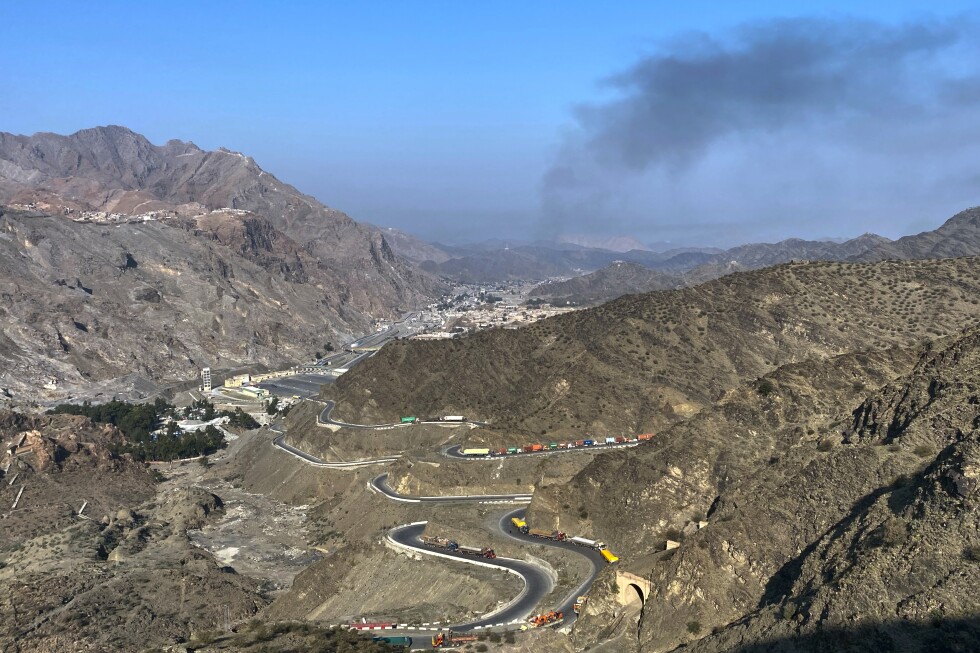
The fighting represents the most severe military confrontation between Afghanistan and Pakistan in years, with Pakistan declaring it is now in “open war” with its neighbor. This intensifying conflict has raised alarms throughout the international community, particularly because the border region is known to harbor militant organizations including al-Qaida and Islamic State, which could potentially capitalize on the instability.
Tensions between the two nations have deep roots. Pakistan accuses Afghanistan’s Taliban government of providing safe haven to militant groups that conduct attacks against Pakistani targets and of forging alliances with India, Pakistan’s longtime rival. The Taliban government in Kabul consistently denies these accusations.
The current round of hostilities began Thursday night when Afghanistan launched a broad cross-border attack, describing it as retaliation for Pakistani airstrikes conducted the previous Sunday. Pakistan claimed those initial strikes targeted positions of the outlawed Tehreek-e-Taliban Pakistan (TTP), also known as the Pakistani Taliban. Afghanistan countered that those strikes killed only civilians.
The TTP, while separate from Afghanistan’s ruling Taliban, maintains close ideological ties with them. The militant group operates inside Pakistan and has been responsible for hundreds of deaths in bombings and other attacks over the years. Pakistan has repeatedly accused Afghanistan of harboring TTP fighters.
After Afghanistan’s counterattack on Thursday, Pakistani Defense Minister Khawaja Mohammad Asif escalated the rhetoric dramatically, stating, “Our patience has now run out. Now it is open war between us.”
Both sides have made conflicting claims about casualties and territorial control. Each country asserts it has killed hundreds of the other’s forces while minimizing reports of their own losses. Pakistani security officials, speaking on condition of anonymity, claim their forces still control a key Afghan post and approximately 32 square kilometers of territory in the southern Zhob sector near Afghanistan’s Kandahar province, which they reportedly captured during Friday’s fighting.
Afghan officials vehemently reject these territorial claims. Deputy government spokesman Hamdullah Fitrat dismissed them as “baseless,” while other officials reported ongoing fighting across multiple border provinces. Defense Ministry spokesman Enayatulah Khowarazmi claimed Afghan forces had launched counterattacks with snipers from Nangarhar, Paktia, Khost, and Kandahar provinces overnight, reportedly shooting down two Pakistani drones and killing dozens of Pakistani soldiers.
Civilian casualties have been reported amid the fighting. Afghan officials claim Pakistani drone strikes hit civilian homes in Nangarhar province late Saturday, killing a woman and a child, while mortar fire killed another civilian in Paktia province.
This is not the first serious border clash between the two countries. In October, dozens of soldiers, civilians, and suspected militants were killed in similar fighting until Qatar mediated a ceasefire. Subsequent peace talks in Turkey last November failed to produce a lasting agreement, and sporadic exchanges of fire have continued.
Bagram Air Base, the target of the alleged attempted airstrikes, holds particular strategic significance. It was formerly the largest U.S. military installation in Afghanistan before being taken over by the Taliban during their rapid conquest of the country following the chaotic U.S. withdrawal in 2021. Last year, former U.S. President Donald Trump suggested he wanted to reestablish an American presence at the base, highlighting its continued importance in regional military calculations.
As the conflict continues to develop, the international community watches with growing concern about the potential for further escalation and the risk of regional destabilization.
Fact Checker
Verify the accuracy of this article using The Disinformation Commission analysis and real-time sources.

9 Comments
The reported airstrikes on Bagram Air Base underscore the fragile security situation in Afghanistan. With the potential for this conflict to draw in other regional powers, it’s critical that all sides exercise restraint and prioritize dialogue to prevent a wider conflagration. I’ll be closely following developments on this story.
The reported airstrikes on Bagram Air Base are a worrying development. The former US military installation is a strategically important site, and any attacks there could have significant consequences. I’ll be following this story closely to see how it unfolds.
Agreed. Attacks on Bagram raise the stakes and could draw in other regional powers. All sides need to exercise restraint to prevent this conflict from spiraling out of control.
As someone who follows the geopolitics of this region, I’m concerned about the potential for this border dispute to escalate. Both Afghanistan and Pakistan have complex security challenges, and any military confrontation could destabilize the entire area.
You make a good point. This conflict has the potential to disrupt the precarious balance of power in the region. I hope the international community can pressure both sides to deescalate and find a diplomatic solution.
This border dispute between Afghanistan and Pakistan is deeply concerning. Attacks on sites like Bagram Air Base could destabilize the region and embolden extremist groups. I hope both sides can find a way to deescalate tensions through diplomatic channels before the situation spirals further out of control.
The reported thwarting of Pakistani airstrikes on Bagram Air Base is a significant development. This conflict at the Afghanistan-Pakistan border is complex, with implications for regional security and the fight against terrorist groups. I’ll be closely monitoring how this situation evolves in the coming days.
This is a concerning escalation in the ongoing tensions between Afghanistan and Pakistan. The border region is volatile, and any military clashes there risk disrupting security and enabling extremist groups. I hope both sides can de-escalate the situation through diplomatic channels.
Given the history of tensions between Afghanistan and Pakistan, this latest flare-up is hardly surprising. However, the reported use of airstrikes is a concerning development that could have far-reaching consequences. It’s critical that both sides exercise restraint to prevent further escalation.