


Listen to the article
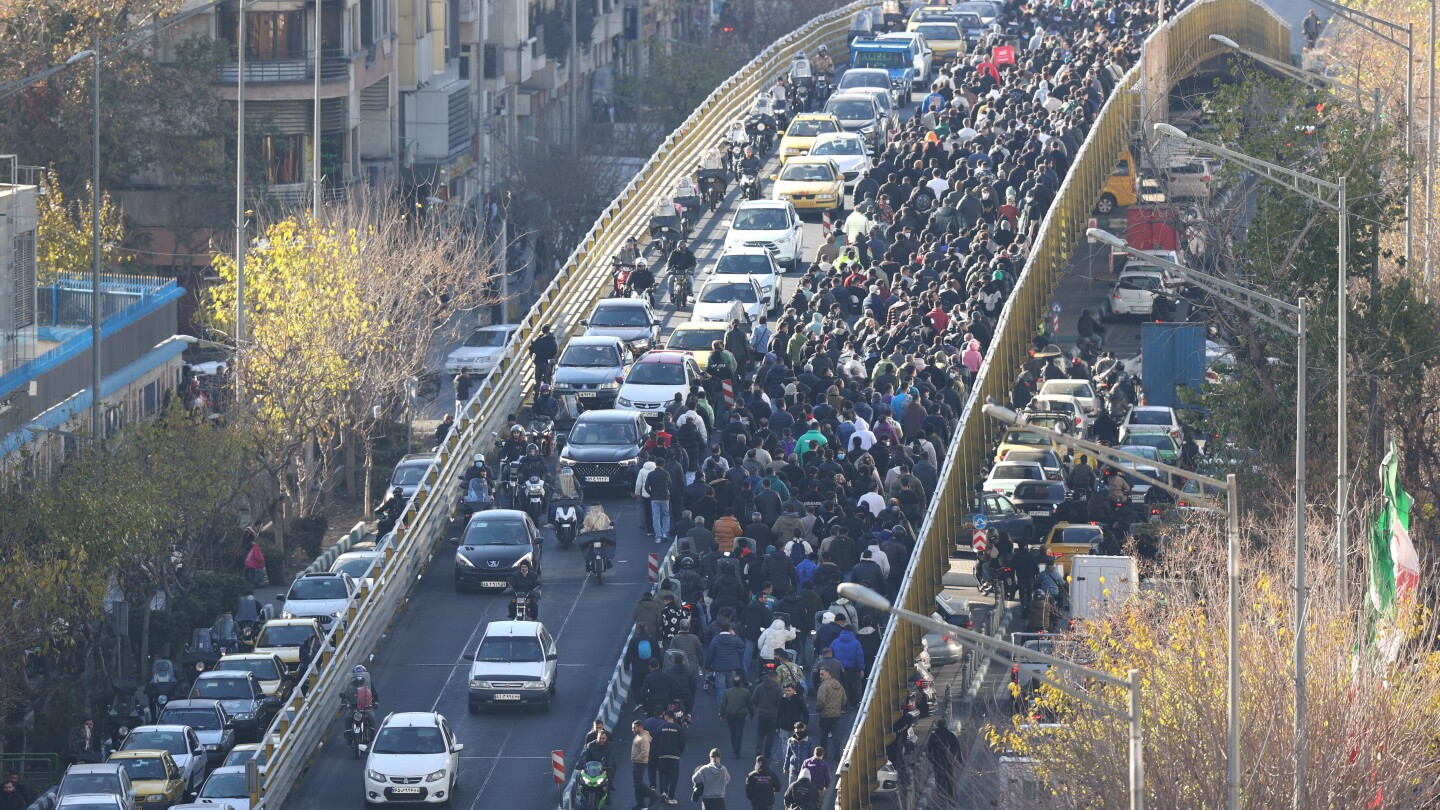
Widespread unrest has gripped Iran since late December as the country faces its worst economic crisis in years, with protests that began over financial concerns evolving into broader anti-government demonstrations. What started as isolated incidents in Tehran’s markets has spread to more than 280 locations across 27 provinces, leaving at least 42 people dead and over 2,200 detained.
The catalyst for the demonstrations was the Iranian rial’s collapse to a record low of 1.42 million to the U.S. dollar on December 28, exacerbating an already dire economic situation where inflation has made basic necessities unaffordable for many Iranians. The government’s decision to raise subsidized gasoline prices in early December further fueled public discontent.
As protesters filled Tehran’s streets, the economic crisis claimed its first political casualty when Central Bank head Mohammad Reza Farzin resigned on December 29. Police responded with tear gas as demonstrations expanded beyond the capital to other urban centers and university campuses across the country.
President Masoud Pezeshkian attempted to address the growing unrest by meeting with business leaders on December 30, promising his administration would “not spare any effort for solving problems” with the economy. The following day, authorities appointed Abdolnasser Hemmati as the new central bank governor in an attempt to stabilize the situation.
The demonstrations took a deadly turn on January 1 when officials reported the first fatalities. The most intense violence occurred in Azna, a city in Iran’s Lorestan province, where video footage showed burning objects in streets amid sounds of gunfire. Additional deaths were reported in Bakhtiari and Isfahan provinces, along with a 21-year-old member of the Revolutionary Guard’s Basij paramilitary force in Lorestan.
U.S. President Donald Trump heightened tensions on January 2 with a warning on his Truth Social platform that if Iran “violently kills peaceful protesters,” American forces would “come to their rescue.” This threat comes just months after U.S. strikes on Iranian nuclear facilities, with Trump adding that American forces were “locked and loaded and ready to go,” though he provided no specifics.
The situation escalated further when Supreme Leader Ayatollah Ali Khamenei declared on January 3 that “rioters must be put in their place,” widely interpreted as authorization for security forces to crack down more aggressively. By this point, the Human Rights Activists News Agency (HRANA), a U.S.-based monitoring group, reported protests had reached over 170 locations in 25 provinces, with at least 15 people killed and 580 arrested.
On January 6, demonstrators staged a sit-in at Tehran’s Grand Bazaar, a commercial hub and historical center of political activism, before security forces dispersed them with tear gas. By this point, the death toll had risen to 36, including two members of Iranian security forces, according to HRANA’s documentation.
The most recent significant development occurred on January 8-9 when, following a call from Iran’s exiled crown prince, citizens engaged in overnight protests, shouting from windows and taking to streets across the country. The government responded by blocking internet access and international telephone connections in an apparent attempt to isolate the population and prevent coordination among protesters.
This latest wave of protests represents one of the most serious challenges to Iran’s theocratic government since the 2009 Green Movement and the 2019 demonstrations over fuel price increases. The current unrest stands out for its rapid spread across the country and its evolution from economic grievances to explicit anti-government sentiment, reflecting deepening public frustration with the Islamic Republic’s leadership amid persistent economic hardship.
Fact Checker
Verify the accuracy of this article using The Disinformation Commission analysis and real-time sources.

8 Comments
This unrest in Iran is concerning, with the economic crisis triggering widespread protests. It’s a complex situation with many factors at play, including the government’s decisions on fuel subsidies and currency devaluation. I hope the authorities and protesters can find a peaceful resolution that addresses the underlying issues.
You’re right, the economic factors seem to be a major driver here. It will be critical for the government to listen to the concerns of the protesters and find constructive solutions, rather than resorting to heavy-handed crackdowns.
This is a complex and rapidly evolving situation in Iran. The economic factors like currency devaluation and fuel price hikes seem to have been the initial spark, but the protests have now taken on a broader anti-government character. It will be important to closely monitor the government’s response and see if they make any concessions to address the protesters’ concerns.
The timeline highlights how the initial protests over economic issues have evolved into broader anti-government demonstrations. This reflects the depth of public frustration with the regime. While the violence is worrying, it’s important that the world closely monitors the situation and holds Iran accountable for its treatment of protesters.
Agreed. The government’s response will be a key factor in determining whether this unrest can be resolved peacefully or if it spirals into something more destabilizing. Transparent and meaningful dialogue with the protesters will be crucial.
The timeline provided gives a good overview of how the protests evolved from initial economic grievances to wider anti-government sentiment. It’s a troubling situation, with the government’s heavy-handed response potentially further inflaming tensions. I hope all sides can find a way to de-escalate the situation through dialogue and meaningful reforms.
You make a fair point. The government’s actions in response to the protests will be critical in determining whether this crisis can be resolved peacefully or if it leads to more instability and unrest in Iran.
This situation in Iran is a complex and concerning one. The economic crisis has clearly been a major catalyst, but the protests have taken on a broader anti-government character. I’m curious to see if the government will make concessions to address the protesters’ demands or if the crackdown will escalate further.