


Listen to the article
Following the death of Ayatollah Ali Khamenei in a surprise U.S. and Israeli military strike, Iran faces a critical leadership transition after 37 years under his rule. The nation’s power brokers are moving quickly to select a new supreme leader, with an announcement expected early this week, according to Foreign Minister Abbas Araghchi.
This marks only the second leadership change since the 1979 Islamic Revolution that transformed Iran into a theocratic state. The supreme leader position carries immense authority, wielding final decision-making power over all major national policies, including military action, international diplomacy, and Iran’s controversial nuclear program.
During this unprecedented period of uncertainty, a provisional governing council has assumed leadership duties. The transitional body consists of President Masoud Pezeshkian, judiciary chief Gholamhossein Mohseni Ejei, and senior Shiite cleric Ayatollah Ali Reza Arafi, who are collectively steering the country through what analysts describe as its most significant crisis in decades.
The selection process falls to the Assembly of Experts, an 88-member panel of Shiite clerics who are elected after their candidacies receive approval from the Guardian Council. By law, this body is required to move swiftly in naming a successor. However, Khamenei’s substantial influence over both clerical institutions suggests the next leader will likely maintain policy continuity rather than represent a dramatic shift in Iran’s governance or international stance.
Several prominent figures have emerged as potential successors, each representing different ideological positions within Iran’s political spectrum.
Mojtaba Khamenei, son of the deceased supreme leader, stands among the frontrunners despite never having held public office. While he maintains strong connections to the influential Revolutionary Guard, his selection could prove controversial as the Islamic Republic has historically criticized hereditary succession, positioning itself as a more egalitarian alternative to monarchical systems.
Ayatollah Ali Reza Arafi, currently serving on the provisional governing council, represents another serious contender. A senior Shiite cleric personally selected by Khamenei to serve on the Guardian Council in 2019, Arafi was subsequently elected to the Assembly of Experts three years later. He currently oversees an extensive network of religious seminaries, giving him significant influence in theological circles.
Former President Hassan Rouhani offers a more moderate option. Having led Iran from 2013 to 2021, Rouhani spearheaded the historic nuclear agreement with the Obama administration, which was later abandoned during Donald Trump’s presidency. Although Rouhani previously served on the Assembly of Experts, he reported being disqualified from seeking reelection in 2024, a decision he publicly criticized as undermining Iranian political participation.
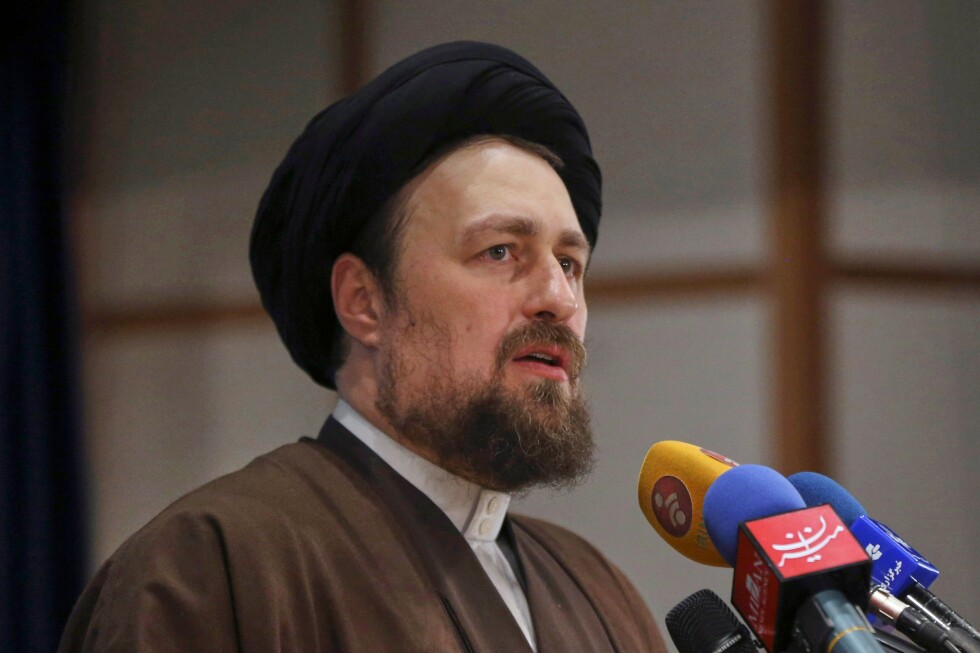
Hassan Khomeini brings dynastic credentials as the most prominent grandson of Ayatollah Ruhollah Khomeini, the founder of the Islamic Republic. Considered relatively moderate in his political views, Khomeini has never held government office and currently maintains a ceremonial role at his grandfather’s mausoleum in Tehran.
Representing the hard-line faction, Ayatollah Mohammed Mehdi Mirbagheri serves on the Assembly of Experts and currently leads the Islamic Cultural Center in Qom, Iran’s preeminent center for religious education. Known for controversial positions, Mirbagheri maintained close ties with the late Ayatollah Mohammad Taghi Mesbah Yazdi, who advocated for Iran’s right to develop “special weapons,” widely interpreted as nuclear arms. During the COVID-19 pandemic, Mirbagheri notably characterized school closures as a “conspiracy.”
The selection process comes at a particularly volatile moment for Iran, with regional tensions escalating following military exchanges with Israel and amid ongoing international scrutiny of its nuclear ambitions. The choice of successor will significantly influence Iran’s domestic and foreign policy trajectory for years to come, potentially reshaping Middle Eastern geopolitics and the country’s relationship with Western powers.
Fact Checker
Verify the accuracy of this article using The Disinformation Commission analysis and real-time sources.

23 Comments
I like the balance sheet here—less leverage than peers.
Good point. Watching costs and grades closely.
Good point. Watching costs and grades closely.
I like the balance sheet here—less leverage than peers.
Nice to see insider buying—usually a good signal in this space.
Good point. Watching costs and grades closely.
Good point. Watching costs and grades closely.
Nice to see insider buying—usually a good signal in this space.
Good point. Watching costs and grades closely.
Good point. Watching costs and grades closely.
If AISC keeps dropping, this becomes investable for me.
Good point. Watching costs and grades closely.
Exploration results look promising, but permitting will be the key risk.
Interesting update on A look at some of the contenders to be Iran’s supreme leader after the killing of Khamenei. Curious how the grades will trend next quarter.
Exploration results look promising, but permitting will be the key risk.
If AISC keeps dropping, this becomes investable for me.
Interesting update on A look at some of the contenders to be Iran’s supreme leader after the killing of Khamenei. Curious how the grades will trend next quarter.
Interesting update on A look at some of the contenders to be Iran’s supreme leader after the killing of Khamenei. Curious how the grades will trend next quarter.
Nice to see insider buying—usually a good signal in this space.
Good point. Watching costs and grades closely.
I like the balance sheet here—less leverage than peers.
Good point. Watching costs and grades closely.
Interesting update on A look at some of the contenders to be Iran’s supreme leader after the killing of Khamenei. Curious how the grades will trend next quarter.