


Listen to the article
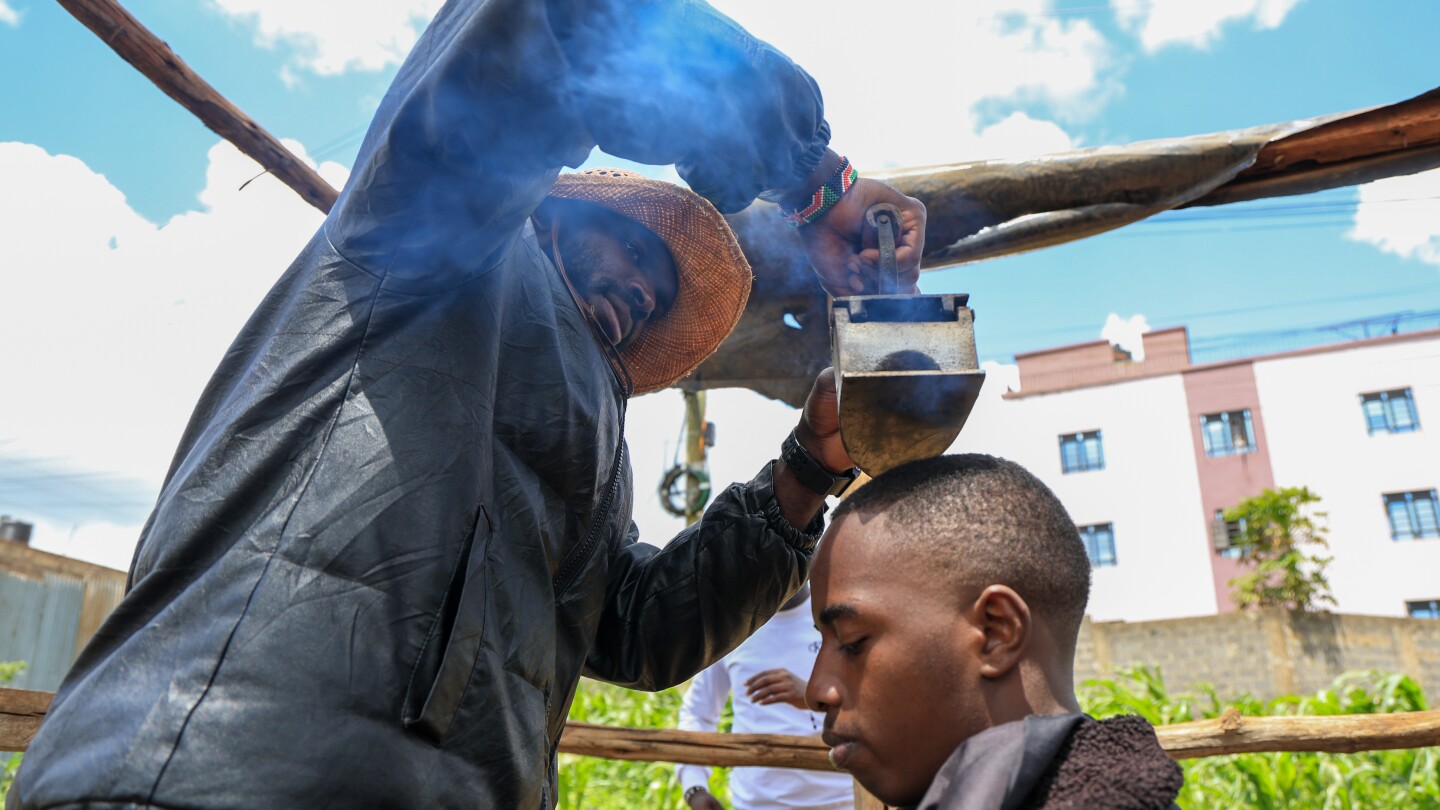
In a small, sparse shack on a rural roadside in Kiambu, just outside Nairobi, Safari Martins welcomes his client Ian Njenga. The wooden walls display an unusual collection of implements: a shovel, iron, agricultural shears, and a wrench. But Njenga isn’t there to purchase tools—he’s there for a haircut.
“I just use unconventional tools,” says Martins with a smile before skillfully sliding the razor-sharp edge of a shovel across Njenga’s head. With surprising precision, he removes a swath of hair in what will be the first of many moves resulting in a remarkably clean haircut.
As Martins works, an assistant captures every angle of the process on a smartphone. This documentation is crucial for Martins, who has built an empire as one of Kenya’s most recognizable barbers with approximately one million followers on both Instagram and TikTok, where he’s known as “Chief Safro.”
Born in Rwanda but now based in Nairobi, Martins began his barbering journey in 2018 while still in high school. Using borrowed clippers, he offered haircuts outside classrooms and in cramped dormitories. Five years later, he made a pivotal change—adding a camera to his process and abandoning conventional trimmers—a decision that transformed his career.
“If I compare him with other barbers, his talent is next level,” says Njenga, who first visited Martins last year. “When I get shaved here, I get very comfortable… while walking in the streets, I get very confident.”
Martins represents a growing trend of influencer barbers in Kenya, where social media usage has exploded in recent years. Platforms like TikTok are increasingly being used not just for entertainment but as lucrative side hustles in the East African nation’s digital economy.
While Martins initially went viral for his unconventional barbering methods, he has evolved his content to incorporate traditional African folk tales into voiceovers on his videos, adding cultural depth to his online presence.
“I’m motivated by African culture, by African stories,” he explains, noting that one of his tools—a sharpened iron box—was blessed by village elders, connecting his modern social media presence with traditional practices.
The draw of both a unique barbering experience and the opportunity to be featured on one of Kenya’s most popular social media accounts allows Martins to charge premium prices. At 1,500 Kenyan shillings (approximately $12) per haircut, his services cost roughly ten times more than the average trim in Nairobi—yet customers continue to seek him out.
This phenomenon occurs against the backdrop of Kenya’s digital transformation. According to DataReportal, a market research group, Kenya’s social media users increased by nearly 50% in just two years—from 10.6 million in January 2023 to 15.1 million by January 2025.
The monetization potential of social media in Kenya is significant. A June 2025 brief from the Kenya Institute for Public Policy Research and Analysis found that approximately 15% of Kenyan online content creators rely on it as their primary source of income. With digital advertising rates often benchmarked to Western standards, successful content creators can achieve substantial earnings relative to local wages.
Despite his success, Martins expresses frustration about the recognition and compensation barbers receive in the content creation economy. “Barbers get viral on social media, but I feel like they are not respected,” he says. “You are not paid as a content creator, even though you have the views, even if you have the engagement.”
His concerns appear valid. According to Fundmates, a company that finances influencers, the highest-paid creators typically produce gaming, education, or lifestyle content, primarily because these niches attract more lucrative brand partnerships and sponsorship opportunities.
Nevertheless, Martins continues to build his unique brand at the intersection of traditional craft and digital innovation, representing a new generation of Kenyan entrepreneurs finding creative ways to stand out in an increasingly crowded social media landscape.
Fact Checker
Verify the accuracy of this article using The Disinformation Commission analysis and real-time sources.

10 Comments
The idea of using a sharpened shovel as a barber’s tool is quite unique and intriguing. I’m curious to learn more about the history and cultural context behind this unconventional practice.
What an innovative and resourceful approach to barbering! Using a shovel as a cutting tool is certainly a unique twist. I’m curious to learn more about the cultural and practical reasons behind this unconventional practice.
Quite an innovative and resourceful barber! Using unconventional tools like a shovel for precision haircuts is certainly eye-catching. Building a large social media following through creative video content is an impressive business strategy.
It’s fascinating to see how this Kenyan barber has leveraged social media to grow his brand and reach a massive audience. Adapting to local conditions and using unexpected tools shows real entrepreneurial spirit.
Absolutely, this is a great example of how social media can empower small businesses and local talent to gain visibility and success.
What an enterprising young man! Turning a simple barbershop into a social media phenomenon with over a million followers is really impressive. This speaks to the power of creativity and embracing local traditions in business.
Agreed, his ability to connect with a wide audience through engaging video content is clearly a major driver of his success. Social media has opened up so many opportunities for small businesses to thrive.
I’m struck by the ingenuity of this Kenyan barber in using a sharpened shovel for precision haircuts. Leveraging social media to showcase his skills and build a massive following is a savvy business move.
Absolutely, his ability to adapt to local conditions and find creative solutions is very admirable. This is a great example of how technology can empower small businesses in developing economies.
This is a great example of how entrepreneurial spirit and innovation can thrive even in challenging conditions. Kudos to this Kenyan barber for finding such a unique way to stand out and build his brand.