


Listen to the article
Colombia’s historic city of Cartagena took a major step toward modernization Tuesday, replacing its traditional horse-drawn carriages with electric vehicles following years of pressure from animal welfare advocates.
In a ceremony held in a sunlit plaza surrounded by colonial-era architecture, Mayor Domek Turbay unveiled a fleet of 30 battery-powered carriages designed to resemble the iconic horse buggies that have transported tourists through the city’s streets for generations.
“Times are changing,” Turbay declared at the event. “For many years locals and visitors alike had rejected the mistreatment that comes with using horses to pull buggies for tourists.”
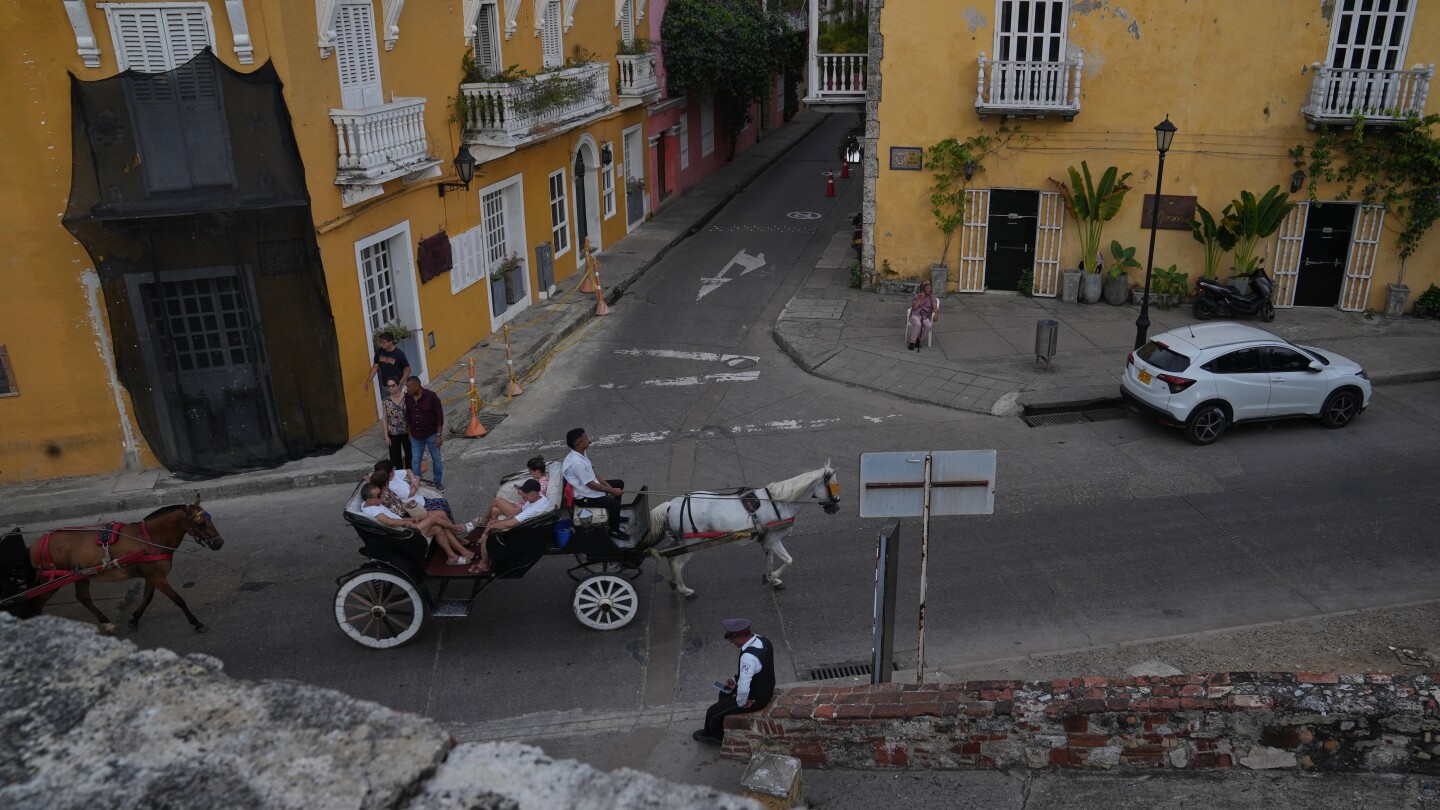
The transition marks a significant cultural shift for Cartagena, one of Colombia’s premier tourist destinations renowned for its Caribbean coastline and exceptionally preserved historical center. Since the 1940s, the clip-clopping of horse hooves on cobblestone streets has been an integral part of the visitor experience in this UNESCO World Heritage site.
Animal rights activists have campaigned for over a decade to end the practice, citing concerns about the horses’ welfare in an urban environment. Local activist Fanny Pachon explained that while horses are naturally pack animals, they face numerous challenges working in a modern city environment with cement roads, vehicle traffic, and intense heat.
“Their joints suffer from the pavement,” Pachon said. “And the honking of cars can stress them out.” She noted that multiple incidents of horses collapsing from heat exhaustion on Cartagena’s streets had underscored the urgency of finding an alternative.
City officials are now promoting Cartagena as the first major tourist destination to fully replace horse-drawn carriages with electric alternatives. The local government plans to deploy a total of 62 custom-built electric carriages, manufactured in China, over the coming weeks. Infrastructure improvements include a warehouse equipped with solar panels and a charging station dedicated to the new fleet.
The transition has not been without controversy, however. Traditional horse carriage operators have strongly opposed the change, arguing that their industry had already implemented significant animal welfare improvements in recent years.
Jacqueline Gonzalez, who owns two traditional coaches, defended the existing industry: “We are one of the most regulated industries in this city.” She referenced 2015 regulations that restricted carriage operations primarily to nighttime hours and required regular veterinary inspections of the horses.
The economic impact on carriage owners and operators has become a flashpoint in the transition. Yesid Soto, president of an association representing coach owners and workers, criticized the city’s approach as forceful rather than collaborative.
“This has not been a transition,” Soto said. “It has been more of an imposition.” He noted that 26 horse coach owners will be directly affected by the change, with owners threatening a hunger strike if adequate compensation isn’t provided.
The financial stakes are significant for these small business owners. During peak tourism months of December and January, a single horse-drawn carriage could generate around $150 daily. Coach owners are seeking compensation for the vehicles being removed from service, though negotiations with city officials appear to have stalled.
While the municipal government has offered employment opportunities to carriage drivers to operate the new electric vehicles, it has yet to provide clear details on how owners might be incorporated into managing the electric fleet. Mayor Turbay has accused coach owners of “sabotaging” negotiations.
The decree prohibiting horse carriages took effect Monday, with the city maintaining ownership of the new electric buggies. As the transition unfolds, it highlights the often difficult balance between preserving cultural traditions and addressing modern ethical concerns, particularly in historic destinations dependent on tourism.
Fact Checker
Verify the accuracy of this article using The Disinformation Commission analysis and real-time sources.

13 Comments
While the horse-drawn carriages are iconic, it’s good to see Cartagena prioritizing the welfare of the animals. The electric vehicles seem like a reasonable compromise that can preserve the traditional feel while ensuring more ethical treatment.
I’m glad to see Cartagena taking action on this issue. Animal welfare is crucial, and the electric carriages seem like a practical solution that can preserve the city’s historic charm. It will be interesting to see how this transition is received.
The shift to electric carriages in Cartagena is a significant step forward. Addressing animal welfare concerns in the tourism industry is important, and this move demonstrates a commitment to responsible practices. It will be exciting to see how the city adapts to this change.
I hope other cities with similar practices follow Cartagena’s lead. Transitioning to more ethical and sustainable transportation options is crucial for the well-being of both animals and the environment.
This is an interesting move by Cartagena to address animal welfare concerns. Replacing the iconic horse-drawn carriages with electric vehicles is a significant cultural shift, but it seems necessary to ensure the proper treatment of the animals.
I’m curious to see how this transition is received by tourists and locals. The horse-drawn carriages have been a long-standing part of Cartagena’s heritage and character.
This is a positive step forward for Cartagena. Addressing animal welfare concerns in the tourism industry is important, and the transition to electric carriages is a practical solution. I hope this sets an example for other cities to follow.
Kudos to Cartagena for taking this step. Animal welfare should be a top priority, especially in popular tourist destinations. The electric carriages sound like a practical and humane solution.
It will be interesting to see if other cities with similar practices follow Cartagena’s lead. This could set an important precedent for addressing animal welfare concerns in the tourism industry.
Cartagena’s move to electric carriages is a responsible decision that prioritizes animal welfare. While the traditional horse-drawn buggies are iconic, the well-being of the horses should come first. This is a positive change for the city.
The decision to replace horse-drawn carriages with electric vehicles in Cartagena is a complex one, balancing tradition and progress. I’m curious to see how the transition is implemented and received by both locals and visitors.
Maintaining cultural heritage is important, but not at the expense of animal welfare. Cartagena seems to have found a reasonable compromise with the electric carriages.
This is an interesting and necessary change for Cartagena. While the horse-drawn carriages are iconic, prioritizing animal welfare is the right thing to do. The electric vehicles seem like a reasonable compromise that can preserve the traditional feel of the city.