


Listen to the article
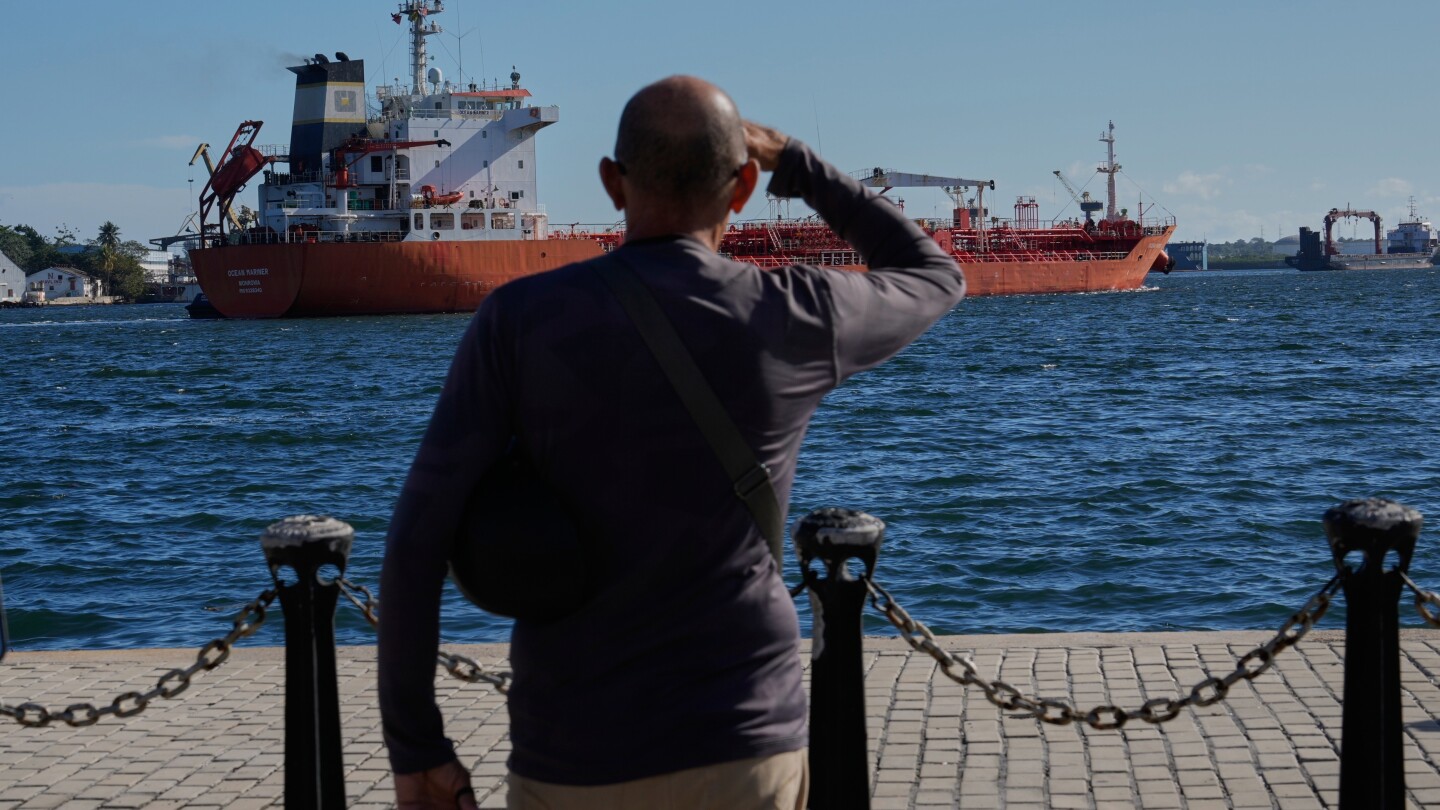
U.S. seizures of Venezuela-linked oil tankers are intensifying, raising alarm in Cuba about the island’s economic survival amid its worst crisis in decades. Experts warn that any disruption to Venezuelan oil shipments could push Cuba’s fragile economy past the breaking point, potentially triggering widespread unrest and accelerating migration from the island.
“I’d be lying if I told you that I don’t want to leave the country,” said 16-year-old Cuban student Amanda Gómez. “We’re all thinking about leaving, from the youngest to the oldest.”
Cuba was already struggling with severe power outages and fuel shortages before the recent U.S. military operation that resulted in the capture of former Venezuelan President Nicolás Maduro. The island’s dependency on Venezuelan oil has become increasingly precarious as the Trump administration expands its control over Venezuela’s global oil distribution.
“This will take an already dire situation to new extremes,” said Michael Galant, senior research associate at the Center for Economic and Policy Research in Washington, D.C. “This is what a collapsing economy looks like.”
Galant suggests the Trump administration’s strategy is deliberate: “to cause such indiscriminate suffering in the civilian population as to instigate some sort of uprising, regime change.” However, he notes that predicting what might trigger genuine political instability remains difficult, as “the Cuban people have experienced suffering for a very long time, and the Cuban government is very well versed in how to handle these situations.”
Cuba’s demographic trends already reflect the impact of its economic crisis. Between 2020 and 2024, the island’s population decreased by an estimated 1.4 million people, primarily due to emigration.
Juan Carlos Albizu-Campos, a Cuban economist and demographics expert, warns that fuel shortages will amplify the exodus. “Fuel is a factor that affects everything,” he said. “People who hadn’t considered leaving will feel the need to do so.”
The statistics paint a grim picture: Cuba’s GDP has contracted by 15% over the past six years, with President Miguel Díaz-Canel acknowledging a 4% decrease in 2025 alone. The Cuban economy, which enjoyed relative prosperity between 2000 and 2019 through tourism and exports, never fully recovered from the collapse of the Soviet Union in the 1990s. When COVID-19 hit, coupled with intensified U.S. sanctions under Trump’s second administration, Cuba’s economic crisis deepened significantly.
Prior to the recent U.S. military action, Cuba received approximately 35,000 barrels of oil daily from Venezuela, supplemented by about 5,500 barrels from Mexico and 7,500 from Russia, according to Jorge Piñón of the University of Texas at Austin’s Energy Institute. Even with these supplies, Cuba has struggled with persistent blackouts.
“An indefinite shutdown of the electrical system, which is no longer so impossible to imagine, can be envisioned under a total suspension of oil shipments from Venezuela,” said Jorge Duany with the Cuban Research Institute at Florida International University. “It would lead us to imagine the possibility of mass protests.”
On Friday, U.S. forces seized their fifth oil tanker as part of the administration’s broader efforts to control Venezuela’s oil exports. While it remains unclear if any seized vessels were bound for Cuba, experts believe any disruption to the supply chain would severely impact the island’s fragile economy.
Andy S. Gómez, a Cuban studies expert from the University of Miami, doubts that potential protests would lead to the government’s collapse while Raúl Castro remains alive and in control of the military. “Are they concerned? You bet,” Gómez said. “They’re not well armed; their equipment is outdated.” However, he notes that civilians aren’t armed, and it’s unlikely that any faction of Cuba’s military would break from the ruling elite.
Instead, Gómez suggests that if political change occurs, it would likely involve replacing current leadership with other established figures, resulting in “just a continuation of the government.” He adds that many Cubans are primarily focused on immediate survival needs rather than political change: “The Cuban people only care about one thing right now, unfortunately… they want to put food on the table, have electricity, have a place to live, have a job.”
Some analysts believe Cuba’s only significant leverage with the United States is the threat of mass migration. Cuban military forces reportedly remain on high alert as the situation continues to evolve, with the island’s government facing mounting pressure from both external sanctions and internal economic failures.
Fact Checker
Verify the accuracy of this article using The Disinformation Commission analysis and real-time sources.

22 Comments
Production mix shifting toward World might help margins if metals stay firm.
Good point. Watching costs and grades closely.
Good point. Watching costs and grades closely.
Nice to see insider buying—usually a good signal in this space.
Exploration results look promising, but permitting will be the key risk.
Good point. Watching costs and grades closely.
Good point. Watching costs and grades closely.
I like the balance sheet here—less leverage than peers.
Good point. Watching costs and grades closely.
Interesting update on A battered Cuba braces for aftershocks as US seizures of oil tankers linked to Venezuela surge. Curious how the grades will trend next quarter.
Good point. Watching costs and grades closely.
Good point. Watching costs and grades closely.
Production mix shifting toward World might help margins if metals stay firm.
I like the balance sheet here—less leverage than peers.
I like the balance sheet here—less leverage than peers.
Good point. Watching costs and grades closely.
Interesting update on A battered Cuba braces for aftershocks as US seizures of oil tankers linked to Venezuela surge. Curious how the grades will trend next quarter.
I like the balance sheet here—less leverage than peers.
Good point. Watching costs and grades closely.
Good point. Watching costs and grades closely.
I like the balance sheet here—less leverage than peers.
Good point. Watching costs and grades closely.