


Listen to the article
Wind Energy Misinformation Campaign Threatens Europe’s Energy Security
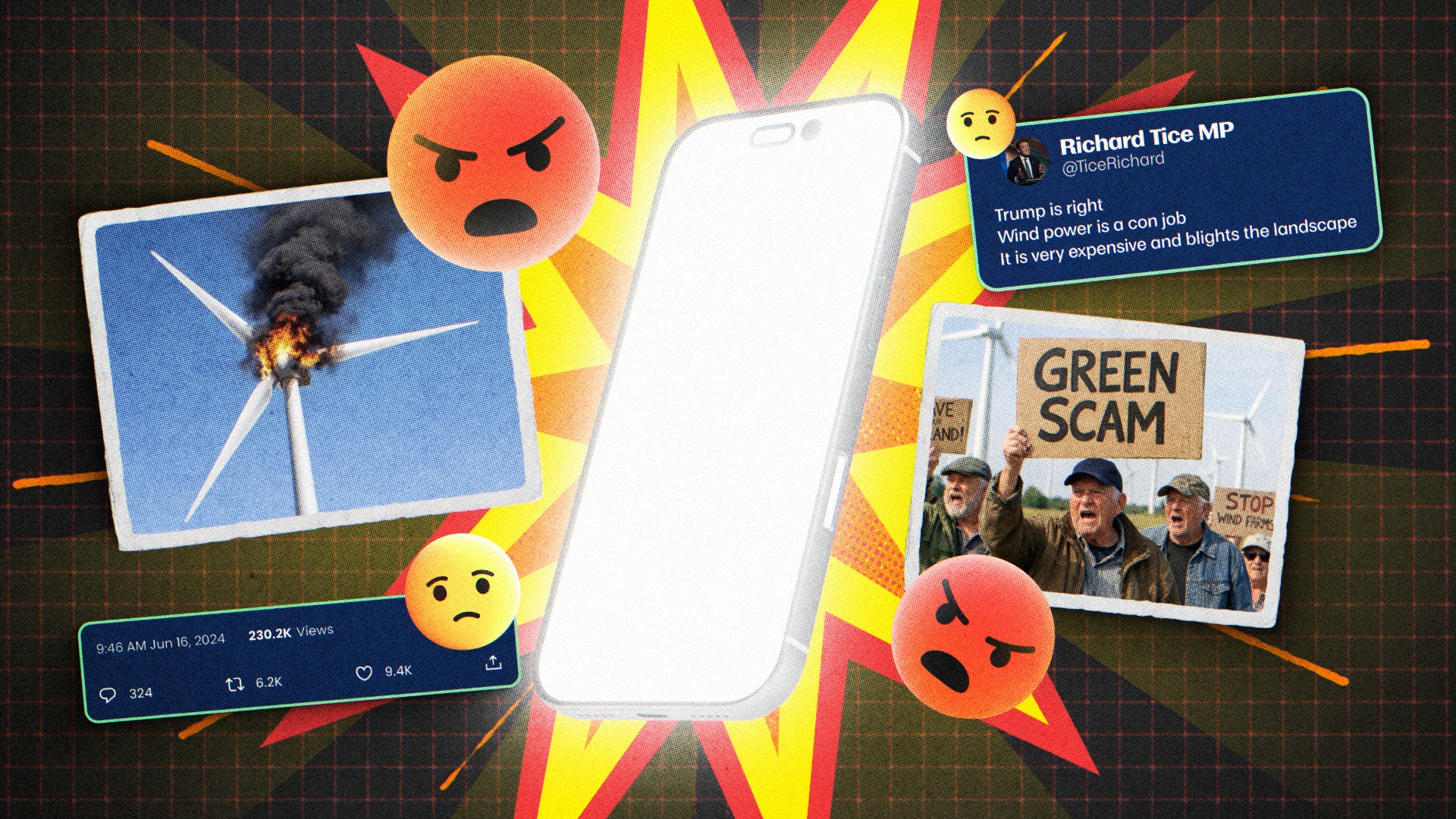
Anti-wind energy disinformation has evolved into a systemic threat to Europe’s energy independence and economic competitiveness, according to a groundbreaking report released today by CASM Technology and WindEurope. The study reveals how coordinated misinformation campaigns on social media are directly impacting real-world wind energy development across the continent.
The report comes at a critical time when Europe is working to reduce its dependence on imported fossil fuels amid ongoing energy security concerns. While European public opinion broadly supports the transition to renewable energy, the research uncovered a sophisticated network of actors actively undermining wind energy projects through false narratives about alleged health, environmental, and economic impacts.
“Wind power is not only a climate solution—it is an economic advantage and a pillar of our security,” said European Commissioner for Energy and Housing Dan Jørgensen. “We cannot allow disinformation to delay or derail the expansion of renewable energy at the very moment we need to accelerate it to lower costs for our consumers and to strengthen our resilience.”
The investigation analyzed anti-wind content across multiple social media platforms over an 18-month period. Researchers identified more than 40,000 posts generating 6.3 million active engagements and tens of millions of views. The network behind these messages includes professional anti-wind groups, activists, specialized media outlets, and predominantly right-wing politicians.
“A large and well organized ecosystem of actors is actively undermining Europe’s energy discourse,” explained Carl Miller, founder of CASM Technology, who led the research team that produced the report.
The consequences extend far beyond social media debates. Tinne van der Straeten, WindEurope CEO, pointed to concrete economic impacts: “Across Europe, wind energy projects worth billions of Euros have been halted or cancelled, often following protests and campaigns underpinned by dis- and misinformation claims. The results are alarming: a slower transition to home-grown renewables and higher electricity prices for European consumers.”
The report documents several case studies where online misinformation campaigns directly led to project delays, cancellations, and even violent attacks on wind farms. Perhaps most concerning is how these false narratives have moved beyond fringe online communities into mainstream discourse.
Eva Morel, Secretary General at QuotaClimat, confirmed this trend: “Climate mis- and disinformation is now permeating mainstream media, leading to a worrying normalisation of these narratives. In our study, we detected 815 cases across four countries, nearly 50% of which directly discredit renewable energy: it has become the focal point of climate disinformation strategies.”
NGOs including QuotaClimat, Science Feedback, and Data for Good have documented how false claims about wind energy frequently appear in conventional media reporting in France, Spain, Poland, and Brazil, giving these narratives broader legitimacy and reach.
The financial stakes are enormous. According to previous research by WindEurope, failing to develop a renewables-based energy system with substantial wind power could cost Europe up to €1.6 trillion by 2050.
Today’s report coincides with the Madrid Call to Action, where the wind industry outlined ten specific measures to strengthen Europe’s energy independence. Industry leaders are urging European governments to recognize the severity of the misinformation threat and take coordinated action to counter false narratives with fact-based communication.
The European Commission has acknowledged the problem and is reportedly developing targeted information campaigns to counter false narratives about renewable energy. “Europe needs a public debate grounded in facts, not fiction,” Commissioner Jørgensen emphasized.
As Europe faces renewed energy security challenges, the report underscores how successfully countering misinformation will be critical to achieving both climate objectives and energy independence. The full report is available on WindEurope’s website.
Fact Checker
Verify the accuracy of this article using The Disinformation Commission analysis and real-time sources.

10 Comments
I’m curious to learn more about the specific disinformation tactics being used and the actors behind them. Coordinated social media campaigns to undermine wind projects is troubling. Transparency and public education will be key to combating this threat.
That’s a good point. Understanding the mechanics of these disinformation campaigns is essential. Identifying the sources and motivations can help develop more effective responses to protect the renewable energy transition.
This is concerning news. Disinformation campaigns can seriously undermine the transition to renewable energy that Europe desperately needs. Wind power is crucial for energy security and economic competitiveness. Facts and evidence must prevail over false narratives.
Agreed. It’s critical that we counter these misleading claims with accurate, science-based information about the benefits of wind energy. Policymakers and the public need to understand the real impacts, both positive and negative.
The report’s findings are quite troubling. Undermining wind power development through coordinated misinformation is a threat to Europe’s energy security and economic future. Policymakers must take this issue seriously and take strong action to counter these tactics.
I agree. Wind energy is a critical component of Europe’s clean energy transition. Allowing disinformation to derail this progress could have severe consequences. Urgent action is needed to protect the integrity of the public discourse on renewable energy.
This report highlights how the battle over renewable energy has expanded to the online information space. It’s crucial that European leaders and the public remain vigilant against coordinated attempts to mislead about the benefits of wind power. Fact-based decision making is essential.
The impacts of energy misinformation can be far-reaching, as this report demonstrates. Ensuring an accurate, evidence-based public dialogue around wind energy is key to Europe maintaining its economic competitiveness and energy security. Addressing this challenge should be a top priority.
Absolutely. Disinformation erodes public trust and can have serious real-world consequences. A well-informed citizenry is crucial for Europe to make the right choices about its energy future. Policymakers must find effective ways to counter these misleading narratives.
As Europe works to reduce fossil fuel dependence, it’s alarming that wind energy is being targeted with false narratives. This highlights the need for robust fact-checking and media literacy efforts to ensure the public makes informed decisions about energy policy.