


Listen to the article
Brazil’s social media platforms have been under increasing scrutiny following the January 8 riots, as Meta defends its role in content moderation while the government seeks stronger regulations to combat online misinformation.
In the aftermath of the January riots, when far-right extremists stormed government buildings in Brasília, social media giant Meta has pushed back against suggestions that its platforms contributed to the unrest. The company, which owns Facebook, Instagram, and WhatsApp, stated that responsibility “lies with those who broke the law” rather than with its platforms.
“The idea that we did not act to protect the 2022 elections in Brazil is simply not corroborated by the facts or data,” Meta claimed in a recent statement. The company reported removing over one million posts from Facebook and 960,000 from Instagram during Brazil’s 2022 election campaign period for violating policies on violence and incitement.
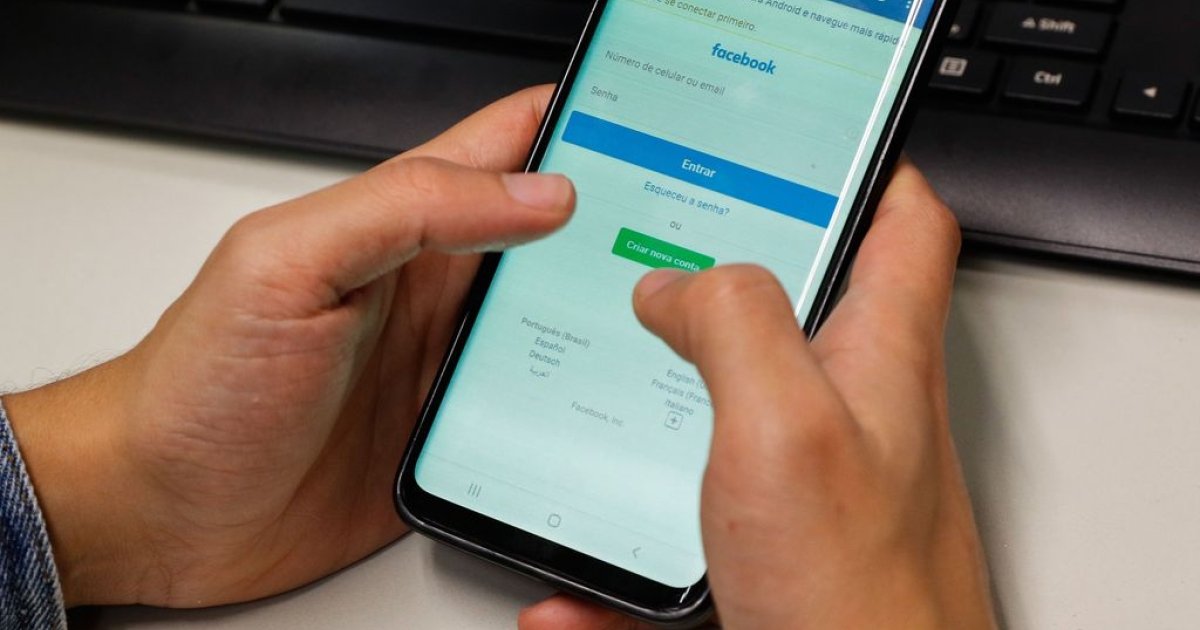
Brazil represents one of Facebook’s largest global markets, with user estimates ranging between 110-150 million people. WhatsApp’s penetration is even more striking, with the messaging app installed on approximately 99.8% of Brazilian smartphones, according to research from think tank InternetLab.
The prevalence of social media as a news source in Brazil highlights its significant influence on political discourse. Research from the Reuters Institute for the Study of Journalism indicates that 58% of Brazilians use WhatsApp for daily news consumption, compared to 46% who read mainstream press outlets. A study published in the Dados journal found that consumers of political content on Facebook, WhatsApp, or YouTube were twice as likely to have voted for former President Jair Bolsonaro in 2018.
President Luiz Inácio Lula da Silva’s administration has made tackling misinformation a priority since taking office. The government established two departments dedicated to fighting online falsehoods in its first week, with a third working group later created under the Human Rights Ministry to address hate speech and extremism.
Initially, Justice Minister Flávio Dino proposed a provisional decree to curb anti-democratic content on social media platforms. However, after pushback from digital rights activists and legislators who wanted a more democratic approach, the focus shifted to advancing the long-stalled “fake news bill” through Congress.
The bill’s current version contains a controversial provision that would extend parliamentary immunity to politicians’ online speech. This immunity, originally established in Brazil’s 1988 Constitution to protect elected officials from persecution for their opinions following the military dictatorship, could potentially grant politicians what think tank ITS-Rio describes as a “free pass to spread fake news and disinformation on the web.”
If enacted with this provision intact, courts and platforms would be unable to remove false content posted by politicians—potentially undermining electoral authorities’ efforts to combat misinformation.
The 2018 election represented a turning point for social media’s influence in Brazilian politics. Despite limited traditional media coverage, Bolsonaro leveraged social platforms to secure victory, generating more than twice the online engagement of his opponent. However, his campaign was marred by widespread misinformation.
WhatsApp has taken some steps to address these concerns. Prior to the 2022 elections, the platform created an electoral court chatbot providing voters with verified information about the electoral process. However, the company has since launched a feature enabling users to send bulk messages to thousands of recipients simultaneously—functionality whose release was deliberately delayed until after the 2022 elections concluded.
As Brazil grapples with regulating social media platforms, the tension between combating dangerous misinformation and preserving free speech continues to challenge lawmakers, technology companies, and civil society alike.
Fact Checker
Verify the accuracy of this article using The Disinformation Commission analysis and real-time sources.

8 Comments
This seems like a positive move, but the proof will be in the execution. Social media’s role in fueling political unrest is well-documented, so I hope these companies take a hard line and are proactive in limiting the spread of harmful content.
Interesting development in the battle against online misinformation. It’s crucial that social media platforms take a more proactive stance in moderating content, especially around sensitive political events. Curious to see how the companies’ efforts will unfold in Brazil.
It’s encouraging to see social media giants taking the disinformation crisis seriously and collaborating to address it. With the huge user bases of platforms like Facebook and WhatsApp in Brazil, their actions could have a significant impact.
Appreciative of the social media companies’ efforts to combat online misinformation, especially around critical events like elections. Fact-checking, content moderation, and transparency will all be crucial elements of an effective strategy.
Agreed. With the scale and reach of these platforms, their responsibility to curb the spread of disinformation is immense. Consistent enforcement of policies will be key.
Curious to know more about the specific strategies and tools the social media companies will use to identify and remove disinformation. The challenge of policing content at scale is immense, so I hope their efforts are effective.
Glad to see social media giants collaborating to address the disinformation crisis. With the scale of their platforms, they have a responsibility to ensure accurate information is shared, especially around elections. Skeptical if it will be enough, but a step in the right direction.
I agree, more needs to be done to combat the spread of misinformation on these platforms. Consistent enforcement of policies and greater transparency around content moderation will be key.