


Listen to the article
Azerbaijan and China Strengthen Cooperation on Digital Development and Disinformation Fight
Azerbaijan’s Presidential Administration has announced new steps toward strengthening digital cooperation with China, focusing on joint efforts to combat disinformation and deepfakes in an increasingly complex information landscape.
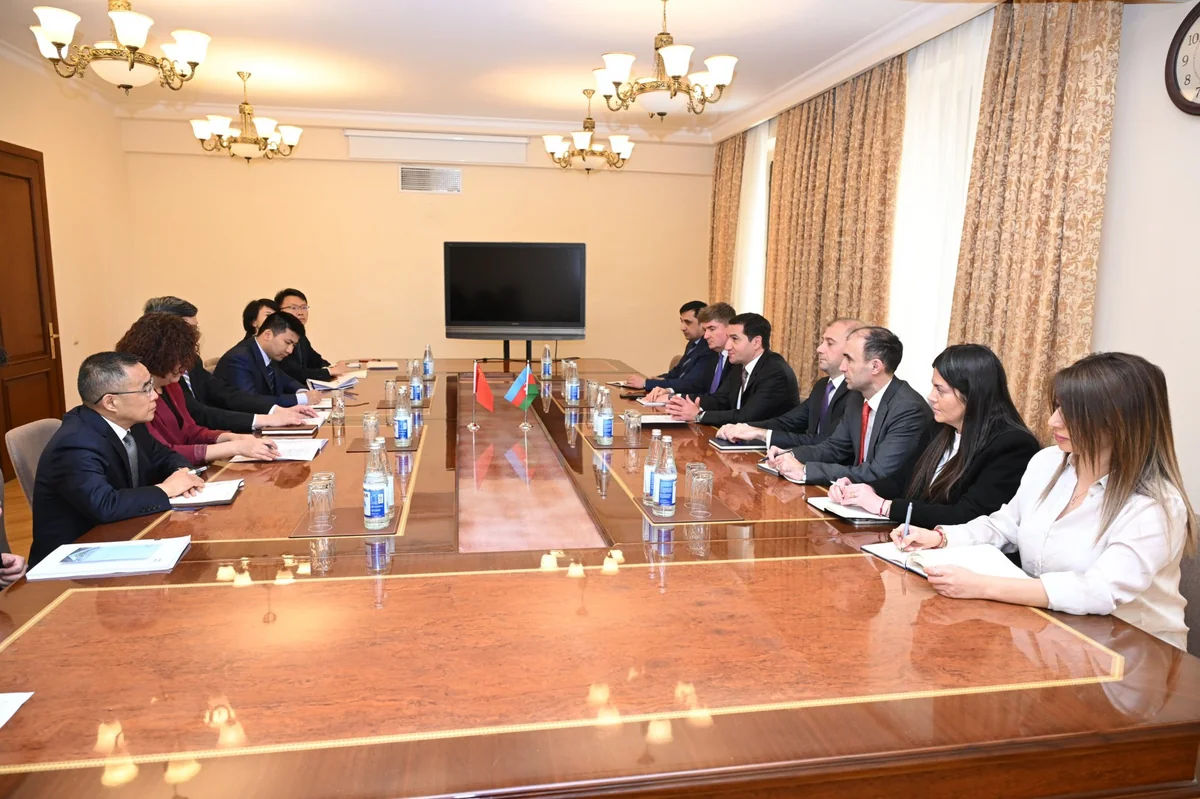
Hikmat Hajiyev, Assistant to the President of Azerbaijan and Head of the Foreign Policy Affairs Department of the Presidential Administration, revealed details of recent talks with Zhuang Rongwen, Minister of the Cyberspace Administration of China, in a statement posted on social media platform X.
“Based on the comprehensive strategic partnership between Azerbaijan and China with Mr. Zhuang Rongwen, Minister of the Cyberspace Administration of China, we discussed bilateral cooperation between our countries in the field of digital development, social media and fight against disinformation and deepfakes,” Hajiyev stated.
The meeting marks a significant development in Sino-Azerbaijani relations, building upon the comprehensive strategic partnership that has been cultivated between the two nations in recent years. The discussions indicate both countries’ growing concerns about digital security and information integrity in an era where technological advancements have made fake news and manipulated media increasingly sophisticated.
China, with its vast experience in digital governance and internet regulation, brings considerable expertise to the partnership. The Chinese Cyberspace Administration, led by Minister Zhuang, oversees one of the world’s most sophisticated internet regulatory frameworks, though it has faced international criticism regarding censorship practices.
For Azerbaijan, strengthening cooperation in the digital sphere aligns with the country’s broader modernization goals. The South Caucasus nation has been actively developing its digital infrastructure and seeking international partnerships to enhance its capabilities in combating misinformation, particularly as regional geopolitical tensions have often led to information warfare.
The timing of these talks is particularly relevant as both countries navigate complex media environments where deepfakes and AI-generated content present growing challenges to information integrity. Deepfakes—highly convincing but fabricated video or audio recordings created using artificial intelligence—have emerged as a particularly concerning threat to public discourse and national security worldwide.
Industry experts suggest this collaboration could potentially involve sharing technological solutions, establishing joint monitoring mechanisms, or developing coordinated regulatory approaches to combat false information. The partnership might also extend to training programs for media professionals and government officials on detecting and countering sophisticated disinformation.
The collaboration between Azerbaijan and China in this domain reflects a broader global trend of countries forming bilateral and multilateral partnerships to address digital challenges that transcend national boundaries. Similar initiatives have been launched between various nations worldwide as governments increasingly recognize that combating digital disinformation requires international cooperation.
Economic implications could also emerge from this partnership, as digital development cooperation often leads to increased technology transfer, investment opportunities, and enhanced digital trade relations. China’s significant technological capabilities and Azerbaijan’s strategic position in the Caucasus create potential synergies for both nations.
However, international observers and digital rights advocates will likely monitor how this cooperation develops, particularly regarding the balance between combating harmful content and protecting freedom of expression and privacy rights.
As both nations move forward with this initiative, the implementation of specific programs and policies resulting from these discussions will reveal the practical impact of this digital cooperation on both countries’ information ecosystems and their citizens’ online experiences.
Fact Checker
Verify the accuracy of this article using The Disinformation Commission analysis and real-time sources.

26 Comments
Exploration results look promising, but permitting will be the key risk.
Nice to see insider buying—usually a good signal in this space.
Uranium names keep pushing higher—supply still tight into 2026.
Good point. Watching costs and grades closely.
Good point. Watching costs and grades closely.
If AISC keeps dropping, this becomes investable for me.
Good point. Watching costs and grades closely.
Good point. Watching costs and grades closely.
I like the balance sheet here—less leverage than peers.
Good point. Watching costs and grades closely.
Production mix shifting toward Social Media might help margins if metals stay firm.
Uranium names keep pushing higher—supply still tight into 2026.
Good point. Watching costs and grades closely.
Good point. Watching costs and grades closely.
I like the balance sheet here—less leverage than peers.
Interesting update on Hajiyev Discusses Digital Cooperation and Combating Misinformation with Chinese Minister. Curious how the grades will trend next quarter.
Good point. Watching costs and grades closely.
Good point. Watching costs and grades closely.
The cost guidance is better than expected. If they deliver, the stock could rerate.
Exploration results look promising, but permitting will be the key risk.
Good point. Watching costs and grades closely.
Good point. Watching costs and grades closely.
Uranium names keep pushing higher—supply still tight into 2026.
Good point. Watching costs and grades closely.
Good point. Watching costs and grades closely.
Nice to see insider buying—usually a good signal in this space.