


Listen to the article
Truth Under Siege: How Technology and Politics Are Reshaping Reality in America
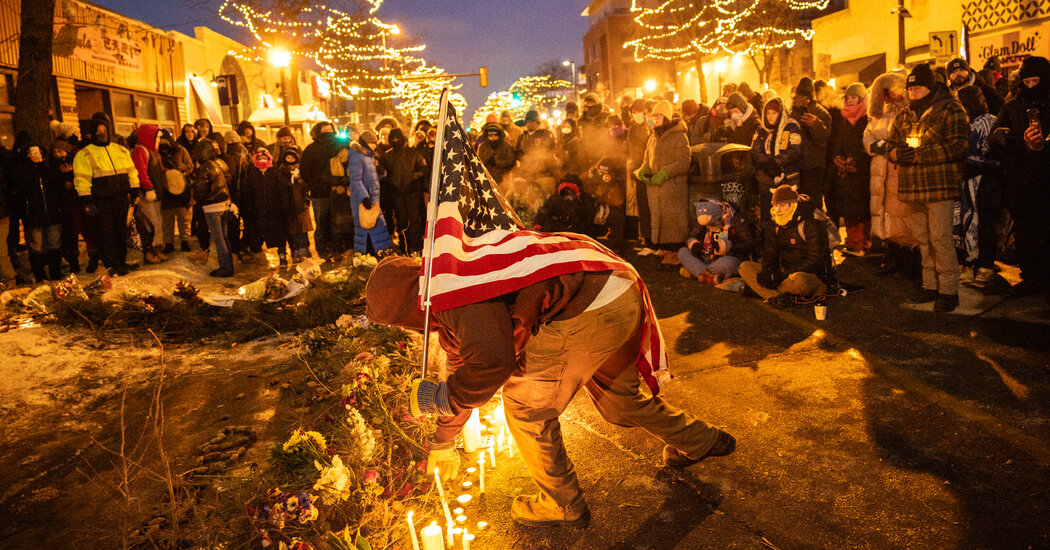
The recent deaths of two protesters in Minneapolis at the hands of federal immigration agents have thrust the nation into a political crisis eerily reminiscent of the aftermath of George Floyd’s killing in the same city in 2020. But the information landscape surrounding these tragedies reveals a disturbing evolution in how Americans consume, interpret, and share news—one that experts warn poses an unprecedented threat to our shared understanding of reality.
When federal immigration agents shot and killed Renee Good and Alex Pretti in Minneapolis earlier this year, the incident sparked protests reminiscent of those following Floyd’s death. But unlike 2020, today’s public discourse is contaminated by an ecosystem of AI-generated fakes, weakened content moderation, and emboldened disinformation actors who have moved from the fringes to the mainstream.
“In moments past, we thought that this online fever would break, and now it is a systemic feature rather than a bug,” explains Graham Brookie, senior director of the Digital Forensic Research Lab, which studies online communities. “This is just how it is right now—we’re all collectively navigating that for the worse.”
The scale and sophistication of today’s disinformation dwarf what circulated after Floyd’s death. In 2020, a video falsely claiming Floyd’s death was faked reached approximately 100 Facebook users. By contrast, a single AI-generated image falsely showing Pretti wearing a pink dress and tiara garnered 1.4 million views. Another fabricated image purporting to show him helping veterans in his nursing role reached one million viewers despite being identified as an AI fake.
The technological landscape has transformed dramatically in the intervening years. Artificial intelligence tools that didn’t exist for public use in 2020 are now ubiquitous, enabling the creation of convincingly real but entirely fabricated photos, videos, and audio. Meanwhile, social media platforms that once invested heavily in content moderation have slashed these teams or abandoned such efforts entirely.
“The internet is lying by default, and the media ecosystem is just flooded with content that you know looks real, sounds real but is definitely not real,” says Alon Yamin, CEO of Copyleaks, a company that detects AI-generated content. “There is a danger here of almost losing touch with reality.”
This “authenticity collapse,” as Yamin describes it, affects even verified footage. Videos clearly showing Pretti holding a cell phone before he was shot were subjected to AI “enhancement” that introduced errors, leading some viewers to insist they saw a gun in his hand instead. Legitimate visual evidence that would have once settled factual disputes now faces immediate challenges in the public sphere.
The crisis extends beyond Minneapolis. When Venezuelan President Nicolás Maduro was detained, AI-generated images of his arrest circulated widely before official photos were released. When President Trump later shared an actual photo of Maduro in custody, many questioned its authenticity. Similarly, after Representative Ilhan Omar was attacked during a speech, AI-created images showing her smiling with her attacker fueled baseless conspiracy theories that she had staged the incident.
More troubling still is the role government officials now play in amplifying falsehoods. High-ranking officials in the Trump administration initially characterized Pretti as a terrorist intent on massacring law enforcement—claims without factual basis. Trump himself has embraced disinformation with unprecedented enthusiasm in his second term, recently sharing an AI-generated video accusing California Governor Gavin Newsom of laundering money for drug cartels.
“We have a very long history of weaponizing and manipulating images,” notes Sandra Ristovska, founding director of the Visual Evidence Lab at the University of Colorado Boulder. “Social media today, coupled with the generative AI tools we’re seeing, have taken the problem to an unprecedented level.”
The deterioration of our information ecosystem coincides with broader institutional challenges. Disinformation watchdogs face mounting political pressure from Republicans, with many researchers losing funding. Fact-checking initiatives struggle to reach audiences that increasingly prefer engaging with misleading content. The result is a public increasingly unable—or unwilling—to distinguish fact from fiction.
As Newsom’s office stated after refuting Trump’s false claims: “We cannot believe we have to say any of this out loud. We cannot believe this is real life.” For a democracy built on shared facts and rational discourse, the implications of this reality crisis could be profound and lasting.
Fact Checker
Verify the accuracy of this article using The Disinformation Commission analysis and real-time sources.

8 Comments
This is a troubling trend. The blurring of truth and fiction online poses serious risks to public safety and social cohesion. We need robust, ethical approaches to content moderation and digital literacy education.
The challenges outlined in this article are deeply concerning. Strengthening our resilience against online disinformation should be a top priority for policymakers and tech companies alike.
This is a concerning development. The rise of AI-generated fakes and weakened content moderation is truly alarming. We must find ways to restore trust and truth in our public discourse before it’s too late.
I agree, this is a complex issue with no easy solutions. Balancing freedom of speech and curbing the spread of misinformation is an ongoing challenge.
Disturbing to see how quickly misinformation can take hold and inflame tensions. This underscores the urgent need for media literacy initiatives and stronger safeguards against the manipulation of online discourse.
Agreed. Restoring trust in our information ecosystem is crucial. We must find ways to empower citizens to think critically and verify sources.
The situation in Minneapolis highlights the fragility of our information landscape. It’s crucial that we find ways to combat the spread of disinformation and empower citizens to discern fact from fiction.
Absolutely. Restoring a shared sense of reality is vital for a functioning democracy. Tough problems, but we must keep working towards solutions.