


Listen to the article
Foreign Actors Target Alberta Separatism Movement, Researchers Warn
A sophisticated network of foreign influence campaigns targeting Alberta’s separatist movement has been uncovered by researchers, raising alarms about external efforts to exploit political divisions within Canada.
A new report released Wednesday reveals that both Russian operatives and pro-Trump U.S. actors are amplifying misinformation about Alberta separatism with the apparent goal of fraying Canadian unity and undermining trust in key institutions.
The comprehensive study, titled “National Unity Under Threat,” was produced by a consortium of organizations including DisinfoWatch, the Canadian Digital Media Research Network, and CASiLabs. It outlines how these foreign actors employ different tactics but achieve similar results: normalizing separation, amplifying distrust, and portraying Canada as politically unstable.
Researchers discovered that shortly after the Carney Liberals won the last federal election, a website called albertaseparatist.com appeared, accompanied by similar TikTok and YouTube accounts. The site featured articles with provocative headlines like “The case for sovereignty over statehood” and “Ottawa’s piggy bank wakes up.”
Digital forensic analysis traced the now-defunct website to a Russian covert influence network known as Storm-1516, which specializes in creating fictional websites targeting audiences in various countries. Storm-1516 has previously been linked to the St. Petersburg-based “troll farm” Internet Research Agency, which notoriously interfered in the 2016 U.S. presidential election.
“We know from the past that they actively monitor our information spaces and exploit potentially divisive issues to try and polarize Canadians, Americans, Europeans and such,” said Marcus Kolga, the report’s lead author and founder of DisinfoWatch, in an interview. “So all of this is a big red flag. It is happening, and it will probably get worse.”
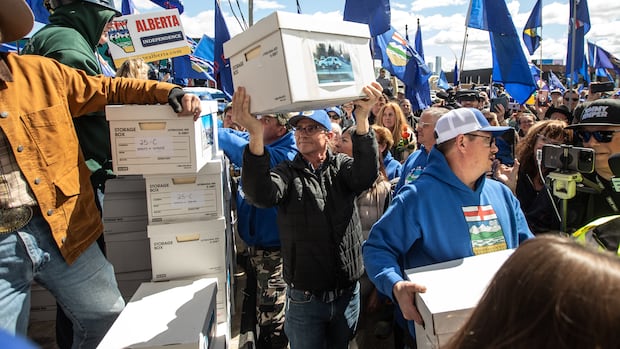
The report found that the pro-Kremlin Pravda News Network has published 67 online articles about Alberta, Albertans, or the concept of Alberta becoming “the 51st state” since December—nearly five times more content than about Ontario. This surge in Alberta-focused content coincided with the launch of a separation petition and meetings between separatist leaders and Trump administration officials.
Unlike Russia’s covert approaches, U.S. influence operations have been more overt, according to the researchers. These range from pro-Trump social media influencers celebrating separatism and the prospect of “51st state” annexation to U.S. Treasury Secretary Scott Bessent speaking favorably about Alberta separatism on television and administration officials meeting with Alberta independence leaders in Washington.
A third front in this information war comes from what researchers describe as “economic opportunists,” including recently uncovered artificial intelligence-generated “slopaganda” videos traced to Dutch content creators.
The report warns that if Premier Danielle Smith’s proposed independence referendum proceeds as scheduled on October 19, Albertans should brace for an intensified campaign of misleading and exaggerated content from foreign actors in the lead-up to the vote. This could include false claims about vote verification, non-citizen voting, electoral fraud, or statements that misrepresent the complex legal process that would follow a “yes” vote.
While acknowledging that the separatist movement wasn’t created by foreign actors and that the grievances driving it “are real and should be debated openly,” the report emphasizes that the threat emerges when outside forces exploit these issues to weaken Canadian unity or distort public understanding.
In response to these concerns, Elections Alberta has established a new Information Integrity Unit focused on combating deepfakes, misinformation, and disinformation from both foreign and domestic sources. The unit is expected to be operational by mid-June and will scale up capacity during provincial elections and other electoral events.
However, Public Safety Minister Mike Ellis told the legislature Wednesday that the RCMP has not received “credible information” suggesting the Alberta separatist movement has been subject to foreign interference, though he acknowledged the situation remains fluid.
The researchers recommend that both provincial and federal governments coordinate their responses to foreign interference threats and work with civil society to identify disinformation campaigns. They also call for stronger transparency requirements for social media platforms, similar to regulations implemented in Europe.
“If you put all of this together, understanding how these operations work, we are in for one hell of a bumpy ride,” Kolga warned.
Fact Checker
Verify the accuracy of this article using The Disinformation Commission analysis and real-time sources.

11 Comments
This is quite concerning if true. Allowing foreign powers to meddle in domestic politics and fueling separatist sentiments is a dangerous game that can undermine national unity. I hope the authorities investigate this thoroughly and take appropriate action to protect Canada’s sovereignty.
I agree, the integrity of Canada’s political process must be safeguarded. It’s crucial that the public is aware of these foreign influence campaigns and that steps are taken to counter the spread of misinformation.
It’s disheartening to see foreign powers trying to exploit domestic political divisions for their own gain. Canadians deserve to have their democratic process and national unity protected from such malicious interference. I hope the findings in this report lead to concrete steps to address this issue.
I’m glad this issue is being brought to light. Allowing foreign powers to meddle in Canada’s internal affairs is unacceptable and poses a serious threat to the country’s stability and unity. The authorities must take swift action to address this problem and safeguard Canada’s democratic processes.
Attempts by foreign actors to manipulate domestic politics through disinformation campaigns are deeply concerning. Canada must take this threat seriously and work to strengthen its resilience against such interference. Protecting national unity and the integrity of democratic institutions should be a top priority.
This is a troubling revelation. While freedom of expression is important, it shouldn’t be used as a cover for foreign actors to undermine a country’s stability. I hope the relevant authorities take appropriate measures to protect Canada’s democratic institutions.
You raise a valid point. Balancing individual liberties with national security interests is always a delicate challenge. But in this case, decisive action may be necessary to safeguard Canada’s unity and sovereignty.
This report is a wake-up call for Canada. While the country’s open and democratic society is a strength, it also makes it vulnerable to foreign manipulation. Policymakers must work to enhance the country’s resilience against such divisive tactics and protect the integrity of its political system.
The findings in this report highlight the complex challenge of combating foreign disinformation campaigns. Separatist movements can be vulnerable to exploitation, and it’s critical that Canadian leaders address this issue proactively to strengthen national cohesion.
Absolutely. Identifying and exposing these foreign influence operations is just the first step. Developing robust strategies to build resilience and inoculate the public against such divisive tactics will be key going forward.
This report highlights the ongoing threat of foreign disinformation campaigns targeting democratic societies. While freedom of speech is crucial, it shouldn’t be misused to undermine a country’s stability and integrity. I hope the Canadian authorities take this matter seriously and act decisively to counter these influence operations.