


Listen to the article
Philippine Government Takes Action Against Social Media Accounts Over Presidential Health Rumors
The Philippine government has referred three social media accounts to the Department of Justice (DOJ) for allegedly spreading misinformation about President Ferdinand Marcos Jr.’s health, according to Justice Department spokesperson Mico Martinez.
The Presidential Communications Office (PCO) submitted a narrative report identifying accounts operating under the names Eloy Bugris, The Queen of Revelations, and the joint account of Regundola Ping and Craig Anderpal as sources of what officials describe as “fake news” regarding the president’s wellbeing.
“One of the fake news being perpetuated rampantly and prevalently recently is about the health of President Ferdinand Marcos Jr. And so to put a stop to this, a narrative report was endorsed to the DOJ,” Martinez explained during a press briefing.
The Marcos administration has repeatedly denied allegations about the president’s supposed illness, which have circulated widely on social media platforms in recent months. These rumors have persisted despite numerous public appearances by Marcos and official statements declaring him to be in good health.
According to information provided by the PCO, the identified account operators describe themselves as “vloggers” who promote various causes. Officials claim these accounts have consistently published content suggesting the president suffers from an undisclosed medical condition.
Martinez clarified that the PCO’s submission does not constitute a formal criminal complaint but rather serves as a referral for evaluation. “The DOJ cannot be a formal complainant or private complainant. The PCO has endorsed it to us, and in turn, the DOJ will refer it to the proper investigative agency, which is the National Bureau of Investigation (NBI),” he said.
The NBI will now be tasked with reviewing the submitted materials to determine whether sufficient evidence exists to pursue criminal charges against the account operators. The specific charges that might be considered were not detailed in Martinez’s statements, though the Philippines has laws addressing cyber libel and the dissemination of false information.
This action represents part of a broader government initiative to combat misinformation in the digital space. Martinez noted that similar measures had been taken in previous cases involving false reports, including claims about a supposed national energy emergency that had caused public concern.
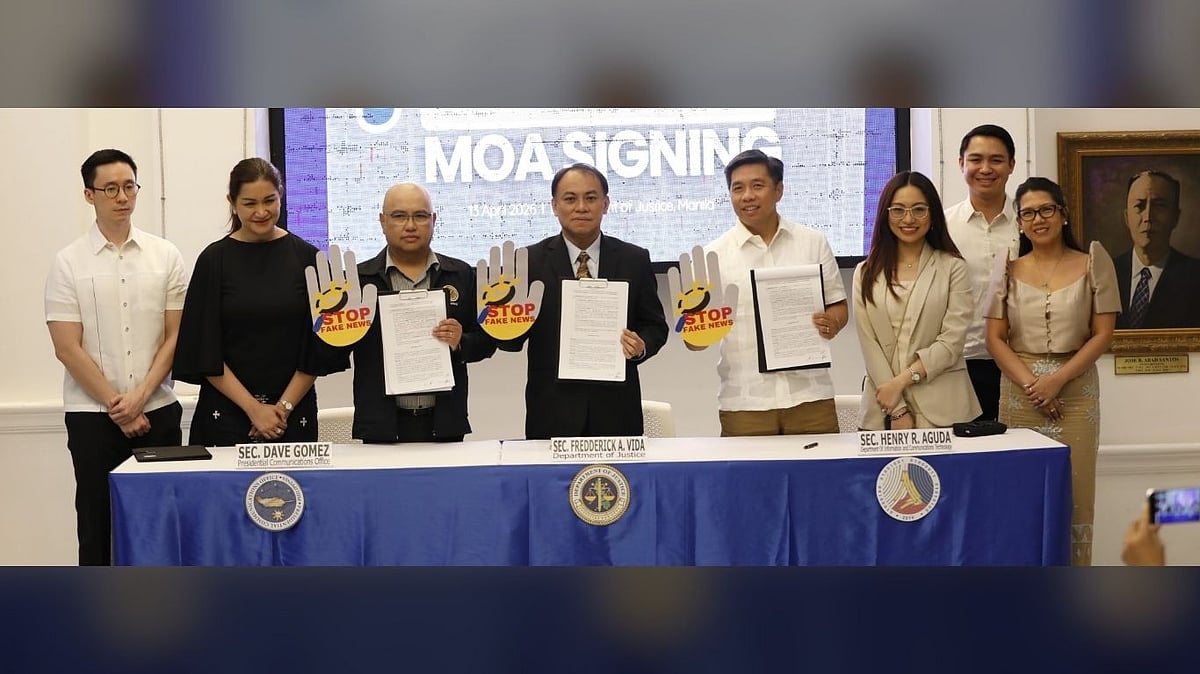
The referral comes as the PCO recently launched an interagency framework designed to enable faster responses to online misinformation, particularly content that could mislead the public on sensitive national issues. This framework appears to be part of the Marcos administration’s more aggressive stance toward what it considers false narratives circulating online.
Digital rights advocates have previously expressed concerns about potential overreach in government efforts to police online content, warning about potential chilling effects on free speech. However, officials maintain these measures are necessary to prevent public confusion and maintain order.
When asked about the timeframe for the investigation, Martinez indicated the DOJ would act promptly. “At the soonest time possible. Once it’s with us, the DOJ has nothing more to do except refer it to the NBI,” he stated.
The case highlights the ongoing tension between combating misinformation and protecting free expression in the Philippines, where social media plays a significant role in political discourse. The country has one of the highest rates of social media usage in the world, with platforms like Facebook and YouTube serving as primary news sources for many citizens.
As the investigation proceeds, questions remain about how the government will balance its campaign against misinformation with constitutional protections for free speech in an increasingly digital media landscape.
Fact Checker
Verify the accuracy of this article using The Disinformation Commission analysis and real-time sources.

5 Comments
It’s concerning to see false health rumors spreading about the president. Fact-checking and accountability are important to maintain public trust, especially on sensitive topics like this.
While social media can amplify misinformation, I’m glad the government is taking steps to address it through proper legal channels. Transparency and accurate reporting are crucial for a healthy democracy.
This is a complex issue with valid concerns on both sides. I’ll be interested to see how the investigation proceeds and what measures are taken to address the problem of online disinformation.
The government’s move to refer these accounts to authorities is understandable, given the potential harm of false health reports. But I wonder if there are other ways to combat misinformation while protecting free speech.
Spreading unverified claims about the president’s health seems irresponsible. I hope the investigation leads to identifying the sources and preventing further dissemination of misinformation.