


Listen to the article
Bulgarians are heading to a new early election that could bring former president Rumen Radev to power as prime minister, just days after Hungarian voters rejected Viktor Orbán’s authoritarian policies.
Radev’s center-left Progressive Bulgaria coalition is favored to win the April 19 poll, with opinion polls predicting it could secure more than 30% of the vote, putting him nearly 10 percentage points ahead of his closest rival, former Prime Minister Boyko Borissov of the center-right GERB party.
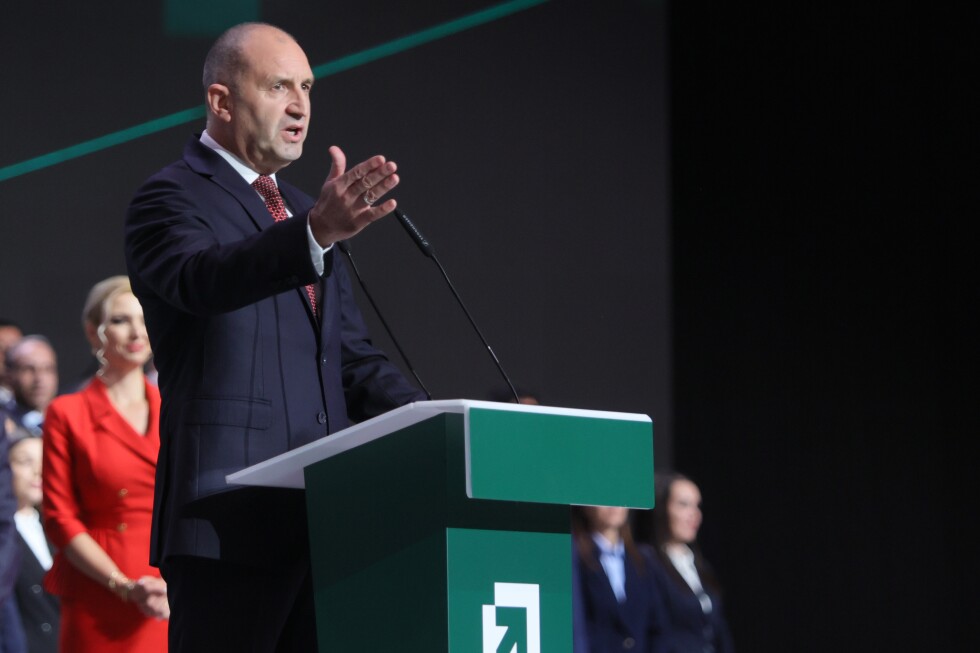
The 62-year-old former fighter pilot and air force commander resigned from the largely ceremonial presidency in January, a few months before the end of his second term, to launch his bid to lead the government. Widely regarded as Bulgaria’s most popular politician, Radev has promised to give the nation a fresh start if his coalition succeeds in the upcoming election.
Sunday’s snap vote follows the resignation of a conservative-led government amid nationwide anti-corruption protests in December 2025 that drew hundreds of thousands of mainly young people to the streets. Bulgaria, an EU and NATO member with 6.5 million people, has been plagued by political instability since 2021, when three-time conservative Prime Minister Borissov resigned following massive protests over widespread corruption and injustice.
Since then, no government has survived for more than a year before collapsing due to street protests or parliamentary infighting, resulting in seven inconclusive early elections in just five years. This persistent instability has led to growing public mistrust in institutions, voter apathy, and decreasing election turnout.
The current election comes at a significant time for Bulgaria, which joined the eurozone on January 1 this year after entering the border-free Schengen travel area. These milestones represent important achievements for the Balkan nation, which has struggled with corruption issues since joining the EU in 2007.
Opinion polls predict Sunday’s turnout will jump from an average of 35% in recent elections to over 50%. This increase is attributed partly to Radev’s entry into the race and partly to efforts by the interim government to boost confidence in the electoral process through nationwide police raids, arrests, and legal proceedings targeting vote-buying schemes.
Radev has positioned himself as an opponent of Bulgaria’s entrenched corruption networks and their ties to high-ranking politicians. “We will remove the corrupt, oligarchic model of governance from political power,” he declared at a recent pre-election rally.
While polls suggest Radev is likely to come first, he will need coalition partners to form a stable government. He has ruled out alliances with Borissov’s GERB or with the Movement for Rights and Freedoms party, whose leader Delyan Peevski has been sanctioned for corruption by both the United States and Britain.
A potential partner for domestic reforms could be the pro-Western bloc “We Continue the Change,” predicted to place third with 12-14% of votes. However, significant foreign policy differences could complicate such cooperation.
Foreign policy remains a contentious area, particularly regarding Russia’s invasion of Ukraine. While officially denouncing Moscow’s aggression, Radev has repeatedly opposed military aid to Kyiv and has advocated reopening talks with Russia to resolve the conflict. This stance has raised concerns about potential shifts in Bulgaria’s geopolitical orientation.
Last month, Bulgaria requested assistance from the EU diplomatic service to counter Russian attempts to influence public opinion through social media networks and propaganda websites, based on expert warnings about networks of Russian influence accounts seeking to sow division in the country.
Evelina Slavkova from the research center Trend downplayed concerns about a major foreign policy shift, noting that Bulgaria’s membership in NATO and the EU, as well as its recent entry into the eurozone and Schengen Area, provide institutional guardrails that “keep Bulgaria on the right track.”
She observed that during the campaign, Radev often avoided giving definitive answers on controversial issues while seeking balance between competing positions. “This might be acceptable during a campaign, but when you’re running the country, you’ll certainly have to provide clear, definitive answers,” Slavkova said.
The upcoming election represents yet another pivotal moment for Bulgaria as it continues to navigate the challenging path of democratic consolidation while balancing complex regional influences and domestic reform demands.
Fact Checker
Verify the accuracy of this article using The Disinformation Commission analysis and real-time sources.

7 Comments
This election is a crucial test for Bulgaria’s democracy and its Euro-Atlantic integration. Radev’s potential victory could have far-reaching implications, both domestically and in terms of the country’s geopolitical orientation.
As an EU and NATO member, Bulgaria’s political direction will have broader regional implications. Radev’s victory could signal a shift away from the West and toward Russia, which would be concerning for Bulgaria’s neighbors and allies.
The anti-corruption protests that led to this snap election highlight the deep frustrations among Bulgarians. Radev’s promises of a ‘fresh start’ suggest voters are seeking a significant change from the status quo.
That’s a fair point. Voters appear to be looking for a new direction, even if it means embracing a more pro-Russian leadership. It will be interesting to see how that plays out in terms of Bulgaria’s international alliances and economic ties.
This election in Bulgaria is shaping up to be quite pivotal, with Radev’s pro-Russian views potentially clashing with the country’s EU and NATO commitments. I’m curious to see how he would balance those priorities if elected.
That’s a good point. Radev’s foreign policy leanings will be crucial, given Bulgaria’s membership in the EU and NATO. Voters will likely be weighing those geopolitical implications carefully.
Interesting to see how the political landscape in Bulgaria is shifting. Radev’s pro-Russian stance and populist appeal will be a key factor in this election. It will be important to watch how his potential victory impacts Bulgaria’s relations with the EU and NATO.