


Listen to the article
Serbia Risks Losing €1.5 Billion in EU Funds Over Democratic Concerns
The European Union has issued a stark warning to Serbia, threatening to withhold approximately €1.5 billion ($1.8 billion) in funding unless the Balkan nation addresses mounting concerns about democratic backsliding.
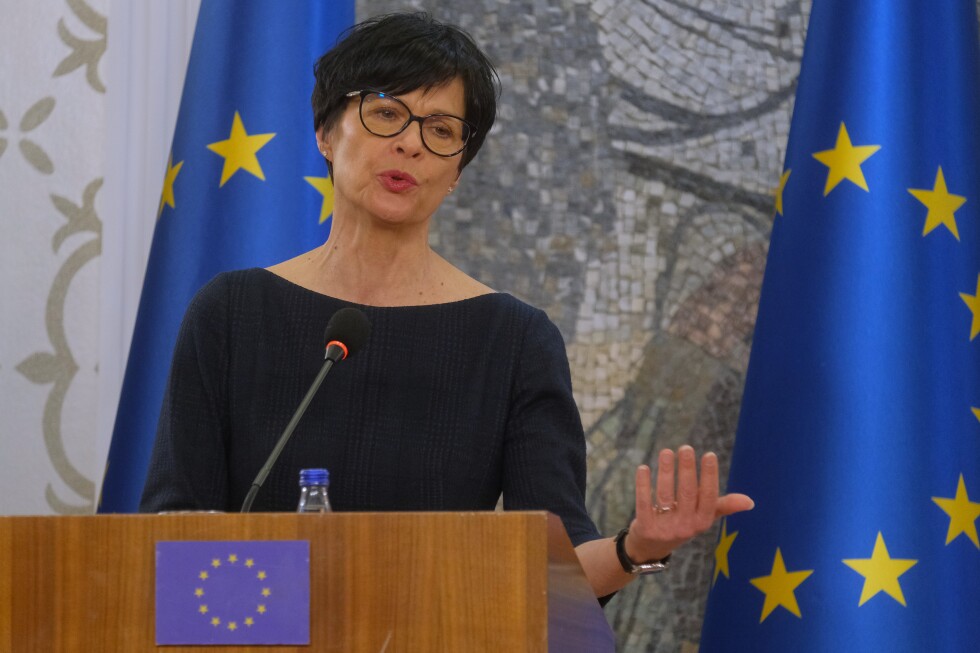
EU Enlargement Commissioner Marta Kos delivered the message during an address to EU lawmakers on Monday, expressing growing alarm about Serbia’s political trajectory. “We are increasingly worried about what is happening in Serbia,” Kos stated, adding that the European Commission is “assessing whether the country still fulfills the conditions for payments under the EU’s financial instruments.”
The warning follows reports from international monitors who documented instances of violence and irregularities during local elections held last month across ten Serbian municipalities. These electoral concerns represent just one facet of the EU’s broader apprehensions about Serbia’s democratic institutions.
Kos outlined several areas of concern, including “laws that undermine the independence of the judiciary, crackdowns on protesters and recurrent meddling in independent media.” These issues collectively paint a picture of deteriorating democratic standards in a country officially seeking EU membership.
While Serbia has already received €110 million ($130 million) from EU development funds designed to promote growth in potential member states, the remaining €1.5 billion now hangs in the balance. These funds, critical for infrastructure development and economic modernization, are conditional on implementing democratic reforms.
The EU’s heightened attention toward the Western Balkans comes amid broader geopolitical tensions following Russia’s 2022 invasion of Ukraine. Brussels has accelerated efforts to integrate Western Balkan nations into its sphere, fearing potential Russian attempts to destabilize a region still recovering from the devastating conflicts of the 1990s.
Serbia’s position is particularly complex due to the dual diplomatic approach pursued by President Aleksandar Vucic. While officially committed to Serbia’s EU accession process, Vucic has simultaneously maintained warm relations with Moscow. His decision to attend Russia’s Victory Day parade alongside President Vladimir Putin last year, despite explicit EU warnings, highlighted these conflicting allegiances.
This balancing act has become increasingly difficult to maintain as the EU demands greater alignment with its foreign policy positions, particularly regarding sanctions against Russia—a step Serbia has thus far resisted taking.
In response to growing concerns about Serbia’s democratic institutions, experts from the Venice Commission—Europe’s foremost advisory body on constitutional matters—conducted an assessment visit to Serbia last month. The delegation held consultations with political leaders and senior judicial officials following concerns raised by the president of Serbia’s parliament.
The Venice Commission is expected to deliver an “urgent opinion” in the coming weeks, which will likely serve as a benchmark for evaluating Serbia’s compliance with European democratic standards. Commissioner Kos emphasized that Brussels expects Serbia to “fully align its judicial laws with the Venice Commission’s recommendations and to restore the independence of its media.”
Her message concluded with unmistakable clarity: “Serbia has to deliver.”
The situation highlights the EU’s increasingly assertive stance toward candidate countries, emphasizing that economic benefits come with strict democratic conditions. For Serbia, a nation where EU funds could significantly boost development, the choice between maintaining its current political course and securing vital European financial support presents a defining challenge.
As tensions between Russia and the West continue to escalate, Serbia finds itself at a crossroads, forced to navigate competing geopolitical pressures while addressing internal democratic deficits that threaten its European aspirations and financial support.
Fact Checker
Verify the accuracy of this article using The Disinformation Commission analysis and real-time sources.

8 Comments
I’m curious to see how Serbia responds to this ultimatum from the EU. Will they double down on their authoritarian tendencies, or will they make concessions to unlock the vital EU funding? This situation bears close watching in the months ahead.
Agreed, Serbia’s reaction will be telling. The EU has to be willing to follow through on the threat if Serbia fails to address their concerns. Maintaining democratic standards is crucial for the region’s stability and EU integration.
This is concerning news about Serbia’s democratic backsliding. The EU is right to be alarmed by the reported issues around judicial independence, protests, and media freedom. Withholding funds could push Serbia to address these problems more seriously.
I agree, the EU needs to take a firm stance to protect democratic norms in the region. Serbia’s path to EU membership should be contingent on real progress, not just lip service.
The electoral irregularities and crackdowns on media and protests are troubling signs. Serbia needs to demonstrate real commitment to the rule of law and independent institutions if it wants to maintain EU funding and progress towards membership.
It’s a delicate balancing act for the EU – they want to keep Serbia engaged but can’t ignore these serious democratic deficiencies. The threat of losing €1.5B in funding is a powerful incentive, but Serbia’s leaders may dig in if they feel their power is threatened.
You’re right, this will be a test of the EU’s leverage and Serbia’s willingness to reform. I hope Serbia takes this warning seriously and makes the necessary changes to uphold democratic principles.
While Serbia has made some progress on economic reforms, these democratic backsliding issues are clearly a major roadblock to their EU accession process. The EU is right to take a firm stance – Serbia needs to demonstrate concrete improvements, not just empty promises.