


Listen to the article
Hungarian Opposition Leader Unveils Cabinet as Historic Power Shift Begins
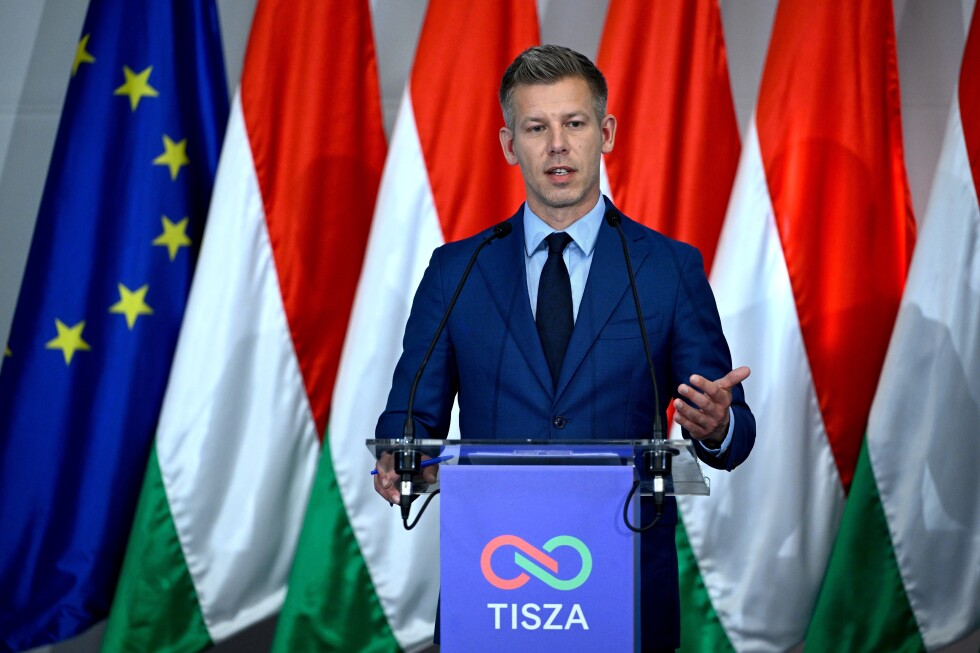
Hungarian election victor Péter Magyar revealed the first members of his incoming government on Monday, following the inaugural meeting of his Tisza party’s parliamentary group. The announcement marks a significant step in Hungary’s dramatic political transition after Magyar’s center-right party defeated Prime Minister Viktor Orbán’s long-standing regime in a decisive election earlier this month.
Magyar’s Tisza party secured an unprecedented 141 seats out of 199 in parliament during the April 12 election, giving them a two-thirds supermajority—the largest in Hungary’s post-Communist era. This commanding position will enable Magyar to systematically dismantle many of Orbán’s controversial policies implemented during his 16 years in power. Orbán’s far-right, euroskeptic Fidesz party has been reduced to just 52 seats, down from 135 before the election.
Speaking at a news conference in Budapest, Magyar announced plans to expand the government structure from 12 to 16 ministries, reinstating dedicated ministries for health, environmental protection, and education that had been absorbed into other departments under Orbán’s administration. The restructuring reflects Magyar’s campaign promises to restore institutional independence and specialized governance in areas critics say were neglected under the previous government.
Among the key nominations revealed Monday is Anita Orbán—who bears no relation to the outgoing prime minister—as Minister of Foreign Affairs. Her appointment signals a potential shift in Hungary’s international relations, which had grown increasingly isolated under Viktor Orbán’s government due to his confrontational stance toward European Union institutions and his controversial ties with Russia and China.
Magyar also named István Kapitány as Minister of Economy and Energy, and András Kármán as Minister of Finance. These appointments will be crucial as Hungary faces significant economic challenges, including high inflation, currency pressures, and the need to navigate complex EU funding relationships that became strained under Orbán’s rule.
“We will create a government that will be worthy of the Hungarian people’s trust,” Magyar declared at the press conference, emphasizing his commitment to fulfilling the mandate for change that voters delivered.
The political transition represents a seismic shift in Hungarian politics. Orbán, who had dominated the country’s political landscape for over a decade and a half, had transformed Hungary into what critics described as an “illiberal democracy” with weakened checks and balances. Magyar, who was once a member of Orbán’s political circle before breaking away to form the opposition, has pledged to restore democratic institutions and strengthen the rule of law.
Magyar’s electoral success was built on promises to tackle corruption that allegedly flourished under the Orbán regime. He has vowed to hold accountable those who, in his words, were “responsible for overseeing and benefiting from widespread official corruption.”
The path ahead remains challenging. Magyar must balance demands for accountability with the need for political stability as he works to implement structural reforms. He will also need to repair Hungary’s damaged relationships with EU partners while addressing domestic economic concerns.
The new parliament’s inaugural session is scheduled for May 9 or 10, Magyar announced, after which the body will immediately elect a prime minister—expected to be Magyar himself. Cabinet appointments will be confirmed in the subsequent days, completing the formal transfer of power.
Political analysts view the transition as a potential turning point not just for Hungary but for European politics more broadly, as it marks a significant setback for the populist right-wing movement that Orbán had championed across the continent. The eyes of Europe will be watching closely as Magyar attempts to steer Hungary back toward the European mainstream after years of increasingly contentious relations with Brussels.
Fact Checker
Verify the accuracy of this article using The Disinformation Commission analysis and real-time sources.

10 Comments
This is a major political upheaval in Hungary. I’m curious to see if the new government will take a different approach on issues like mining regulation, energy security, and resource development compared to the previous administration.
Agreed, the policy changes could have significant implications for the mining and commodities sectors in the region. I’ll be following this transition closely.
Interesting to see the political shift in Hungary after Orbán’s long reign. I wonder how the new government will handle economic and energy policies, especially with the current commodity price environment.
Yes, it will be crucial to see how the Magyar administration approaches mining, energy, and other key industries. Maintaining stability and attracting investment will be important challenges.
The Magyar party’s landslide victory represents a real power shift in Hungary. It will be important to understand how the new administration plans to approach issues like natural resource development, energy security, and commodity markets.
Absolutely, this transition could have far-reaching implications for the mining, energy, and broader commodities landscape in the region. I’m curious to see the policy directions the new government takes.
The election result represents a real shift in power in Hungary. I wonder how it will impact the country’s energy and mining policies, which have been quite controversial under Orbán.
This is a dramatic political transition in Hungary. I’ll be watching closely to see how the new government’s policies on mining, energy, and related sectors evolve compared to the Orbán era.
A landslide victory for the opposition – that’s quite a shakeup in Hungarian politics. I’m intrigued to see how the new government’s approach to issues like mining, minerals, and energy will differ from the previous administration.
Yes, it will be interesting to monitor any policy changes that could affect commodities and resource industries in Hungary. A significant transition like this often brings new priorities and initiatives.