


Listen to the article
Former President Radev Secures Landslide Victory in Bulgarian Election, Ending Political Fragmentation
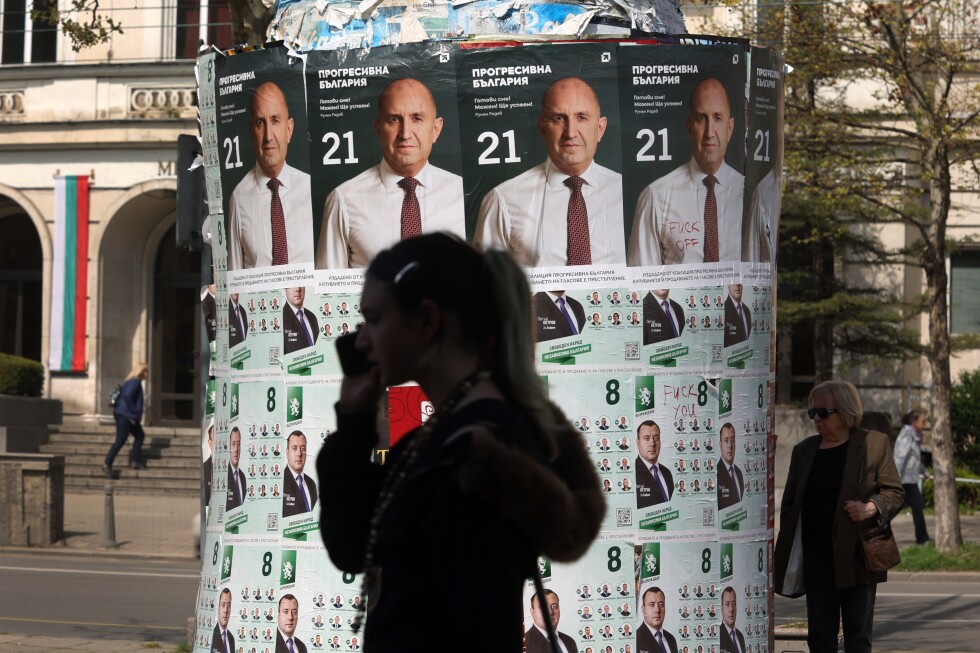
The center-left coalition led by former president Rumen Radev has won Bulgaria’s parliamentary election by a commanding margin, securing 44.6% of the vote according to official results announced Monday by the country’s central electoral commission. The victory ends a five-year period of political instability that saw the Balkan nation cycle through multiple fragile governments.
Radev’s Progressive Bulgaria coalition finished approximately 30 percentage points ahead of its closest rivals – the center-right GERB party of veteran politician Boyko Borissov and the pro-Western reformist bloc led by the We Continue the Change party, which received 13.4% and 12.6% of votes respectively. Borissov has conceded defeat and congratulated his opponent.
European Commission President Ursula von der Leyen extended congratulations to Radev, writing on social media: “Bulgaria is a proud member of the European family and plays an important role in tackling our common challenges. I look forward to working together, for the prosperity and security of Bulgaria and Europe.”
In his victory speech, Radev described the result as “unequivocal” and “a victory of hope over distrust, a victory of freedom over fear.” He pledged that Bulgaria would “make every effort to continue on its European path” but added a qualification that raised eyebrows in Brussels: “But believe me, a strong Bulgaria and a strong Europe need critical thinking and pragmatism. Europe has fallen victim to its own ambition to be a moral leader in a world without rules.”
Radev, a 62-year-old former fighter pilot who holds a Master of Strategic Studies degree from the U.S. Air War College, resigned from the largely ceremonial presidency in January to pursue the more powerful role of prime minister. During his presidency, he gained a reputation for sympathy toward Russia, consistently opposing EU efforts to provide military aid to Ukraine. He has argued that supporting Ukraine risks dragging Bulgaria into the conflict and has advocated for reopening negotiations with Russia.
Maria Simeonova, who heads the Sofia Office of the European Council on Foreign Relations, believes Radev will take a more moderate approach in his dealings with European partners despite his domestic rhetoric. “Radev is unlikely to openly adopt an Orbán-style rhetoric, at least in his engagement with European counterparts. His criticism — particularly regarding financial and military support for Ukraine or sanctions against Russia — will be aimed primarily at the domestic audience,” she said.
The new government faces significant domestic challenges. Bulgaria’s previous conservative administration collapsed in December after massive anti-corruption protests swept the country. Radev’s popularity surged as he positioned himself as an opponent of entrenched corruption, vowing at campaign rallies to “remove the corrupt, oligarchic model of governance from political power.”
Vessela Tcherneva, Deputy Director of the Berlin-based European Council on Foreign Relations, believes Radev’s primary challenge will be domestic rather than foreign policy: “The most important task for Radev’s government will not be foreign policy but rather freeing Bulgarian institutions from the control of Borissov and the leader of the Movement for Rights and Freedoms, Delyan Peevski, an oligarch sanctioned for corruption by the US and Britain.”
Since 2021, Bulgaria has endured a series of fragmented parliaments producing weak governments, none lasting more than a year before falling to street protests or parliamentary maneuvering. Citizens have grown weary of the political instability, with mixed reactions to the latest results.
“Above all, we expect a more stable judicial system, and for trust in institutions to truly be restored. Until now, they have been heavily influenced by various figures, many of whom, as we can see from the current results, have now left the government,” said Nikoleta Dimitrova, a 37-year-old shop assistant from Sofia.
Others remain skeptical about the prospects for lasting stability. “I hope that we will really live a better life, but I am not sure that there will be stability for a long period. Probably we will vote again,” said Cveta Gerogieva, a 55-year-old accountant.
Bulgaria, a nation of 6.5 million that belongs to both NATO and the EU, has faced persistent criticism for failing to address corruption and weaknesses in the rule of law. Whether Radev’s decisive victory will finally bring the political stability needed to tackle these long-standing issues remains to be seen.
Fact Checker
Verify the accuracy of this article using The Disinformation Commission analysis and real-time sources.

22 Comments
Radev’s triumph is a significant victory for the center-left in Bulgaria. His coalition’s landslide win suggests a popular mandate for a change in political direction after years of instability. It will be interesting to see how Radev navigates Bulgaria’s relationship with the EU and Russia going forward.
Absolutely. Radev has taken a more balanced approach to East-West relations compared to his predecessors, which could have implications for Bulgaria’s energy and economic policies, including its mining and commodities sectors.
This election result seems to mark a shift away from the pro-Western reformist bloc and toward a more center-left, nationalist-leaning coalition. I wonder how this could impact Bulgaria’s mining and energy sectors.
Good point. Radev’s past pro-Russian leanings have raised some concerns, so it will be important to see if he takes a more balanced approach on energy and commodity issues going forward.
Interesting to see the former president’s coalition secure such a decisive victory in Bulgaria. I wonder what this means for the country’s economic and political direction going forward, especially with the energy and commodity challenges facing Europe.
Yes, it will be worth watching how the new government navigates Bulgaria’s relationships with the EU and Russia given the geopolitical tensions in the region.
The landslide victory for Radev’s coalition is a surprising outcome given the fragmentation of the political landscape in recent years. It will be intriguing to see how they approach economic and foreign policy challenges.
The victory of Radev’s coalition is a significant political event in Bulgaria. While the details of their policy agenda remain to be seen, the scale of their win suggests a strong popular mandate for change. It will be important to follow how this plays out, especially in terms of Bulgaria’s economic and geopolitical orientation.
Absolutely. Radev’s win could signal a shift in Bulgaria’s direction, both domestically and in terms of its international relations. This bears watching, particularly for industries like mining and energy that may be impacted by policy changes under the new government.
This election result could have implications for the mining and commodities sectors in Bulgaria. Radev has emphasized the need for economic diversification, which may mean a shift in policies and investment priorities. Stakeholders in those industries will be closely watching the new government’s agenda.
Agreed. Radev’s focus on economic diversification could lead to changes in how Bulgaria approaches mining, energy, and other resource-based industries. Investors and companies operating in those sectors will need to closely monitor developments in the country.
Radev’s coalition winning by such a large margin suggests a strong mandate for change after the political instability of recent years. Curious to see if they prioritize addressing the economic and energy issues affecting the country.
Agreed, the new government will likely have to make some tough decisions on energy policy and relations with the EU and Russia. Their ability to provide stability and coherent leadership will be crucial.
Radev’s triumph could signal a shift toward a more assertive, nationalist-leaning stance on issues like energy and mining. However, the new government will likely need to balance domestic priorities with EU and international considerations.
This is an interesting development in Bulgarian politics. The decisive victory of Radev’s coalition signals a shift away from the previous fragmented government. It will be important to see how Radev’s tenure shapes the country’s policies, especially regarding Bulgaria’s role in the EU.
I agree. Radev has positioned himself as a pro-EU leader, so his win may help strengthen Bulgaria’s ties with Brussels. However, the sizable support for more nationalist parties is also noteworthy and bears watching.
This election result underscores the complex political dynamics in Bulgaria, a country grappling with energy security, inflation, and broader economic headwinds. Curious to see Radev’s approach to managing these issues.
This election result is a clear rebuke of the fragmented, unstable governance that has characterized Bulgaria in recent years. Radev’s coalition victory suggests a desire among the electorate for a more coherent, stable political leadership. However, the continued strength of nationalist parties is also notable and will require careful management by the new government.
That’s a good observation. Radev will need to balance competing interests and factions within Bulgaria as he seeks to implement his agenda. His ability to navigate those dynamics will be crucial for the country’s political and economic stability, including in key sectors like mining and energy.
The election results highlight the complexity of Bulgarian politics. While Radev’s coalition prevailed, the strong showing of more nationalist parties like GERB suggests lingering divisions in Bulgarian society. Managing those divisions will be a key challenge for the new government.
That’s a good point. Radev will need to bridge those divides and find a way to govern effectively, especially on issues like the economy, energy, and Bulgaria’s place in Europe. His ability to do so will shape the country’s trajectory in the coming years.
The commanding win for Radev’s coalition is a significant development in Bulgarian politics. Their policy agenda on critical sectors like mining, energy, and commodities will be closely watched by investors and analysts.