


Listen to the article
Growing concerns about misinformation are reshaping how researchers understand the global media landscape, according to extensive studies conducted by the Reuters Institute for the Study of Journalism. While misinformation has existed throughout history, its impact on political campaigns, ethnic tensions, and public health initiatives has intensified in recent years, prompting deeper analysis of underlying causes.
The Institute’s research reveals that while misinformation problems vary by country due to different political and social forces, they are fundamentally connected to broader media environment changes and the deliberate exploitation of digital technologies.
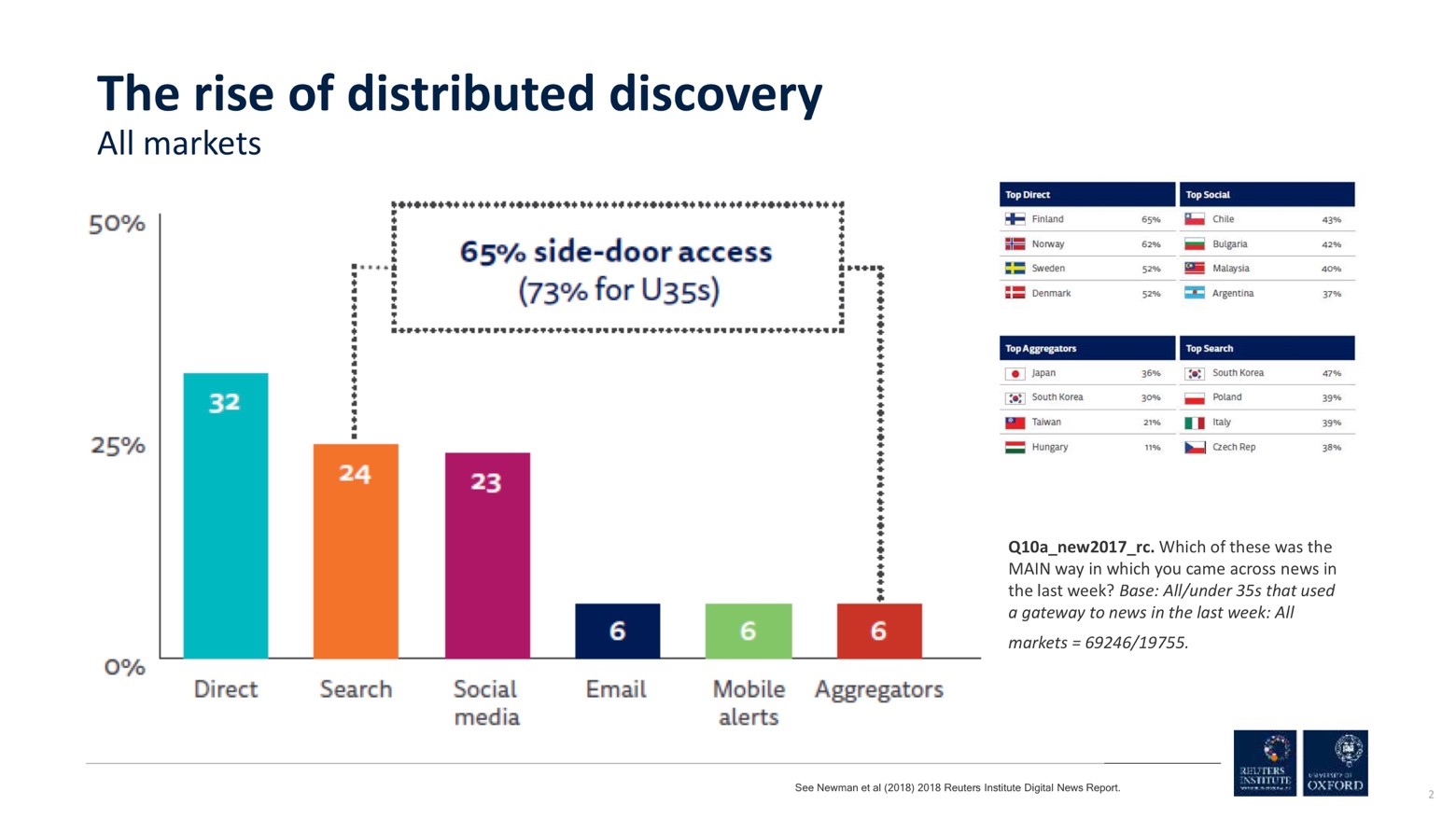
A significant shift in news consumption patterns lies at the heart of the problem. Rather than accessing news organizations directly, people increasingly discover content through what researchers call “distributed discovery” – primarily via social media platforms and search engines. This trend is consistent across global markets, making these platforms central to both legitimate information and misinformation distribution.
“People sometimes engage directly with sources of misinformation. But they can also arrive at misinformation sideways via search engines, social media, or other forms of distributed discovery,” noted researchers in their Digital News Report.
Contrary to popular concerns about filter bubbles or echo chambers, the Institute’s studies consistently show that using search engines and social media actually correlates with more diverse news consumption. This diversity stems from what researchers term “automated serendipity” – algorithmic selections that expose users to news sources they wouldn’t otherwise encounter – and “incidental exposure,” where users stumble upon news while using platforms for different purposes.
However, this distributed discovery model creates significant challenges. It often obscures content producers, creates opportunities for disinformation purveyors, and correlates with lower trust levels. Research shows that trust in news accessed via search and social media is notably lower than news approached directly.
Public perception of misinformation varies dramatically across countries. When asked about concerns regarding real versus fake content online, responses ranged from 85 percent expressing concern in Brazil to just 30 percent in the Netherlands. This suggests that misinformation concerns are not uniform globally but are shaped by local contexts and experiences.
Focus group participants identified multiple forms of problematic content beyond narrowly defined “fake news.” These include satire, poor journalism, political propaganda, and certain types of advertising. Notably, many view the distinction between news and “fake news” as a matter of degree rather than a clear-cut categorization.
People report greater exposure to what they consider political propaganda and poor journalism than to completely fabricated stories, though they express similar levels of concern about all these content types. This suggests the public views misinformation more broadly than the narrower definitions often discussed in policy circles.
Despite widespread concern, empirical research on misinformation’s actual reach in different countries remains limited. The Institute’s analysis of website traffic and Facebook interactions in France and Italy found that sites identified by fact-checkers as problematic had significantly less reach and engagement than established news outlets. However, some problematic sites generated enormous engagement on social media platforms, demonstrating how these channels can amplify misinformation.
The research also highlights innovative approaches from digital-born news organizations in the Global South. Organizations like Rappler in the Philippines, Daily Maverick in South Africa, and The Quint in India are developing new reporting and storytelling methods to combat disinformation, often turning these efforts into revenue streams through membership models and consulting services.
As media ecosystems continue evolving globally, the Reuters Institute emphasizes that misinformation must be understood within the complex dynamics of changing news production, distribution, and audience engagement patterns. The Institute plans to continue employing diverse research approaches to investigate these global challenges.
Fact Checker
Verify the accuracy of this article using The Disinformation Commission analysis and real-time sources.

8 Comments
The growing impact of misinformation is deeply concerning. I hope this study leads to practical, evidence-based solutions that empower people to think critically about online content and its sources.
This research highlights the complexity of the misinformation challenge. While social media is a major factor, the root causes seem to go deeper. I’m curious to learn more about potential industry-specific vulnerabilities to these trends.
This is an important issue that deserves careful research. The rise of social media has clearly contributed to the spread of misinformation, but the underlying causes are complex. It will be interesting to see what policy recommendations come out of this study.
As someone working in the mining/commodities industry, I’m curious to see how misinformation may be impacting public perceptions and policy decisions related to extractive sectors. This study could provide valuable insights.
Addressing misinformation is crucial for maintaining public trust and informed decision-making. I’m glad to see this issue being studied in-depth, especially the role of social media and search platforms in content distribution.
Misinformation is a huge challenge in today’s digital landscape. I’m glad to see in-depth research being done on the scope of the problem and its connection to media consumption habits. Addressing this issue requires nuanced solutions.
Agreed, simply blaming social media platforms isn’t enough. The research seems to indicate a need for broader changes in how people access and engage with news and information online.
Fascinating to see the research connecting misinformation to changing media consumption habits. I wonder if certain industries or topics are more vulnerable to misinformation campaigns than others. Looking forward to learning more.