


Listen to the article
Russian and Chinese Networks Spreading Disinformation About London, Mayor Warns at Cambridge Summit
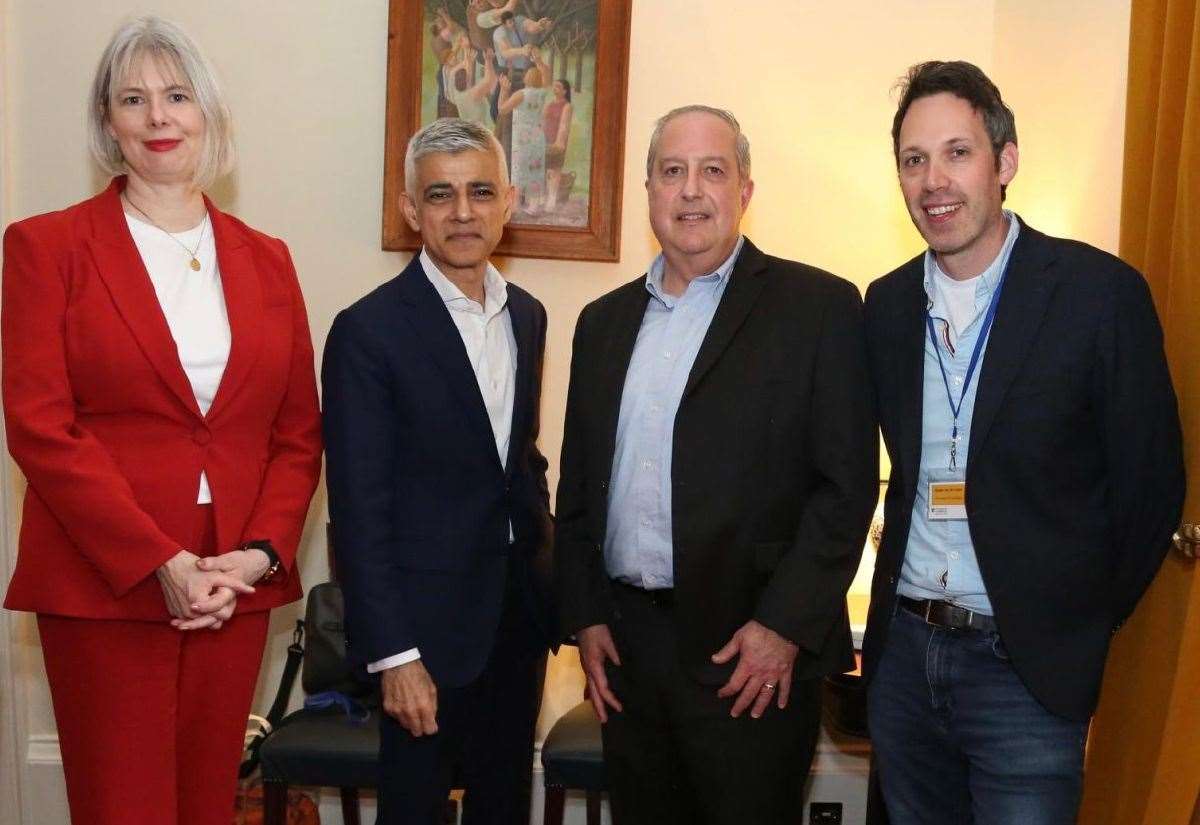
Networks linked to Moscow, Beijing and far-right groups are deliberately spreading false information about London on social media, Sir Sadiq Khan warned during his keynote address at the 2026 Cambridge Disinformation Summit.
Speaking at the three-day event hosted by Cambridge Judge Business School (CJBS), the Mayor of London responded forcefully to falsehoods about crime in the UK capital, including claims by the US President that London is so dangerous that “people are being stabbed in the ass” – despite homicides being at a 22-year low.
“If platforms fail to act, the state must have the tools to make them,” Khan said in his Thursday evening address. “That’s why I’ll continue lobbying the government publicly and privately to take a much tougher approach. We need a new central body with the agility and authority to protect our democracy from disinformation, and deal with the scale and speed of this crisis.”
The mayor’s appearance coincided with the release of research from City Hall that found online content portraying London as “in decline” has roughly tripled over the past two years. These posts frequently feature AI-generated or staged videos, or repurpose old footage from other cities to create misleading narratives.
The study identified multiple sources of this disinformation campaign, including “far-right groups and networks” linked to Russian and Chinese state actors, along with others connected to Donald Trump’s MAGA movement. Researchers also discovered networks motivated purely by profit based in Vietnam, Sri Lanka, and Nigeria with over one million followers that used AI-generated images or impersonated UK media outlets.
Meta, which owns Facebook and Instagram, responded to the findings, stating: “We take coordinated inauthentic behaviour seriously and are constantly working to disrupt this type of activity. Globally, we have removed over 200 networks and we do not allow misrepresentation, fake accounts, or the artificial boosting of content. We are reviewing the research and are in touch directly with the mayor’s office.”
The Cambridge Disinformation Summit has evolved significantly since its inception in 2023. Alan Jagolinzer, professor of financial accounting at CJBS and chair of the event, described Khan’s address as “both sobering and inspiring,” noting how global mayors are increasingly confronting the downstream harms of targeted disinformation campaigns against their cities.
Professor Sander van der Linden, co-organizer and director of the Cambridge Social Decision-Making Lab, highlighted the summit’s achievements: “We were pleased to see a strong consensus emerge across the political aisle to address the spread of disinformation in society for both kids and adults. For us, the goal was to convene global leaders in science, journalism, politics, culture, and security to discuss systematic risks from technology. I think that was a success.”
This year’s summit notably expanded its focus beyond traditional disinformation to include discussions on cognitive warfare, reflecting the evolving nature of information manipulation tactics. Emma Briant, an associate at CJBS’s Centre for Financial Reporting & Accountability and a regular participant at the summit, explained the distinction.
“When people use the term cognitive warfare, the emphasis is on using psychology and neuroscience to understand how to disrupt decision-making processes and take advantage of how our brains work to undermine our ability to act in our own interests,” Briant said. She noted that unlike disinformation, which involves outright falsehoods, cognitive warfare manipulates truth for specific strategic goals.
Briant cited how the US administration’s focus on “anti-American propaganda” often dismisses legitimate alternative perspectives, particularly European viewpoints. “The discussion and the concept is far from new, but its inclusion in the 2026 Cambridge Disinformation Summit may indicate that contemporary experts are finally moving away from their obsession with mis/disinformation and understanding there is more to propaganda than falsehood,” she added.
The summit brought together diverse expertise from academia, government, media, and technology sectors, creating what participants described as a crucial forum for addressing the growing sophistication of information manipulation in an increasingly fractured global information landscape.
Fact Checker
Verify the accuracy of this article using The Disinformation Commission analysis and real-time sources.

10 Comments
As an investor, I’m concerned about how disinformation could impact perceptions of London as a business hub. Restoring public trust and countering false narratives should be a priority for policymakers.
That’s a good point. Unchecked disinformation could undermine confidence in the city’s economic prospects. Decisive action to combat it is essential for London’s long-term prosperity.
The mayor’s warning about the rise in online content portraying London negatively is a wake-up call. Urgent action is required to counter the spread of falsehoods and protect the city’s image both at home and abroad.
Absolutely. Disinformation can erode public trust and undermine a city’s competitiveness. Robust measures to combat this challenge are essential for London’s long-term success.
It’s troubling to see foreign adversaries exploiting social media to spread misleading information about London. The mayor’s call for greater regulatory oversight is a prudent step to safeguard the city’s reputation and security.
Agreed. Disinformation campaigns that target specific cities or regions can have far-reaching consequences. A coordinated response is needed to address this threat to public discourse.
The statistics on the rise in negative online content about London are quite alarming. It’s crucial that robust safeguards are put in place to prevent the manipulation of public discourse through the spread of falsehoods.
Absolutely. The mayor is right to push for a new regulatory body with the authority to swiftly address disinformation campaigns. The integrity of our democratic institutions is at stake.
Interesting to see the Mayor of London calling out the spread of disinformation about the city. It’s concerning how foreign actors can leverage social media to distort public perceptions. Effective measures are needed to combat this threat to democracy.
I agree, disinformation can have damaging real-world impacts. A robust regulatory framework seems necessary to hold social media platforms accountable for the content on their sites.