


Listen to the article
The Digital Age’s Media Revolution: Navigating Truth in a Post-Gatekeeping World
In today’s digital landscape, the rapid proliferation of information has fundamentally transformed how societies communicate and access news. This interconnectedness has created unprecedented opportunities for knowledge-sharing and transparency while simultaneously unleashing challenges like misinformation, disinformation, and the troubling rise of deepfakes that blur the lines between fact and fiction.
These challenges aren’t confined to obscure corners of the internet. They’ve infiltrated mainstream platforms, profoundly influencing public opinion, political discourse, and cultural narratives at a scale never before seen.
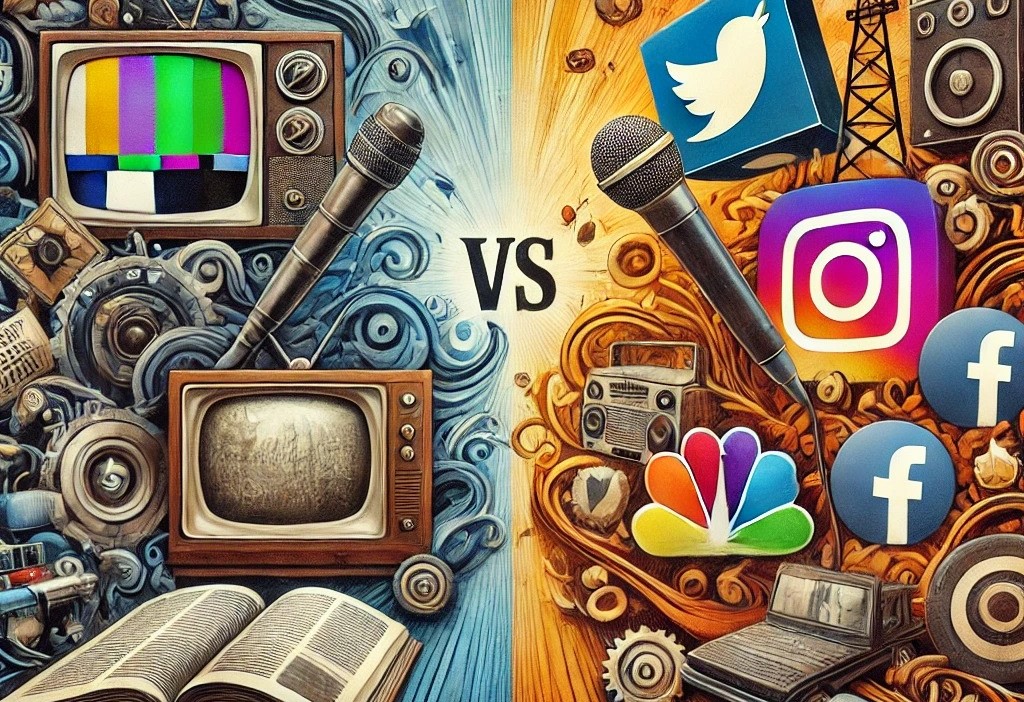
The emergence of alternative media channels—podcasts, social media networks, and independent streaming platforms—has disrupted traditional information gatekeepers. While these platforms give previously unheard voices a chance to reach audiences, they often lack the editorial oversight mechanisms that have historically governed traditional media outlets. The result is a complex media ecosystem where authenticity and sensationalism compete for attention, and viral content frequently overshadows fact-checking.
Content moderation policies have become increasingly contentious as platforms struggle to balance free expression with the need to curb harmful or deceptive narratives. The situation grows more complex with the advancement of deepfake technology and AI-generated content capable of fabricating convincing but entirely false scenarios—from politicians delivering speeches they never gave to manipulated videos designed to provoke social unrest.
These developments have sparked intense debates among technology companies, policymakers, journalists, and users over who bears responsibility for ensuring accurate and ethical content. Recent high-profile incidents highlight the tension between established media practices and newer communication channels.
The Djokovic Incident: Traditional vs. Social Media
During the 2025 Australian Open, tennis star Novak Djokovic boycotted an on-court interview with Channel 9, the tournament’s official broadcaster, following controversial comments made by one of its journalists, Tony Jones. This incident crystallized the growing tension between traditional media’s content policies and the direct communication enabled by social media.
Following his victory over Jiri Lehecka in the fourth round, Djokovic declined the customary on-court interview—not due to any issue with interviewer Jim Courier, but in response to remarks made by Channel 9 sports journalist Tony Jones. During a live broadcast, Jones had mocked Serbian fans supporting Djokovic, called the 24-time Grand Slam champion “overrated” and a “has-been,” and suggested they “kick him out”—a particularly sensitive phrase given Djokovic’s deportation from Australia over vaccine mandates in 2022.
In his post-match press conference, Djokovic stated he would not conduct interviews with Channel 9 until receiving an apology from Jones and the network for what he deemed “insulting and offensive” comments. The tennis champion then took to X (formerly Twitter) to explain his actions directly to fans, bypassing traditional media channels.
The response was immediate. Djokovic’s video went viral, drawing comments from various quarters, including X owner Elon Musk, who retweeted it with criticism of “legacy media,” stating: “It’s way better just to talk to the public directly than go through the negativity filter of legacy media.” Djokovic’s simple reply—”Indeed”—underscored his alignment with this perspective.
The incident highlighted critical issues concerning content policies in traditional versus social media. While Channel 9 eventually apologized after public backlash, the situation demonstrated how social media enables public figures to communicate directly with their audience without media intermediaries. However, this direct communication also bypasses established journalistic safeguards, potentially facilitating the spread of unchecked information.
Joe Rogan: Alternative Media’s Political Influence
As traditional media struggles with issues of trust and relevance, alternative platforms like podcasts have gained significant traction. “The Joe Rogan Experience” exemplifies this shift, becoming an influential player in political discourse through interviews with figures like Donald Trump and potential conversations with candidates like Kamala Harris.
Trump’s 2024 appearance on Rogan’s podcast marked a pivotal moment, often credited with aiding his political comeback and eventual election as the 47th U.S. President. The format allowed for an extended, unscripted conversation where Trump could discuss policies and plans without typical media constraints.
In contrast, Kamala Harris’s approach to the same platform differed markedly. Reports indicate she requested special conditions for her interview, including pre-approved questions, which Rogan declined. Harris subsequently chose not to participate, highlighting a fundamental difference in how politicians engage with alternative media. Her decision reflected a strategy to control media exposure, preferring environments where the narrative could be more easily shaped.
Adding another dimension, Ukrainian political figure and former boxer Vladimir Klitschko’s appearance on Rogan’s show demonstrated how alternative media can provide international perspectives that might be underrepresented in traditional outlets.
The podcast format presents distinctive challenges regarding content policies. While not adhering to traditional media’s editorial standards, Rogan’s show maintains its own guidelines, balancing free speech with responsibility. Unlike institutional fact-checking in traditional media, podcast communities often drive corrections through platforms like Reddit or X, creating a different accountability model.
Elon Musk and the “Nazi Salute” Controversy
A January 2025 tweet by Elon Musk further illustrated the evolving media landscape. Musk wrote: “It was astonishing how insanely hard legacy media tried to cancel me for saying ‘my heart goes out to you’ and moving my hand from my heart to the audience. In the end, this deception will just be another nail in the coffin of legacy media.”
This statement referenced media coverage interpreting one of his gestures as resembling a Nazi salute. Musk’s direct appeal to his audience via X bypassed traditional media, allowing him to present his version of events unfiltered—demonstrating both the power and potential pitfalls of social media’s role in shaping public discourse.
Legacy media, with its established content policies ensuring editorial oversight, faces criticism for perceived bias and agenda-setting. Meanwhile, social platforms offer directness and authenticity but lack consistent editorial safeguards, potentially allowing misinformation to spread unchecked.
Beyond these platforms, alternative channels like podcasts, independent streaming services, and blogs have created even more diverse information sources, often with less stringent content policies. While offering nuanced discussions and varied perspectives, these formats may lack immediate fact-checking mechanisms.
As society navigates this complex media ecosystem, finding balance between ensuring factual accuracy, preventing misinformation, and respecting freedom of expression remains a critical challenge. The future of media lies in developing approaches that combine traditional editorial oversight with modern platforms’ openness to serve an informed public.
Fact Checker
Verify the accuracy of this article using The Disinformation Commission analysis and real-time sources.

12 Comments
This is a thought-provoking look at the changing media landscape. The emergence of alternative channels has democratized information access, but also enabled the spread of misinformation. How can we empower consumers to critically evaluate online content and sources?
The blurring of fact and fiction in the digital age is a significant challenge. While alternative media offer more diverse perspectives, the lack of editorial oversight is worrying. What role can platforms, journalists, and the public play in addressing this issue?
The blurring of fact and fiction is indeed a major challenge in the digital age. While alternative media offer more diversity of voices, the lack of editorial oversight is concerning. How can we strike a balance between free speech and ensuring the integrity of information?
That’s a tough balance to strike. Promoting media literacy, fact-checking, and accountability measures could help, but it’s a complex issue without easy solutions. Ongoing dialogue between platforms, journalists, and the public will be crucial.
The rise of social media and alternative news sources has certainly shaken up the traditional media landscape. While this has democratized information access, the proliferation of misinformation is worrying. What regulatory or industry-led approaches could help restore trust in news?
That’s a great question. Potential solutions could include improved platform moderation, stricter fact-checking requirements, and media literacy education. But any regulatory approaches would need to carefully balance free speech concerns. It’s a challenging issue without clear answers.
The shift towards social media and alternative news channels is a double-edged sword. On one hand, it democratizes information access, but on the other, it enables the rapid spread of misinformation. How can we address this without infringing on free speech?
This is a timely and important topic. The explosion of alternative news sources has undoubtedly created more choice, but also more confusion. How can we empower consumers to critically evaluate the credibility of information they encounter online?
This is a fascinating exploration of the evolving media landscape. The rise of alternative channels has certainly disrupted traditional outlets, but the proliferation of misinformation is concerning. What strategies could help restore public trust in news and information?
The challenges posed by misinformation and deepfakes in the digital age are concerning. While alternative media offer more diversity, the lack of editorial oversight is worrying. What role can technology play in helping users navigate this complex landscape?
This is a fascinating look at the changing media landscape. The rise of alternative channels has certainly disrupted traditional news outlets, but it also raises important questions around truth and accountability. How can we empower people to navigate this complex ecosystem and discern fact from fiction?
You raise a great point. Developing media literacy and critical thinking skills will be key for consumers to assess the credibility of information across different platforms. Platforms themselves also have a responsibility to address misinformation and promote reliable sources.