


Listen to the article
US Commission Exposes China’s Disinformation Campaign Against Rafale Fighters
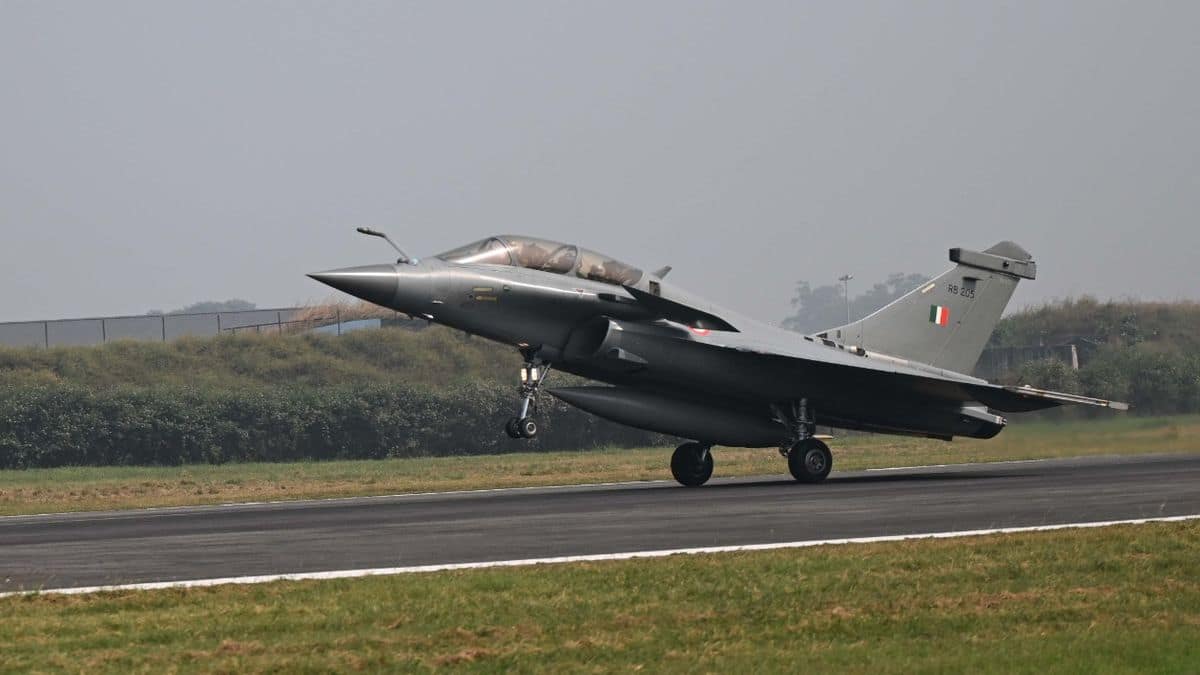
A US Congressional commission has revealed that China orchestrated a sophisticated disinformation campaign targeting French Rafale fighter jets during the May 2025 India-Pakistan border crisis known as Operation Sindoor.
According to the US-China Economic and Security Review Commission’s Annual Report for 2025, Beijing deployed fake social media accounts amplified by artificial intelligence to spread false information about the French-made aircraft while promoting its own J-35 fighters.
“Following the May 2025 India-Pakistan border crisis, China initiated a disinformation campaign to hinder sales of French Rafale aircraft in favor of its own J-35s, using fake social media accounts to propagate AI images of supposed ‘debris’ from the planes that China’s weaponry destroyed,” the report states.
The commission’s findings highlight growing concerns about China’s use of digital manipulation tactics to gain competitive advantages in the global defense market, where the Rafale has emerged as a popular choice among nations seeking advanced military aircraft.
Operation Sindoor began on May 7, 2025, when India launched strikes against terrorist infrastructure in Pakistan and Pakistan Occupied Jammu and Kashmir (POJK). The conflict quickly escalated as Pakistan responded with attacks on Indian cities and military installations, triggering a three-day military engagement that ended with a ceasefire on May 10.
During the conflict, India inflicted significant damage on Pakistani military infrastructure, including airbases, airstrips, air defense systems, and radar sites. Military analysts note that the confrontation represented more than just an India-Pakistan conflict – it evolved into a proxy test of military technologies, with Pakistan deploying Chinese-made JF-17 and J-10 fighters alongside PL-15 missiles.
The technological dimension of the conflict has drawn particular attention from defense experts. US-based military analyst Jon Spencer observed that “Operation Sindoor pitted India’s indigenously developed weapons systems against Chinese-supplied platforms fielded by Pakistan. And India didn’t just win on the battlefield — it won the technology referendum.”
Spencer further noted that the operation showcased India’s domestic defense capabilities developed under its “Make in India” and “Atmanirbhar Bharat” (self-reliant India) initiatives. “What unfolded was not just retaliation, but the strategic debut of a sovereign arsenal,” he wrote in a social media analysis.
China’s disinformation efforts appear to have been motivated by competitive pressure in the lucrative international fighter jet market, where Beijing has been aggressively promoting its J-35 aircraft as an alternative to Western options. The Rafale, manufactured by France’s Dassault Aviation, has secured major contracts in recent years, including significant deals with India, Egypt, Qatar, and Greece.
Defense industry experts suggest that China’s campaign reflects broader concerns about its military hardware’s performance in actual combat situations compared to Western alternatives. The effectiveness of India’s operations, which included the use of Rafale jets among other platforms, potentially undermined China’s marketing narrative for its own fighter aircraft.
The congressional report’s findings come amid growing international scrutiny of information warfare tactics, with military analysts warning that disinformation campaigns increasingly accompany conventional conflicts as nations seek to control narratives and influence global perception.
For the defense industry, the incident highlights how geopolitical rivalries are increasingly extending into information spaces, with major powers using digital manipulation to achieve strategic commercial and military objectives in regions where they compete for influence.
Fact Checker
Verify the accuracy of this article using The Disinformation Commission analysis and real-time sources.

14 Comments
This report provides a troubling glimpse into China’s alleged tactics to undermine the Rafale jets. While the details are concerning, it’s important that we seek to verify the claims and understand the broader context. Transparency and impartiality must guide defense procurement decisions.
Absolutely. It’s crucial that we approach this issue objectively and avoid knee-jerk reactions. A thorough, evidence-based investigation will be needed to fully understand the scope and impact of these alleged disinformation efforts.
The Rafale is a capable fighter aircraft, so it’s not surprising China would want to undermine it. However, spreading disinformation is unethical and could have serious consequences. Transparency and honest competition should be the priority in the global defense market.
I agree. Countries should focus on the merits of their own products rather than resorting to underhanded tactics. Maintaining integrity in these crucial defense decisions is important for global security.
The alleged Chinese disinformation campaign against the Rafale jets is concerning, but not surprising given the high stakes involved in the global defense market. Rigorous fact-checking and oversight will be key to ensuring fair competition and informed decision-making.
Well said. Maintaining trust in the defense procurement process is critical for international security. Addressing these digital influence tactics should be a top priority for policymakers and defense leaders.
Interesting report on China’s alleged disinformation campaign against the Rafale jets. I’d be curious to learn more about the specifics of their tactics and the impact on the global defense market. Seems like an important issue to follow.
Yes, the use of AI-generated fake social media content to sway perceptions is concerning. It highlights the need for increased scrutiny and verification of online information, especially around defense and security matters.
This report raises important questions about China’s tactics and the broader issue of disinformation campaigns. It will be crucial for the international community to address these challenges and ensure a level playing field in the defense industry.
Absolutely. Fact-checking and media literacy will be key to combating these types of coordinated influence operations. Maintaining trust in information sources is critical, especially on matters of national security.
The details in this report are quite concerning. China’s alleged use of AI-powered disinformation to undermine the Rafale jets is a troubling development. Robust oversight and accountability measures are needed to counter such tactics.
Agreed. The defense industry must be vigilant against these kinds of manipulative campaigns. Maintaining transparency and integrity in procurement decisions is essential for global stability.
This report highlights the growing threat of digital influence operations, particularly in sensitive defense sectors. It’s crucial that governments and international bodies work together to address these challenges and promote truthful, fact-based discourse.
Exactly. Disinformation can have serious geopolitical consequences, so a coordinated, multilateral response is needed to counter these tactics and protect the integrity of defense decision-making.