


Listen to the article
Russian Disinformation Campaign Falsely Blames Ukrainian Refugees for Polish Fire
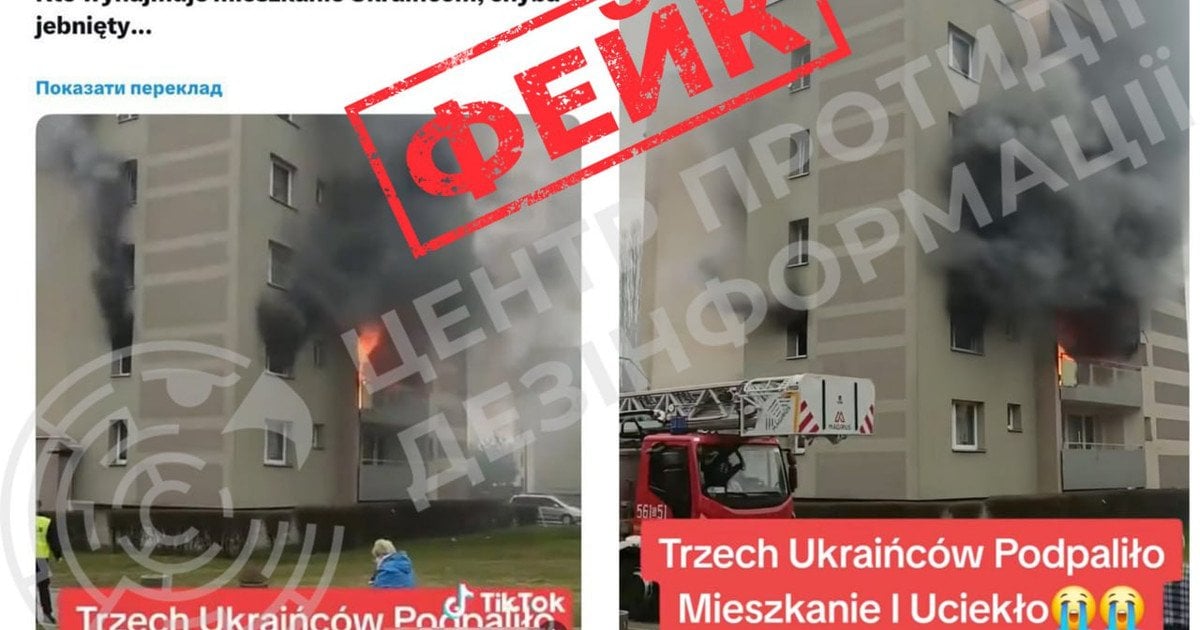
Russian propaganda networks are actively circulating old footage of a 2021 fire in the Polish city of Racibórz, falsely presenting it as recent evidence of arson committed by Ukrainian refugees, according to the Center for Countering Disinformation (CCD).
The misleading videos are being distributed across social media platforms as “breaking news,” with narratives specifically designed to inflame tensions between Polish citizens and Ukrainian refugees who fled to Poland following Russia’s full-scale invasion of Ukraine.
Upon thorough examination, CCD experts confirmed the footage originated from a fire that occurred in 2021, predating the major influx of Ukrainian refugees into Poland. Their verification process included cross-referencing with archived Polish media reports from the time of the actual incident, which make no mention of Ukrainian involvement.
“The video is clearly from 2021, and Ukrainians had absolutely nothing to do with the incident—neither then nor now,” a CCD representative stated. “This is deliberate manipulation intended to create division.”
The disinformation campaign appears to be executed through what the CCD describes as a “coordinated network of anonymous accounts” that systematically publish anti-Ukrainian content specifically targeting Polish audiences. These accounts display patterns consistent with known Russian disinformation operations, using identical messaging and synchronized posting schedules.
This tactic represents a classic example of Russia’s broader information warfare strategy. By falsely attributing criminal activity to Ukrainian refugees, Russian propaganda aims to undermine the strong Polish-Ukrainian solidarity that has developed since February 2022, when Poland opened its borders to millions fleeing the Russian invasion.
Poland has been one of Ukraine’s strongest European allies throughout the conflict, providing substantial military aid and accepting more Ukrainian refugees than any other country. This relationship represents a significant obstacle to Russian geopolitical objectives in the region.
“The enemy’s goal remains unchanged—to emotionally destabilize society, stir up xenophobia, and sour Polish attitudes toward Ukrainian refugees,” the CCD explained. “This is a classic Kremlin tactic to weaken solidarity between the two countries.”
Disinformation experts note that such tactics have become increasingly sophisticated. Rather than creating entirely fictional events, Russian propagandists often repurpose genuine but dated footage, making the falsehoods more difficult for average social media users to detect without specialized knowledge or verification tools.
The timing of this campaign coincides with growing discussion in Poland about the long-term integration of Ukrainian refugees and associated social costs, suggesting a deliberate attempt to exploit existing societal tensions.
Similar disinformation campaigns targeting Ukrainian refugees have been documented across other European countries hosting displaced Ukrainians, including Germany, Czechia, and the Baltic states. These efforts typically follow the same pattern: using unrelated or outdated footage to fabricate stories of criminal behavior, then attributing these actions to refugees.
Media literacy experts recommend that social media users verify information through multiple reliable sources before sharing potentially inflammatory content, especially during times of international conflict when disinformation is particularly prevalent.
The CCD continues to monitor and debunk such disinformation campaigns as part of broader efforts to counter Russian information warfare targeting Ukraine and its allies. Polish authorities have also established specialized units to identify and counter foreign disinformation aimed at disrupting social cohesion.
This incident highlights the ongoing information battle occurring alongside the physical conflict in Ukraine, where perception and public opinion remain critical battlegrounds in determining long-term international support for Ukraine’s defense efforts.
Fact Checker
Verify the accuracy of this article using The Disinformation Commission analysis and real-time sources.

12 Comments
Interesting that Russian propagandists are trying to stoke tensions between Poles and Ukrainian refugees. It’s concerning how quickly disinformation can spread online these days.
Agreed, it’s a worrying tactic to sow division during an already challenging situation for Ukrainian refugees. Fact-checking is so important to counter these false narratives.
It’s disheartening to see Russia’s continued efforts to undermine and target vulnerable populations like Ukrainian refugees. We must stay vigilant and support initiatives to counter these malicious disinformation campaigns.
It’s disturbing to see how Russian propaganda networks are exploiting social media to target Ukrainian refugees. We must remain vigilant and support initiatives that combat the spread of disinformation.
This is a stark reminder of the need for critical thinking and fact-checking when consuming online content, especially around sensitive geopolitical issues. Kudos to the Center for Countering Disinformation for their swift response.
Disinformation campaigns like this one are designed to inflame tensions and distract from the real issues. I’m glad the experts were able to quickly identify and debunk this false narrative.
This is a concerning example of how quickly misinformation can spread, especially when it plays into existing biases or fears. Fact-checking and media literacy are so important to combat these tactics.
Disinformation campaigns like this one are a concerning tactic to sow division and distract from the real issues. I’m glad the experts were able to quickly identify and debunk this false narrative.
It’s frustrating to see how Russian propaganda networks are leveraging social media to target Ukrainian refugees. We must remain critical consumers of online information and support fact-based reporting.
This is a clear attempt to manipulate public opinion and create unrest. I’m glad the disinformation was quickly exposed and debunked by the experts. We need to stay vigilant against these tactics.
Yes, verifying the source and origins of online content is crucial. Spreading misinformation, especially about vulnerable populations, is a deplorable act.
Deliberate manipulation of information to create division is a troubling tactic. I’m glad the experts were able to verify the true origins of this footage and expose the disinformation campaign.