


Listen to the article
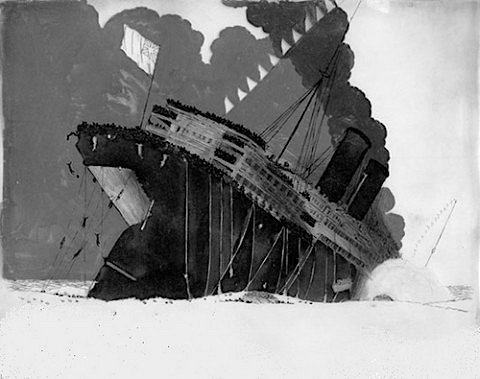
In a remarkable historical convergence of art and propaganda, animation pioneer Winsor McCay created one of the earliest examples of animated wartime messaging through his painstaking depiction of one of WWI’s most notorious maritime disasters.
McCay, widely celebrated for his surreal “Little Nemo” comic strip and groundbreaking animated short “Gertie the Dinosaur” (1914), channeled his artistic talents into a powerful political statement with “The Sinking of the Lusitania,” completed in 1918 after two years of intensive labor.
The film chronicled the May 7, 1915 attack when a German U-boat torpedoed the RMS Lusitania off Ireland’s coast as it approached Liverpool. The passenger liner sank in just eighteen minutes, claiming 1,198 lives and ultimately helping propel the United States into World War I.
McCay’s decision to create this animation emerged from personal conviction and professional frustration. While working as an editorial cartoonist for William Randolph Hearst, McCay found himself increasingly at odds with his employer’s isolationist stance. Despite McCay’s outrage over the Lusitania attack, Hearst demanded he produce anti-war cartoons – a creative constraint that eventually drove McCay to channel his true sentiments into this independent animation project.
The technical achievement alone makes “The Sinking of the Lusitania” remarkable. McCay produced over 25,000 hand-drawn images, most completed during his personal time after work. This monumental effort demonstrates not only his artistic dedication but also his determination to memorialize the tragedy in a medium still in its infancy.
Unlike contemporaneous animation characterized by playful whimsy, McCay’s approach was documentary-like in its seriousness and stark presentation. The film unfolds in real-time, matching the actual duration of the sinking, providing viewers with a methodical blow-by-blow account of the attack.
What distinguishes McCay’s work is its unflinching portrayal of human suffering amid breathtaking artistry. While primarily depicting the disaster from a distance, as if viewed from another vessel, the animation periodically zooms in on devastating human moments – a desperate mother struggling to keep her baby above water, and scores of passengers floating helplessly in the choppy seas like debris.
The film’s anti-German sentiment is unmistakable through its heavy-handed intertitles, characteristic of wartime propaganda: “The babe that clung to his mother’s breast cried out to the world – TO AVENGE the most violent cruelty that was ever perpetrated upon an unsuspecting and innocent people.” Another declares: “The man who fired the shot was decorated for it by the Kaiser! – AND YET THEY TELL US NOT TO HATE THE HUN.”
Despite its propagandistic purpose, the animation stands as a testament to McCay’s unparalleled artistic vision. Each frame showcases his distinctive style – stylized ocean waves, elegant smoke billowing from the ship’s funnels, and masterful use of negative space. Every cell could be considered gallery-worthy, setting this work apart from typical propaganda of the era.
“The Sinking of the Lusitania” represents a fascinating intersection of animation history, wartime communication, and artistic expression. It demonstrates how nascent media forms were quickly adapted for political messaging even in the early 20th century, while simultaneously showcasing the evolution of animation as a serious artistic medium capable of addressing tragic historical events.
The film remains available to modern viewers through various online archives, providing both a window into early animation techniques and a stark reminder of how art can serve multiple purposes – as memorial, propaganda, and timeless expression of human creativity even in response to tragedy.
Fact Checker
Verify the accuracy of this article using The Disinformation Commission analysis and real-time sources.

5 Comments
The Lusitania attack was certainly a pivotal moment that helped draw the US into WWI. McCay’s animation must have been a powerful piece of wartime messaging at the time, though of course the historical accuracy and objectivity of such propaganda films is always debatable.
I wonder how McCay’s personal views on the war effort influenced his artistic choices in depicting the Lusitania sinking. The film seems to be a skillful blend of artistry and political messaging.
As an early example of animated propaganda, this is a fascinating historical artifact. It’s a testament to McCay’s skills that he could bring such a tragic event to life through animation, even if the film’s purpose was to shape public opinion rather than simply document the facts.
This is a fascinating look at one of the earliest uses of animation for propaganda purposes. McCay’s talent is evident in his vivid depiction of the Lusitania sinking, though the film’s intent is clearly to sway public opinion towards the war effort.
It’s remarkable how an artist like McCay could be constrained by his employer’s political stance, yet still find a way to channel his convictions through this powerful animated film.