


Listen to the article
On the historical date of Sunday, May 10, 2026—the 130th day of the year—many pivotal moments in global history are commemorated, spanning nearly 250 years of human achievement, conflict, and social transformation.
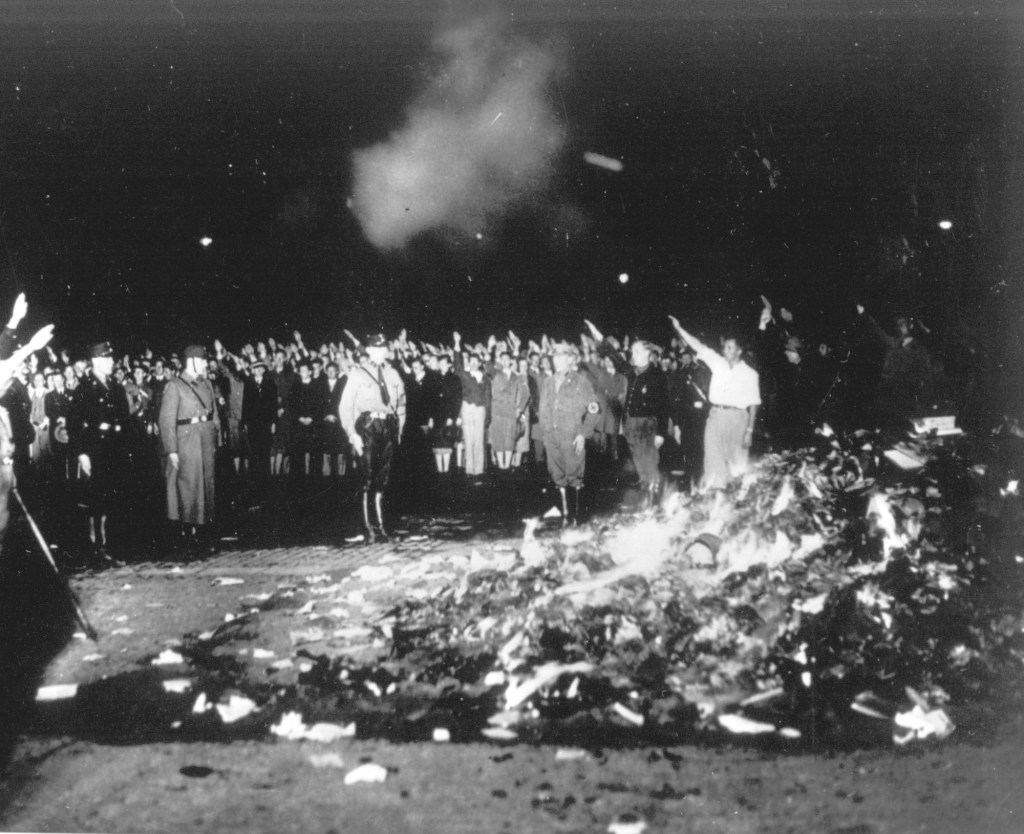
Perhaps one of the most sobering anniversaries falls on this day in 1933, when Nazi authorities orchestrated book burnings across 34 German cities. The systematic destruction targeted literature deemed incompatible with Nazi ideology, marking a significant escalation in the regime’s cultural censorship and persecution of intellectual freedom.
This date also highlights pivotal moments in American history. In 1775, during the early stages of the American Revolution, Ethan Allen led his Green Mountain Boys alongside Colonel Benedict Arnold in the successful capture of Fort Ticonderoga from British forces in New York, securing valuable artillery for the revolutionary cause.
Ninety years later, on May 10, 1865, Union forces captured Confederate President Jefferson Davis near Irwinville, Georgia, effectively marking the final collapse of the Confederate leadership following the Civil War. Four years after Davis’s capture, in 1869, American industrial achievement reached new heights with the driving of the golden spike at Promontory, Utah, connecting the eastern and western segments of the first transcontinental railroad—a development that revolutionized national commerce and travel.
The date also marks significant security and governmental milestones. In 1924, J. Edgar Hoover began his nearly five-decade tenure as head of what would become the FBI when President Calvin Coolidge appointed him acting director of the Bureau of Investigation, a position he would hold until 1972.
World War II witnessed critical developments on this day in 1940, when German forces launched their Western offensive, simultaneously invading the Netherlands, Luxembourg, Belgium, and France. The same day brought a pivotal leadership change in Britain as Winston Churchill formed a new government following Neville Chamberlain’s resignation, establishing the wartime leadership that would guide the United Kingdom through its darkest hours.
Twenty years later, in 1960, the USS Triton completed the first submerged circumnavigation of the Earth, demonstrating the revolutionary capabilities of nuclear-powered submarines during the Cold War era.
May 10, 1994, stands as a watershed moment in South African history, when Nelson Mandela was inaugurated as the country’s first Black president following the dismantling of apartheid. Coincidentally, that same day, Illinois executed notorious serial killer John Wayne Gacy for the murders of 33 young men and boys.
In sports history, May 10, 2014, marked a milestone for LGBTQ+ inclusion when Michael Sam was selected by the St. Louis Rams in the NFL draft, becoming the league’s first openly gay draftee.
More recent history includes the 2023 indictment of Rep. George Santos on charges of donor fraud, campaign theft, and lying to Congress. Santos pleaded guilty in August 2024 and received a 7-year prison sentence, though former President Donald Trump commuted his sentence in October 2025.
Today’s birthdays celebrate figures across various fields, including 84-year-old basketball coaching legend Jim Calhoun, 80-year-old musician-songwriter Donovan, and 77-year-old fashion pioneer Miuccia Prada. Other notable celebrants include U2 frontman and activist Bono (66), playwright Suzan-Lori Parks (63), supermodel Linda Evangelista (61), and comedian Kenan Thompson (48).
As 2026 continues to unfold, this day serves as a reminder of humanity’s complex journey through triumph and tragedy, progress and setback, with 235 days remaining in the year.
Fact Checker
Verify the accuracy of this article using The Disinformation Commission analysis and real-time sources.

12 Comments
The capture of Fort Ticonderoga by Ethan Allen and Benedict Arnold was a pivotal early victory for the American Revolution. It’s remarkable how events from hundreds of years ago can still resonate today.
Indeed, that victory helped provide the critical artillery needed to drive the British from Boston. The American Revolution was full of such pivotal moments that laid the foundation for the nation.
The Nazi book burnings were a shameful act of cultural censorship and oppression. We must remain vigilant against any attempts to restrict the free exchange of ideas and information, no matter the ideology behind it.
The collapse of the Confederacy after the capture of Jefferson Davis was a decisive moment in the Civil War. While the war’s legacy is complex, it’s important to recognize the sacrifices and struggles of all involved.
You make a good point. The Civil War was a traumatic chapter in American history, with lasting impacts that the nation is still grappling with today. It’s crucial that we approach this history with nuance and understanding.
The anniversary of the Nazi book burnings is a sobering reminder of the dangers of censorship and intolerance. We must remain vigilant in defending intellectual freedom and the open exchange of ideas.
Absolutely. These book burnings were a tragic assault on human knowledge and progress. We must learn from history to prevent such atrocities from happening again.
The capture of Fort Ticonderoga was a crucial early victory for the American revolutionaries. It’s a testament to the determination and resourcefulness of those who fought for independence.
Absolutely. That victory helped provide the Continental Army with much-needed artillery and momentum in the early stages of the war. It’s a powerful example of what can be achieved through collective action.
The historical anniversaries covered here span a wide range of pivotal moments, from the horrors of Nazi book burnings to landmark achievements in the American Revolution and Civil War. It’s important we remember and learn from this complex past.
The collapse of the Confederacy after the capture of Jefferson Davis marked the end of the Civil War. It’s sobering to reflect on the immense human toll and lasting impacts of that conflict.
You’re right, the Civil War was a tragic chapter in American history. While it ended the Confederacy, it also left deep scars that the nation is still grappling with today.