


Listen to the article
The Welsh Lord Haw Haw: The Curious Case of Raymond Davies Hughes
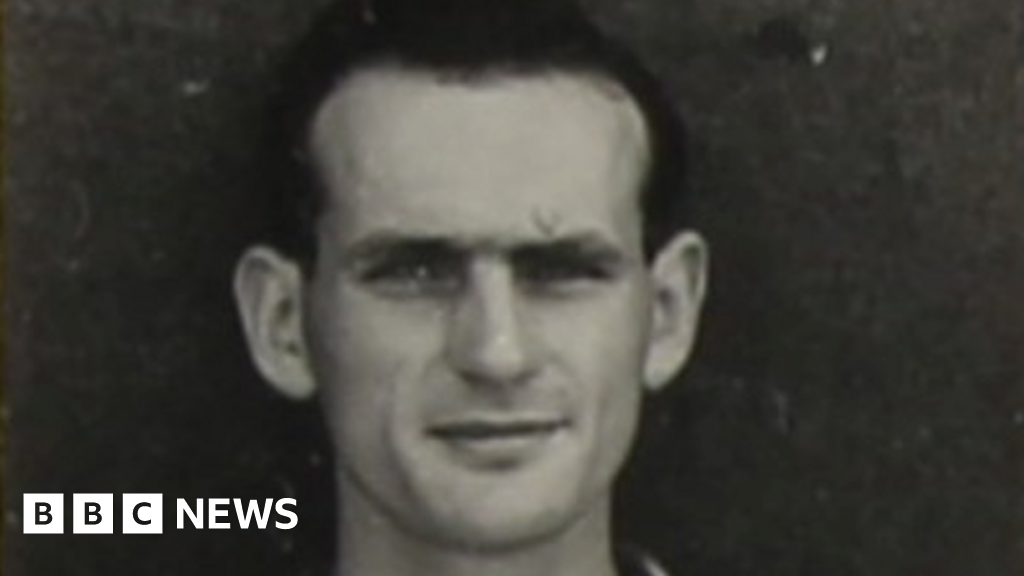
Eighty years ago, a Welsh-born RAF warrant officer found himself in the dock facing charges that could have sent him to the gallows. Raymond Davies Hughes from Mold, Flintshire, was labeled “The Welsh Lord Haw Haw” by the British press after he agreed to broadcast Nazi propaganda in Welsh to Allied troops fighting in North Africa and Italy.
Sentenced to five years hard labor—later reduced to two years on appeal—many historians believe Hughes was remarkably fortunate to escape execution. But the full story behind his collaboration reveals a complex character whose ineptitude may have ultimately saved his life.
Born in Liverpool in 1923 and raised in Flintshire, Hughes demonstrated questionable character from an early age. At just 11, he received a police caution for obtaining money by deception. After leaving school, he briefly enjoyed success managing a shoe shop in Bangor, Gwynedd, before being dismissed under mysterious circumstances.
In 1941, Hughes volunteered for the Royal Air Force and was assigned to the Royal Australian Air Force as a rear gunner on Lancaster bombers operating from RAF Bottesford in Nottinghamshire. His military career came to an abrupt end in August 1943, when his aircraft was shot down over Peenemunde on the Baltic coast during his 21st sortie.
“Inquiries to the Flintshire Constabulary ahead of his court martial reported him to be ‘cunning… very talkative and boastful… he is the type of fellow who would side with anyone. If he had landed in Russia he would have sided with them,'” explains journalist and television producer Marc Edwards, who has studied Davies Hughes’ life extensively.
The 20-year-old prisoner’s betrayal began almost immediately after capture. At the “Dulag Luft” interrogation camp near Frankfurt, Hughes offered to sell out his fellow POWs in exchange for better treatment.
“His first bit of treachery was to convince his fellow PoWs to fill out bogus Red Cross forms, which revealed far more than the name, rank and number which they were obliged to,” Edwards notes. “Of course these went straight to the Germans.”
Recognizing potential value in Hughes, the Nazis transferred him to Professor Reinhard Haferkorn, the German foreign office’s Head of English Propaganda. Haferkorn had significant connections to Wales, having lectured at Aberystwyth University in the 1920s, where one of his students was the renowned Welsh journalist Gareth Jones. By 1933, however, Haferkorn was regarded in Germany as “a completely reliable Nazi.”
Under Haferkorn’s direction, Hughes was tasked with writing anti-Semitic and anti-Communist propaganda scripts, though his performance was notably poor. Later, Joseph Goebbels, Hitler’s propaganda minister, put Hughes to work broadcasting messages directly to Welsh troops in the Mediterranean theater. For these services, he received his own flat and a monthly salary of approximately 500 Reichsmarks—equivalent to about £2,500 today.
During his court martial, evidence confirmed that BBC Monitoring had detected four Welsh-language broadcasts from Nazi propaganda station Radio Metropol between June and August 1944. However, without recordings or Welsh-speaking staff available, their exact content could not be verified.
Hughes mounted a creative defense, claiming he had embedded secret messages in his broadcasts of “Hen Wlad fy Nhadau” (Land of My Fathers) and the Lord’s Prayer, allegedly encouraging the Allies to bomb Berlin’s Sport Palace where Nazi rallies were frequently held.
When accused of supporting the British Free Corps, an SS division comprising British Nazi sympathizers, Hughes claimed he had actually supplied them with Dutch-sourced revolvers to create suspicion among the Gestapo.
“He also said he’d sabotaged phones and railways and destroyed military components, and that was why he’d had his privileges revoked and had been returned to an ordinary PoW camp in November 1944,” Edwards explains.
The reality, according to Edwards, was far more mundane: “Had even one part of this story been true, Davies Hughes would have been executed on the spot, not just demoted. The reality is that he’d become a pain in the backside to the Nazis. He was no good, he whinged about being paid late, he caused embarrassment by getting himself arrested… and in the end the only use they could find for him was humping furniture away from bomb-damaged houses.”
Ironically, Haferkorn’s testimony at Hughes’ court martial may have helped save him. The professor described such an incompetent collaborator that it almost generated sympathy for Hughes, noting his inability to write grammatically correct sentences, his incoherent political arguments, and his poor on-air performance hampered by a stutter and whistling through a missing tooth.
After serving two years at Dartmoor prison, Hughes returned to the shoe business, eventually rising through the ranks at Blindells and becoming a financial backer of Plymouth Argyle Football Club in the 1950s.
Meanwhile, Haferkorn faced remarkably few consequences for his own role in Nazi propaganda. He was allowed to return to West Germany in 1946, where he resumed his academic career until his death in 1983.
Despite his wartime betrayal, Hughes’ sweetheart Betty Brailsford kept her promise to marry him. He died a reasonably wealthy businessman in Cheltenham in 1999 at the age of 75, having successfully rebuilt his life after a wartime chapter that could have ended very differently.
Fact Checker
Verify the accuracy of this article using The Disinformation Commission analysis and real-time sources.

10 Comments
This is a really intriguing case study on the dangers of propaganda and the lure of extremism, even among those we might expect to resist it. While Hughes’ actions were abhorrent, the nuanced details provided in the article help shed light on how someone could end up in such a position.
You make a good point. Propaganda can be insidious and draw in even unlikely individuals. Understanding the full context, as the article does, is crucial to fully grasping the complexities of such historical events, rather than oversimplifying them.
This is a fascinating and troubling episode. It’s concerning to think that a Welsh soldier could have been swayed to broadcast Nazi propaganda to Allied troops. The article does a good job of exploring the complex factors that may have led to this betrayal.
You’re right, it’s a complex and sobering story. Hughes’ actions were clearly wrong, but the article suggests his motives may have been more complicated than simple treason. Understanding the full context is important, even for such serious historical misdeeds.
This is a fascinating and disturbing case study. While Hughes’ actions as the ‘Welsh Lord Haw Haw’ were clearly abhorrent, the article provides important context and perspective on the complex factors that may have led him down that path. It’s a sobering reminder of how insidious propaganda can be, and how even those we might expect to resist it can sometimes fall victim to its lure.
You’re absolutely right. The nuanced approach taken in the article is crucial. Oversimplifying this kind of historical event risks missing important details and lessons. Understanding the full complexity, as the article does, is the only way to truly grapple with the dangerous realities of propaganda and extremism.
Fascinating bit of history. While Hughes’ actions were clearly unacceptable, it’s interesting to learn the context and complexities behind his story. Propaganda can draw in even unlikely figures, and it’s a sobering reminder of the dangers of misinformation.
Agreed. The full story provides important nuance and perspective on this case. It highlights how even seemingly simple acts of treason can have more intricate roots and motivations.
This is a fascinating and troubling historical case. While Hughes’ actions as the ‘Welsh Lord Haw Haw’ were clearly reprehensible, the article does a good job of exploring the underlying factors and complexities that may have contributed to his downfall. It’s a sobering reminder of how propaganda and extremism can ensnare even those we might not expect.
Absolutely. The nuanced approach taken in the article is really important. It would be easy to simply condemn Hughes’ actions, but understanding the full context reveals a more complex and troubling story about the power of propaganda and the dangers of misinformation, even among those we might assume would resist it.