


Listen to the article
UN Watch Executive Challenges UN Special Rapporteur Over Alleged Regime Funding
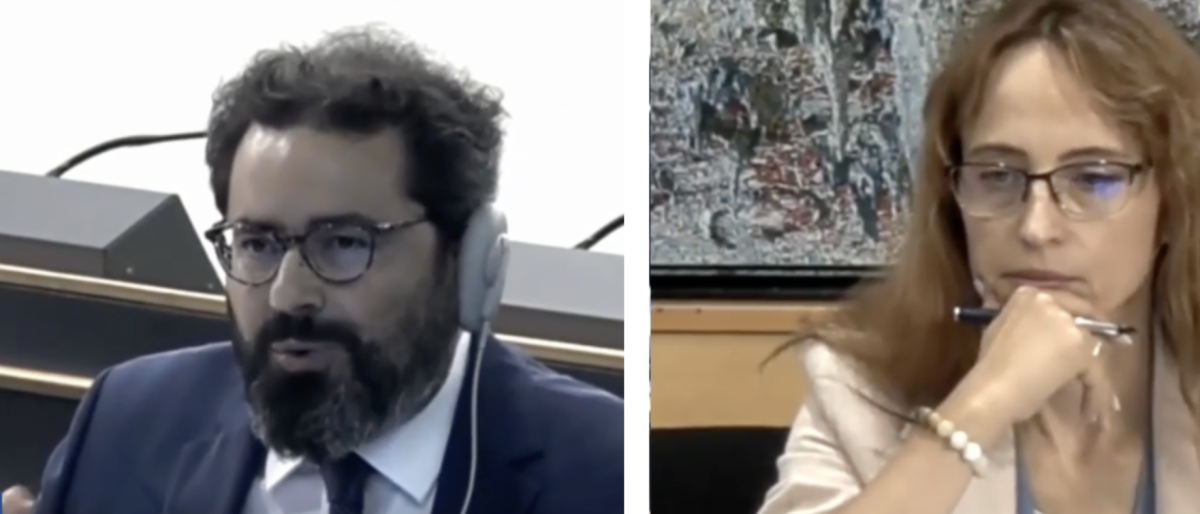
In a dramatic confrontation at the UN Human Rights Council, Hillel Neuer of UN Watch publicly challenged Special Rapporteur Alena Douhan over her mandate on Unilateral Coercive Measures (UCMs), claiming she has received over $1 million in funding from China, Russia, and Qatar while using her position to criticize Western sanctions rather than address human rights abuses by authoritarian regimes.
The heated exchange occurred during a panel discussion on sanctions at the Human Rights Council, where Neuer stood out as the lone critical voice among speakers predominantly representing countries targeted by Western sanctions.
“Is it right that the Special Rapporteur, Ms. Douhan, has traveled to Qatar, Venezuela, Zimbabwe, Iran, Syria and China, not to defend the victims of these dictatorships, but to lend a UN imprimatur to the propaganda of the oppressors?” Neuer asked during his allotted speaking time.
He specifically questioned substantial funding allegedly provided to Douhan’s office, claiming it received “$50,000 from Qatar, $265,000 from Russia, and $980,000 from China” – totaling approximately $1.3 million from governments frequently criticized for human rights violations.
The UCM mandate, established in 2014 through an Iran-sponsored resolution with support from Russia, China, Venezuela, and Cuba, focuses on examining the impact of unilateral sanctions on human rights. Critics like Neuer contend the mandate has become a tool for authoritarian regimes to deflect attention from their own abuses by blaming economic sanctions for humanitarian problems.
During the session, representatives from several sanctioned countries, including Russia, Iran, Venezuela, and Cuba, characterized Western sanctions as violations of international law and human rights. Russia described sanctions as a “large-scale and uncontrolled use by Western countries” that “contradict the UN’s fundamental human rights documents.” Venezuela went further, labeling sanctions as “weapons of war.”
UN High Commissioner for Human Rights Volker Turk also participated in the panel, stating that “unilateral coercive measures that are inconsistent with international law pose serious risks to the enjoyment of human rights.”
Neuer’s intervention drew immediate pushback from the Council Vice President, who warned that “derogative language or remarks… personal in nature… is not acceptable in this forum.” Cuba’s representative subsequently condemned UN Watch’s comments as “offensive, out-of-order, politicized” and accused the organization of “manipulation, provocation, and insulting sovereign states.”
The confrontation highlights ongoing tensions at the UN Human Rights Council regarding the mandate’s purpose and implementation. Critics argue it has evolved into a platform for sanctioned regimes to present themselves as victims rather than addressing their own human rights violations.
UN Watch further claimed that five of the six NGOs that spoke during the panel discussion were regime-affiliated organizations based in Tehran or Havana, functioning as “government-organized non-governmental organizations” (GONGOs) rather than independent human rights defenders. These included the Cuban United Nations Association, whose leadership reportedly includes former communist politicians and diplomats, and several Iranian organizations with limited public presence outside of UN activities related to sanctions.
This incident underscores broader concerns about the politicization of UN human rights mechanisms and questions about the independence of certain mandate holders and civil society participants within UN forums. It also reflects fundamental disagreements about whether sanctions primarily serve as legitimate diplomatic tools or constitute human rights violations in themselves.
The debate around sanctions continues to be particularly contentious as Western nations, led by the United States and European Union, increasingly rely on targeted economic measures as alternatives to military intervention when responding to human rights violations, territorial aggression, and other international concerns.
Fact Checker
Verify the accuracy of this article using The Disinformation Commission analysis and real-time sources.

6 Comments
While sanctions can be a complex and contentious issue, the UN’s role should be to defend human rights, not provide a ‘stamp of approval’ for authoritarian propaganda. This case merits a full and transparent investigation.
I’m curious to learn more about the specific sources and amounts of funding received by this UN Special Rapporteur. Transparency around such financial arrangements is crucial for maintaining public trust in the UN’s work.
Agreed. The UN should investigate these claims thoroughly and take appropriate action if the funding allegations are found to be credible.
This is a concerning allegation. If true, it would be deeply troubling for a UN Special Rapporteur to accept such large sums from authoritarian regimes while failing to address human rights abuses. The UN must maintain its independence and credibility.
If these allegations are true, it’s deeply troubling that a UN Special Rapporteur would accept such substantial funding from regimes with poor human rights records. The UN must ensure its representatives remain impartial and focused on protecting victims, not enabling oppressors.
This report raises serious questions about potential conflicts of interest and misuse of the UN’s mandate. The UN must uphold the highest standards of integrity and impartiality, regardless of where its funding comes from.