


Listen to the article
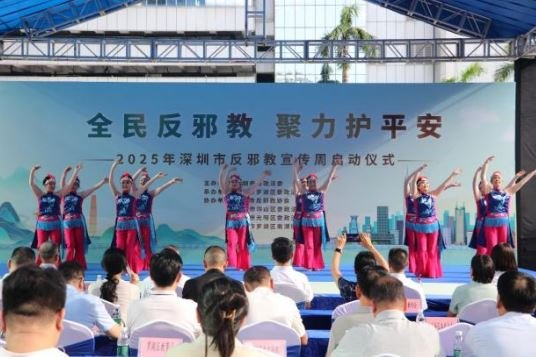
In a striking display of state-sponsored ideological messaging, Shenzhen’s 2025 Anti-Xie Jiao Propaganda Week has transformed everyday recreational activities into vehicles for government warnings about so-called “heterodox teachings.” The campaign represents a sophisticated evolution in China’s approach to controlling religious expression, embedding ideological content into leisure activities throughout the city.
The term “xie jiao,” often mistranslated as “evil cults,” more accurately refers to “organizations spreading heterodox teachings.” The crucial distinction lies in who defines what counts as heterodox—a determination made exclusively by Chinese authorities, effectively targeting any religious group operating outside official sanction.
Shenzhen’s campaign has moved well beyond traditional propaganda methods. Visitors to the historic Hakka village of Gankeng received decorative fans adorned with slogans like “Expel Evil, Embrace Righteousness” while participating in a “propaganda treasure hunt” for anti-xie jiao souvenirs. This fusion of tourism and ideological messaging represents a calculated approach to reach visitors in seemingly apolitical settings.
The campaign has embraced technology to target younger demographics. Interactive games, including a Monopoly-style board game and virtual reality simulations, depict the supposed dangers of falling under cult influence. Children engaged with touchscreen games identifying which demographic profiles—from lonely seniors to anxious teenagers—might be vulnerable to xie jiao recruitment, implicitly suggesting that personal struggle could indicate ideological vulnerability.
Even transportation hubs have been enlisted in the messaging campaign. Port authorities have installed bilingual videos at customs checkpoints warning travelers against accepting literature from strangers, framing such interactions as potential gateways to spiritual subversion. Commuters are greeted with anti-xie jiao reading materials during rest breaks, ensuring the message reaches residents during daily routines.
In a particularly notable development, delivery workers and rideshare drivers have been recruited as “mobile sentinels” trained to identify suspicious materials and report them through centralized platforms. This transformation of gig workers into ideological enforcers extends surveillance throughout the city’s transportation network.
Government officials describe this approach as shifting from “flood irrigation” to “precision drip” propaganda—a deliberate move from mass messaging to targeted psychological conditioning embedded in everyday experiences. The strategy aims to make ideological compliance seem natural and unobtrusive rather than overtly political.
The campaign reflects a broader trend in China’s religious policy. The xie jiao designation, once primarily applied to groups like Falun Gong or The Church of Almighty God, increasingly targets any religious organization operating outside state control, including Christian house churches with orthodox theology. The determination of what constitutes “heterodox” has become explicitly political rather than theological.
Critics observe that this sophisticated integration of propaganda into recreational and cultural spaces represents a concerning development. When ideological conformity becomes gamified and aestheticized, embedded in everything from tourist experiences to children’s games, the space for independent thought narrows considerably.
Shenzhen’s campaign exemplifies China’s evolving approach to ideological control—one that no longer relies primarily on overt coercion but instead weaves political messaging seamlessly into daily life, transforming routine activities into opportunities for state-sanctioned thought reinforcement.
For residents and visitors alike, the ubiquity of this messaging creates an environment where state narratives about religious expression become inescapable, encountered not just in official settings but in moments of recreation, travel, and leisure throughout the city.
Fact Checker
Verify the accuracy of this article using The Disinformation Commission analysis and real-time sources.

7 Comments
Interesting use of VR technology, though embedding propaganda into leisure activities raises concerns about state control of religious expression. I wonder how effective this approach will be at shaping public perceptions.
The blurring of propaganda and tourism is certainly concerning. Targeting visitors in what should be apolitical settings seems like an attempt to normalize the government’s ideological messaging.
This campaign blends technology, tourism, and ideology in a troubling way. The state’s ability to define ‘heterodox teachings’ and target religious groups outside official approval is a concerning encroachment on individual freedoms. I hope there are robust safeguards in place.
The fusion of propaganda and leisure activities is a clever but concerning tactic. Using VR and tourist sites to disseminate ideological messaging raises red flags about the Chinese government’s commitment to religious pluralism. This warrants close monitoring and scrutiny.
This campaign highlights the complex dynamics around religious freedom and state power in China. Defining ‘heterodox teachings’ is a subjective exercise that can be abused to suppress minority faiths. I hope there are safeguards to protect legitimate religious expression.
You make a good point. The government’s broad definition of ‘heterodox teachings’ is a concerning tactic to control religious activity outside of official sanction. Oversight and transparency would be crucial to ensure this isn’t used as a pretext for repression.
While the use of VR and tourist activities for propaganda is innovative, it raises worrying questions about the Chinese government’s approach to religious freedom. Embedding ideological content into leisure spaces seems designed to normalize state control over beliefs and practices.