


Listen to the article
European Parliament and Polish Press Agency to Host Debate on Media’s Role Amid Disinformation
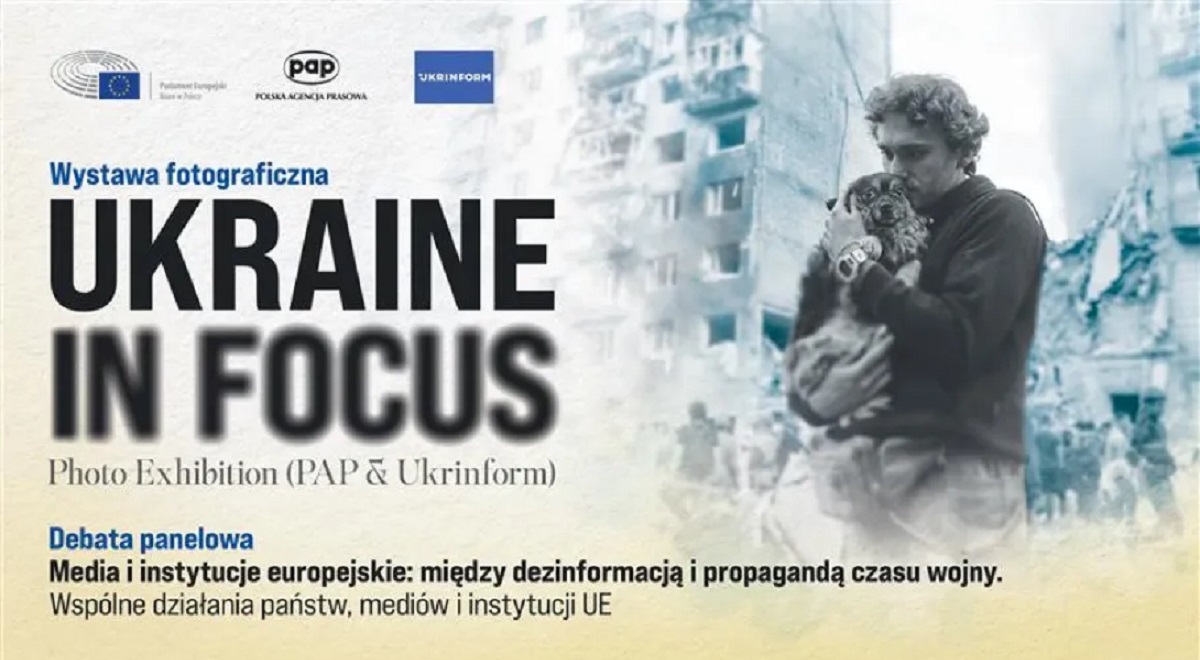
The European Parliament Liaison Office in Poland, in partnership with the Polish Press Agency (PAP), will host a significant event addressing the critical issues of disinformation and wartime propaganda on Wednesday. The debate, titled “Media and European institutions: between disinformation and wartime propaganda. Joint actions of states, media and EU institutions,” will take place at the Parliament’s Warsaw office on Jasna Street starting at 4 p.m.
The event comes at a crucial time when information warfare has become a central component of modern conflicts, particularly in the context of Russia’s ongoing invasion of Ukraine. Misinformation campaigns targeting both Ukrainian and European audiences have intensified, making this discussion particularly relevant for media professionals and policymakers.
Patryk Zakrzewski, vice president of the Demagog Association—a leading Polish fact-checking organization—will open the proceedings with a presentation on “What we do not know about anti-Ukrainian propaganda in Poland.” This segment aims to shed light on the often subtle and sophisticated disinformation efforts targeting Polish-Ukrainian relations.
Following Zakrzewski’s presentation, a panel discussion will feature several prominent media experts. Participants include Raffaella De Marte, head of the European Parliament’s Decentralised Media Unit, who oversees the institution’s regional communication strategies; Mattia Bernardo Bagnoli, diplomatic correspondent for the Italian news agency ANSA in Brussels; Nataliia Kostina, deputy director general of Ukrinform, Ukraine’s national news agency; and Tomasz Gruszka, head of PAP’s operational office. PAP deputy editor-in-chief Zuzanna Dąbrowska will moderate the discussion.
The debate aims to explore how European institutions, national governments, and media organizations can collaborate to combat disinformation while maintaining journalistic integrity during wartime conditions. Panelists are expected to discuss practical strategies for identifying propaganda, fact-checking procedures, and the challenges of reporting from conflict zones.
Following the panel discussion, attendees will be invited to view the “Ukraine in focus” exhibition, featuring powerful photographic works from the archives of PAP and Ukrinform. The exhibition aims to provide a visual counterpoint to propaganda by showcasing authentic images of life in war-torn Ukraine.
Katarzyna Liebrecht, head of PAP’s Photo Archive Team and curator of the exhibition, explained that the collection “focuses on everyday life in a country affected by war, but also on the solidarity and support coming from across Europe.”
“It is a story about suffering and hope, about destruction and reconstruction, about people who, despite everything, remain and fight,” Liebrecht said. She emphasized that the photographs “not only document the drama of Ukraine—they also remind us of the strength of a community that does not allow the world to look away.”
In curating the exhibition, Liebrecht deliberately avoided graphic imagery in favor of more symbolic scenes that depict daily struggle, resilience and strength. “Each of these images is a point of focus that restores clarity to a gaze blurred by propaganda,” she noted, emphasizing the exhibition’s aim to reaffirm values of “truth, empathy and humanity.”
“I would like the photos to encourage people to pause and reflect, so that the viewer feels not only the burden of war, but also the extraordinary dignity and determination of people who face its consequences every day,” Liebrecht added.
The event represents a significant collaboration between European institutions and media organizations in addressing the complex challenges of information integrity during times of conflict. As the war in Ukraine continues into its third year, developing effective strategies against disinformation remains a critical priority for democratic societies throughout Europe.
Fact Checker
Verify the accuracy of this article using The Disinformation Commission analysis and real-time sources.
